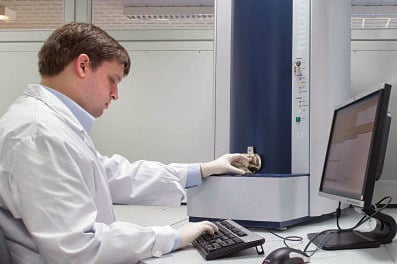
OneBreath platform uses single exhaled breath sample to assess postoperative pneumonia risk in cardiac surgery patients.
The US Food and Drug Administration (FDA) has granted Breakthrough Device Designation to Breath Diagnostics Inc’s OneBreath platform, an in vitro diagnostic that analyzes exhaled breath to identify patients at elevated risk of developing postoperative pneumonia following cardiac surgery.
The designation applies to OneBreath as a qualitative assessment tool for volatile organic compounds (VOCs) from a single preoperative breath specimen. The test is designed to aid in perioperative risk stratification and management of adult patients scheduled for elective cardiac surgery.
The FDA grants Breakthrough Device designation to qualifying medical devices that have the potential to provide more effective treatment or diagnosis of life-threatening or irreversibly debilitating diseases than current options. Devices in the program receive prioritized FDA interaction and enhanced communication to support more efficient development and review.
“We believe this designation marks an important step forward for the OneBreath platform and reflects the emerging role of breath-based molecular diagnostics in addressing unmet clinical needs,” says Ivan Lo, CEO of Breath Diagnostics Inc, in a release. “To our knowledge, OneBreath is the first FDA Breakthrough Device to apply [liquid chromatography–mass spectrometry (LC-MS)]-based molecular analysis to human breath.”
Ten-Minute Analytical Workflow
OneBreath features a single-breath sampling design in which a patient provides one exhaled breath that is subsequently analyzed using LC-MS. The analytical workflow is designed to be completed in approximately 10 minutes, supporting integration into perioperative clinical settings.
Unlike most breath technologies that rely on indirect signals or sensors, the OneBreath platform operates at the molecular level, directly measuring defined chemical species with high analytical specificity, according to the company.
“A single exhaled breath is simple, fast, and entirely non-invasive—qualities that may make patients more willing to undergo testing compared with blood draws or other sample types such as urine or stool,” says Lo in a release. “Unlike blood, which is filtered and metabolized by organs such as the liver and kidneys, breath contains volatile organic compounds associated with biological processes, including inflammation and metabolic activity.”
Platform Technology Approach
The OneBreath platform captures multiple layers of molecular evidence from exhaled VOCs, enabling qualitative assessment across a wide dynamic range. Breath Diagnostics believes this architecture positions OneBreath not as a single-use assay, but as a scalable platform technology potentially capable of supporting future clinical applications.
As stated in the FDA grant, OneBreath is intended to be used in conjunction with clinical evaluation and standard risk assessment tools, does not identify specific pathogens, and is not intended to diagnose pneumonia. Analysis is performed by qualified laboratory personnel in an appropriately equipped clinical laboratory, and the device is for prescription use only.
Breath Diagnostics plans to leverage the Breakthrough Devices Program to continue working with the FDA as it advances OneBreath through its development and regulatory pathway. However, Breakthrough Device designation is based on preliminary data and does not guarantee that the FDA review and approval process will be shortened or that an application will be approved.
The OneBreath system has not been cleared or approved by the FDA and remains in the development stage. It is not available for clinical or commercial use.
ID 92268564 © Kiosea39 | Dreamstime.com