Circulating tumor DNA testing shows promise for guiding treatment decisions in muscle-invasive bladder cancer, though additional biomarkers are needed for local recurrence detection.
Circulating tumor DNA (ctDNA) testing can predict metastatic risk in patients who receive bladder-sparing treatment for muscle-invasive bladder cancer, but it is not a good predictor of local recurrence within the bladder, according to a new study from Fox Chase Cancer Center researchers.
The study, published in the Journal of Clinical Oncology, also showed that the absence of ctDNA predicted favorable outcomes, regardless of whether the patient’s bladder was removed. ctDNA are tiny fragments of DNA left behind by cancer cells as they die off during treatment.
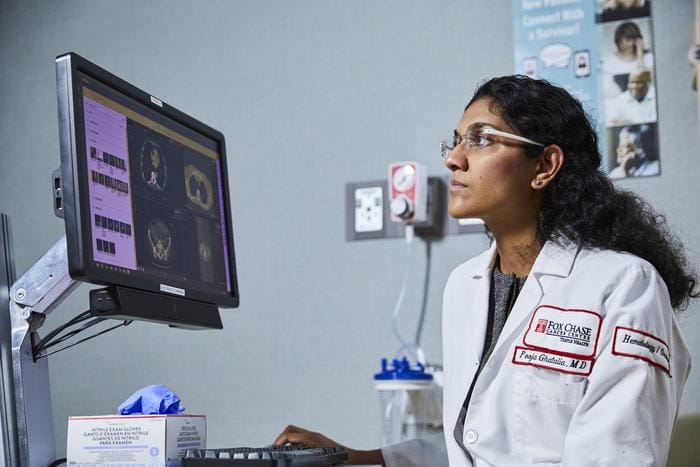
The findings, which report updated data from the phase 2 RETAIN-2 clinical trial, could be used to help guide treatment decisions for patients with muscle-invasive bladder cancer, says first author Pooja Ghatalia, MD, an associate professor in the Department of Hematology/Oncology at Fox Chase Cancer Center, in a release.
“This tells us ctDNA can be incorporated into the decision-making of who should keep their bladder and who should not, knowing that we also need additional tests or biomarkers to detect local recurrence early in patients who undergo active surveillance,” says Ghatalia, in a release.
Addressing Quality of Life Concerns
Keeping the bladder intact is a high priority for patients undergoing treatment for bladder cancer,, according to Ghatalia. Not only does bladder removal increase the risk of complications, but it also means patients must wear a urine bag for the rest of their lives, significantly affecting their quality of life.
New and better neoadjuvant therapies mean that more patients may be able to be treated for cancer without removing the bladder. However, providers need tools to better identify which patients can be safely treated with this approach and which ones still need to undergo cystectomy, a surgery to remove the bladder.
Although ctDNA has previously been shown to be an effective tool to predict outcomes in patients who have had their bladders removed, this is the first time it has been studied in patients who are treated with a bladder preservation approach.
Positive Trial Results
In addition to the findings on ctDNA, researchers also reported positive results from the trial, demonstrating that a response-adapted bladder-preservation approach involving neoadjuvant chemoimmunotherapy can be considered in select patients.
Researchers will continue following patients from the RETAIN-2 trial for five years to study long-term outcomes of bladder-sparing treatment. They are also currently designing the RETAIN-3 clinical trial, with plans to use ctDNA as a predictive biomarker in treatment decision-making.
Ghatalia presented results of the study during a podium presentation at the 2026 ASCO Genitourinary Cancers Symposium, which was held February 26-28 in San Francisco.
Photo caption: Pooja Ghatalia, MD, an associate professor in the department of hematology/oncology at Fox Chase Cancer Center.
Photo credit: Fox Chase Cancer Center