As autoimmune and allergy testing demand continues to grow, labs are refining workflows, standardization, and test utilization. An immunodiagnostics expert explains how those changes are affecting day-to-day lab operations.
By Alyx Arnett
Autoimmune and allergic diseases don’t follow a single, predictable pattern, according to Santhosh Nair, president of immunodiagnostics at Thermo Fisher Scientific. Patients often present with broad, overlapping symptoms, and individuals with one autoimmune condition are at higher risk of developing additional immune-mediated diseases—something Nair says occurs in roughly one in four patients.
Nair says that complexity carries into the lab. “Labs are not simply running individual tests,” he says. “They are building a diagnostic narrative across multiple data points, often under time pressure.”
As testing volumes grow, Nair says labs are managing variability across methods while working to keep results meaningful for clinical decision-making. Access to standardized testing approaches, he adds, remains uneven in some settings.
He says more laboratories are putting greater emphasis on standardization in both how testing is performed and how results are interpreted.
“The goal is not just efficiency, but confidence—confidence that results are reproducible, comparable, and meaningful in a clinical context,” he says.
Reflex Testing and Structured Pathways
When cases are complex, Nair says the answer is not more testing, but more deliberate use of the tests labs already run.
High-quality single-analyte assays, paired with clearly defined testing pathways, can help laboratories move from an initial clinical question to an answer without adding unnecessary steps, he says. He points to reflex testing—the automatic triggering of follow-up tests based on an initial result—as one approach.
“It allows laboratories to extend the diagnostic pathway automatically based on initial findings, reducing delays, minimizing the need for additional patient visits, and ensuring that clinicians receive a more complete picture upfront,” Nair says.
He says that approach can reduce repeat or piecemeal test ordering, give clinicians a more complete answer earlier, and make lab workflows more predictable. For example, instead of requiring a new order after an initial result, labs can automatically trigger the next appropriate test in a diagnostic sequence, reducing back-and-forth with clinicians.
Workflow as a Scaling Challenge
As testing demand grows, Nair places increasing weight on how workflows are designed.
Structured workflows can reduce variation and make it easier for labs to handle higher volumes without sacrificing quality, he says. Test utilization also plays a role, particularly when labs move away from ordering disconnected tests and instead follow a defined sequence that builds toward a complete diagnostic answer, rather than relying on individual test orders that may not capture the full clinical picture.
“The combination of disciplined workflow design and intelligent test utilization is what enables laboratories to scale with confidence,” he says.
Nair says this can improve turnaround times, reduce redundant testing, and help labs manage staffing constraints while maintaining more consistent clinical outcomes.
What to Ask Before Adding New Technology
For laboratories evaluating new diagnostic approaches, Nair says the starting point should be how well the technology fits into existing operations.
“The first question laboratories should ask is not what a new technology can do, but how it fits into what they already do,” he says.
That includes how a system connects with laboratory information systems and reporting workflows. He also points to considerations such as training, usability, and staff confidence in whether a new approach is successfully adopted.
Technologies that introduce friction into existing workflows are unlikely to be adopted, he adds. Those that align with existing scientific evidence and quality frameworks—and that support reproducible results—are more likely to hold up over time.
Where the Field Is Heading
Looking ahead, Nair expects autoimmune and allergy diagnostics to become more tightly integrated with clinical workflows.
In allergy testing, he points to the continued role of specific IgE testing in identifying sensitization to allergens such as food and environmental triggers. He also expects continued investment in automation and digital connectivity.
“Automation is not just about throughput,” he says. “It is about ensuring that processes are performed the same way, every time, with minimal opportunity for error.”
He also expects greater use of longitudinal data and patient-reported information, reflecting a shift toward managing immune-mediated conditions as ongoing processes rather than one-time diagnostic events. He adds that there will be continued pressure to expand access to high-quality diagnostics beyond specialized centers and into routine care.
“The laboratories that succeed will be those that can combine precision, consistency, and integration as part of a unified approach to delivering clinically meaningful answers,” Nair says.
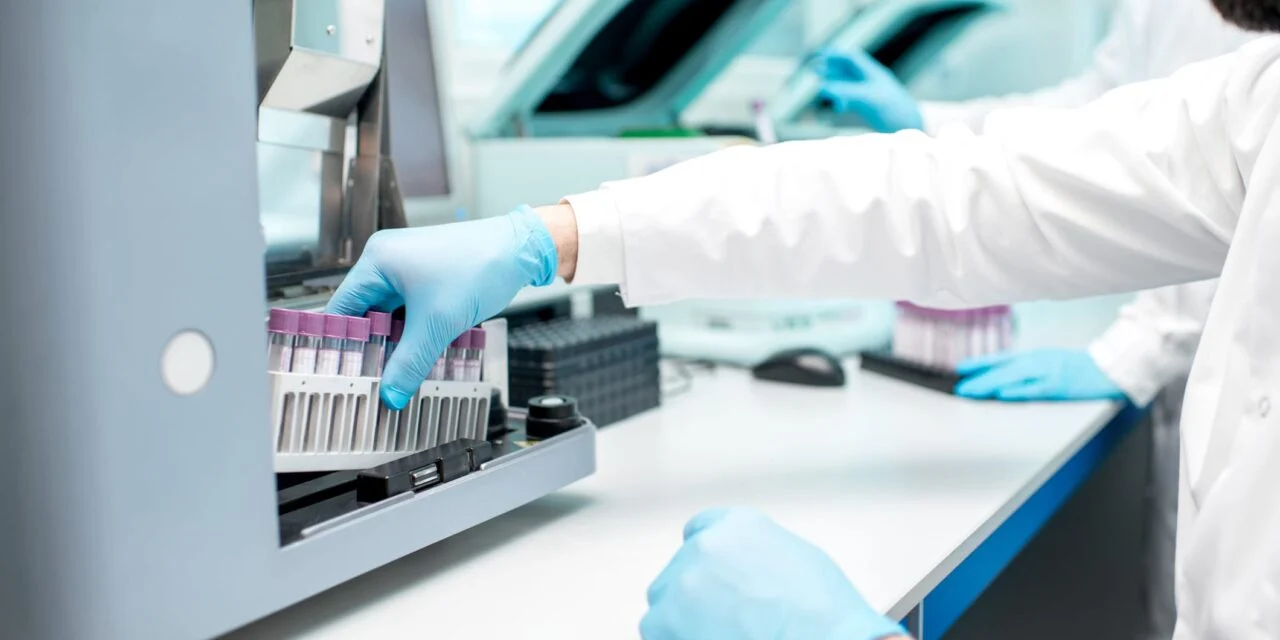
ID 114358273 © Rosshelen | Dreamstime.com