Managing point-of-care data takes time. Modern informatics platforms are helping healthcare teams spend less of it on administrative work and more on patient care.
By Anand Kapai
Let me start with a simple question: When was the last time you used ChatGPT, Gemini, Claude, Copilot, or another artificial intelligence (AI) tool?
The interesting part is not the technology itself, but rather the behavior behind it. Across industries, people are reaching for AI because they are trying to solve very human problems: too much complexity, too little time, and too many decisions that need to be made faster. Recent research1 suggests that about 1 in 6 working-age adults (around 17%) globally are now using some form of AI tools, often to improve productivity and save time2. We want better answers. We want fewer manual steps. We want the confidence that comes from seeing the right information in the moment.
In healthcare, this conversation becomes even more important. Time is not simply a productivity metric. Time is patient care. Every minute spent searching for information, manually documenting results, reconciling data across systems, and preparing reports is a minute that could be redirected toward patients, quality improvement, staff support, and faster clinical decision-making.
That is why digital tools, analytics, automation, and AI-enabled workflows should not be viewed as a technology trend alone. They are a response to a deeper operational reality: Healthcare teams are being asked to manage more data, more devices, more compliance requirements, and more pressure on outcomes.
For point-of-care testing teams, this is a daily reality.
Every Second Creates Data, but Not Every Second Creates Insight
Healthcare creates data every second: patient data, quality control data, device data, operator data, compliance data, and workflow data. An average hospital is estimated to generate approximately 137 terabytes of data each day.3 So, the challenge is not in the creation of data; the real challenge is using it. A World Economic Forum article reports that approximately 97% of the data produced by hospitals worldwide remains underutilized.4
This matters because approximately $1.8 trillion in global health spending each year makes little or no contribution to improved health outcomes.4 That tells us we do not have a data problem but a workflow problem, a decision-making problem, and a time problem.
Teams may have the data they need, but lack the immediate visibility required to act. That gap between data availability and actionable insight is where time is lost. It can delay quality review, slow operator recertification, obscure device downtime or patient-result errors, and increase the administrative burden on clinical and laboratory teams that are already stretched thin.
So, the question is not whether we have enough data. We do. The better question is, can we turn that data into insight quickly enough to make a difference?
Your Own Ecosystem of Data, but Your Time Is Too Valuable to Waste
Now bring this closer to the environment of laboratory and point-of-care professionals. A large health system manages dozens of sites, hundreds of point-of-care devices, thousands of operators, and millions of data points across patient testing, quality control, device events, and operator competency. The network may be distributed, but the responsibility for oversight, compliance, and performance is still shared across a relatively small group of experts.
For point-of-care coordinators, the day can begin with accreditation requirements, operator issues, device alerts, QC review, reporting needs, and multiple systems competing for attention. The pressure is not only to keep the program running but also to keep it compliant, consistent, efficient, and patient-centered.
In this environment, big data presents big potential. Greater insight and efficiency can lead to better outcomes, sooner. But for healthcare systems with complex point-of-care networks, that promise can feel beyond reach when data is available but not accessible, reports exist but are not flexible, and alerts appear without clear prioritization.
The pain points are familiar: complex IT environments, information overload, operator training challenges, network inefficiency, quality and compliance demands, and financial pressure. These are symptoms of the same issue: Teams are managing more complexity than their workflows were designed to support.
Middleware systems were meant to help. Automation and digitization were a relief from manual work, but in many point-of-care environments, they introduced a new kind of complexity. Every device came with its own middleware. Multiple middleware systems meant multiple servers, multiple trainings, multiple maintenance routines, and multiple ways of doing essentially the same work. Each became another weight on an overloaded system.
Most middleware systems have static reports that make it difficult to compare performance across sites or shift perspectives quickly. Manual operator-certification tracking consumes valuable time and increases compliance risk. And when device downtime disrupts workflow, the impact can extend beyond efficiency to the pace and reliability of patient care.
Then there is documentation. One US study found that nurses manually documented an average of 631–875 flowsheet data points during a 12-hour shift in ICU and acute care settings, excluding device-integrated data.5 The same study notes that previous research found nurses spend approximately 19%–35% of their practice time documenting care.5 That is a lot of time spent managing data.
This is why I believe the future of point-of-care informatics must be built around a simple idea: giving time back to the people doing the work. Because at the end of the day, what matters most is not the system, the screen, the report, or the dashboard. What matters most is patient care.
From More Systems to Smarter Workflows
The next generation of point-of-care data management solutions cannot be about adding another software layer. Healthcare does not need more complexity disguised as innovation. It needs solutions that remove friction from daily work.
That means consolidating information into workflows that reflect how point-of-care teams actually operate. It means dashboards that focus attention on what needs action now, faster review of QC data, device events, patient-result errors, operator certifications, and workload trends, and fewer disconnected systems standing between teams and the information they need.
It also means listening carefully to the people closest to the work. The best solutions are shaped by the people who use them, challenge them, and depend on them when the pressure is high.
That is why Siemens Healthineers developed Atellica Connect POC Insights with extensive input from point-of-care coordinators and laboratory professionals. The intent was not to create just another data management product, but to build a smarter, easier-to-use platform that helps teams actually manage their point-of-care testing program in one place.
Built with our Point-of-Care Community at the Heart
There is a phrase we often hear in product development: “If you build it, they will come.” In healthcare, I believe the better version is: “If we build it together, it will matter.”
Because healthcare workflows are too complex, and the stakes are too high, for solutions to be designed at a distance. We have to understand not only what users click but also what they are trying to accomplish. What slows them down? What would make their day easier? What would help them act faster and with more confidence?
The best way to answer those questions is to go to the source. Atellica Connect POC Insights was shaped by years of customer input and real-world feedback from point-of-care professionals managing complex, high-pressure networks every day. It reflects a simple belief: Technology should not replace expertise; it should amplify it. With better visibility, smarter workflows, and more intuitive tools, teams can act with greater confidence and focus their time where it matters most.

Leading in Open Connectivity
Point-of-care testing environments are rarely uniform. They often include multiple device types, manufacturers, care locations, and stakeholder needs. A coordinator may need visibility across glucose, blood gas, HbA1c, urinalysis, coagulation, infectious disease, and other testing workflows. IT teams may need simplified infrastructure and fewer systems to support. Lab leaders may need standardization, quality oversight, and evidence of continuous improvement.
This is why connectivity matters. Atellica Connect POC Insights is a leader in open connectivity with 260-plus device interfaces across more than 80 manufacturers. The value here is not just the number. The value is the ability to choose the devices that work best for your program and connect them to one system. With a consolidated view of your unique point-of-care testing environment, teams can move from fragmented oversight to coordinated action.
When device data, operator data, patient-result data, QC data, and workload data are connected, the workflow changes. Teams can identify issues earlier, see patterns that were previously hidden, compare performance across sites and devices, and focus attention where it is needed most.
Bigger Picture. Fewer Clicks.
For me, one of the most important shifts in healthcare technology is the movement from passive reporting to actionable insights. A report that tells you what happened last month has value. But a dashboard that helps you identify what needs attention today has a different kind of value.
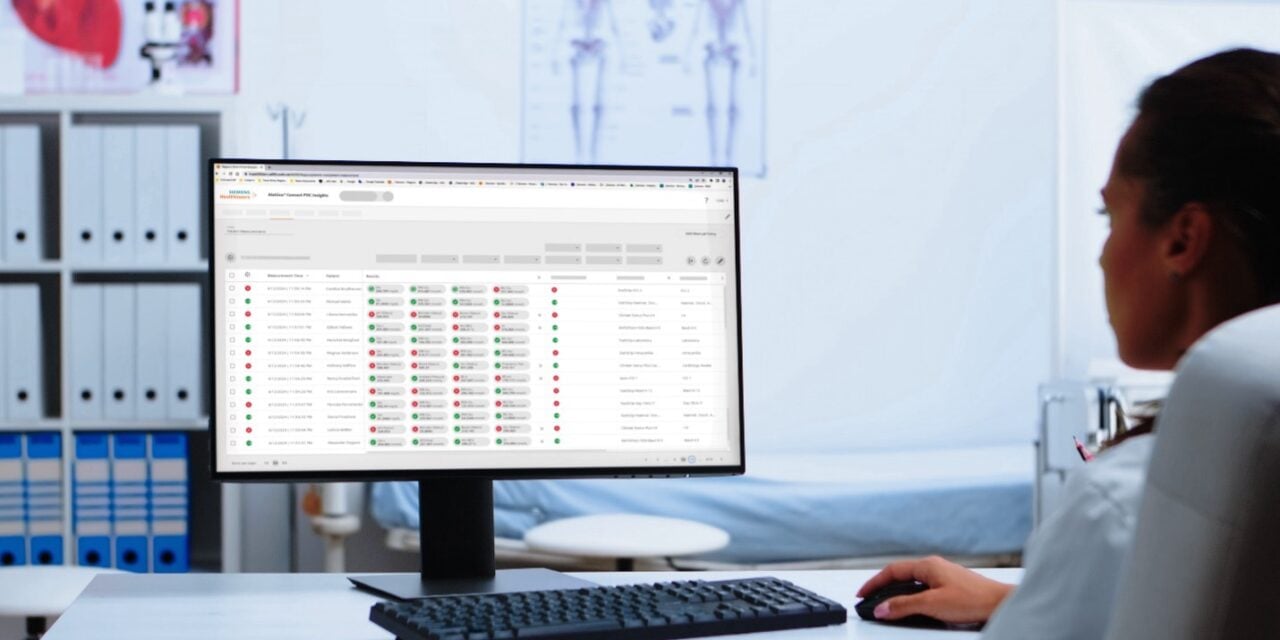
Atellica Connect POC Insights is designed to help teams move faster from data to decision. With built-in analytics and dynamic reporting, teams can visualize trends across workload, device events, quality control, patient results, and operator certifications. Interactive charts with flexible filters allow users to review information from multiple perspectives and drill into the areas that need attention.
That may sound operational, but the clinical impact is real. Faster visibility into QC trends can support earlier quality intervention. Better insight into operator certification can reduce the risk of untrained operators performing testing. Device-event analytics can help teams recognize recurring issues, while workload visibility can help leaders understand capacity, utilization, and resource needs.
In other words, informatics becomes more than data management. It becomes a way to improve governance, quality, and consistency across your point-of-care testing program.
Operator Management Should Not Be a Manual Burden
Operator management is one of the most underestimated challenges in point-of-care testing. In a large health system, there are thousands of operators across multiple locations, each requiring training, certification, recertification, and ongoing oversight. Manual tracking is time-consuming and error prone. It can also create avoidable disruptions when certifications lapse or operators are locked out unexpectedly.
Atellica Connect POC Insights helps centralize operator oversight by connecting operator records, certification status, training activities, and automating recertification. Teams can now reduce manual follow-up and quickly see who is ready, who needs attention, and where training gaps may exist.

Quality and Compliance Need Speed and Confidence
Quality and compliance are daily disciplines. Teams need to review QC, monitor patient-result errors, document corrective action, prepare for audits, manage proficiency and linearity requirements, and maintain traceability across the program.
When information is scattered, these activities become harder than they need to be. Audit requests take longer to address. Reports may require manual adjustment. Quality issues may be visible in one place, while related device or operator information is somewhere else. The result is more time spent searching and less time spent improving.
A more connected informatics approach brings these activities into one operational view, linking QC information, device status, patient results, operator status, and audit records more clearly. This gives teams a stronger foundation for compliance and continuous quality improvement.
The Real Measure of Innovation Is Time Returned
Innovation in healthcare should not be measured only by features, interfaces, or technical specifications. Those matter, of course. But the more meaningful measure is whether the solution gives time back.
Does it give time back to the point-of-care coordinator who no longer has to assemble reports from multiple systems? To the nurse or clinician who depends on an available device and properly trained operators? To the lab manager who needs faster visibility into quality and compliance? To the IT team working to simplify infrastructure and reduce duplicated systems?
When time is returned, it does not disappear. It goes somewhere better: back to patients, quality, staff development, problem-solving, process improvement, and the human side of care.
Because time is our greatest asset. And in healthcare, every minute matters.
All trademarks are the property of their respective owners. Product availability may vary from country to country and is subject to varying regulatory requirements. Please contact your local representative for availability.
About the Author: Anand Kapai is the vice president and head of global commercial marketing for the Siemens Healthineers Point of Care business division.
References
- Microsoft AI Economy Institute. Global AI diffusion: Q1 2026 trends and insights. Microsoft. 2026 May. Available at https://www.microsoft.com/en-us/research/wp-content/uploads/2026/05/Microsoft-AI-Diffusion-Report-2026-Q1.pdf
- Gillespie N, Lockey S, Ward, T, et al. Trust, attitudes and use of artificial intelligence: A global study 2025. The University of Melbourne and KPMG.
- Eastwood B. How to navigate structured and unstructured data as a healthcare organization. 2023 May 8 HealthTech Magazine. https://healthtechmagazine.net/article/2023/05/structured-vs-unstructured-data-in-healthcare-perfcon
- World Economic Forum. How data-driven digital healthcare tools cut costs and boost outcomes. 2025 June 3. Available at https://www.weforum.org/impact/how-digital-healthcare-tools-cut-costs-boost-outcomes/
- Collins S, Couture B, Kang MJ, et al. Quantifying and visualizing nursing flowsheet documentation burden in acute and critical care. AMIA Annual Symposium Proceedings. 2018;2018:348-357. PMID: 30815074; PMCID: PMC6371331.