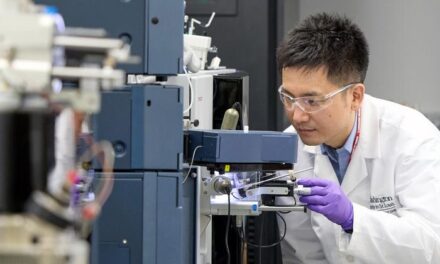
The dedicated facility operates separately from the company’s CLIA-certified clinical lab to advance biomarker research and translational programs.
CND Life Sciences has opened a new Innovation Laboratory in Scottsdale, Arizona, designed to expand its assay development, biomarker research, and translational programs for neurodegenerative diseases.
The new laboratory operates separately from CND’s existing CLIA-certified, CAP-accredited, and CLEP-permitted clinical laboratory operations. The dedicated facility provides specialized space for technology evaluation, assay development, biomarker research, and translational research initiatives to support long-term product development.
“The opening of our Innovation Laboratory marks an important milestone for CND,” says Todd Levine, MD, chief medical officer and co-founder of CND, in a release. “This facility reflects our commitment to investing in our people, scientific capabilities, and long-term vision, helping us better serve clinicians, patients, researchers, and partners.”
Located near CND’s headquarters and central laboratory operations in Scottsdale, the facility is designed to foster collaboration across the company’s scientific, product development, operational, and leadership teams, according to the release.
“The Innovation Laboratory strengthens our ability to explore new scientific opportunities, advance the future of precision neurodiagnostic, medicine and support development of novel therapeutic treatments for degenerative diseases,” says Christopher Gibbons, MD, chief scientific officer and co-founder of CND Life Sciences, in a release. “By creating a focused environment for scientific expansion, the facility will help us move promising ideas forward and continue building on the work that drives our mission.”
Advancing Cutaneous Neurodiagnostic Testing
Operations at the new Innovation Laboratory are scheduled to begin next week, according to the company.
CND provides diagnostic testing services to support clinicians evaluating patients for suspected neurodegenerative disorders. The company offers the Syn-One Test as a laboratory developed test to assist in diagnosing suspected synucleinopathies, including Parkinson’s disease, dementia with Lewy bodies, multiple system atrophy, and related disorders, according to the release. The test uses proprietary techniques to detect phosphorylated alpha-synuclein in cutaneous nerves while evaluating peripheral nerve degeneration.
In a prospective, multicenter study funded by the National Institutes of Health and published in 2024 in the Journal of the American Medical Association, phosphorylated alpha-synuclein was identified in 95.5% of participants clinically diagnosed with a synucleinopathy, according to the company.
To date, more than 3,500 clinicians have ordered the Syn-One Test in the evaluation of more than 70,000 patients, according to the release. In addition to clinical testing, CND collaborates with biopharmaceutical companies on clinical trials for investigational therapeutics and is conducting ongoing research focused on early disease detection, synuclein quantification, and biomarker discovery, according to the company.
ID 218192069 | Artificial Intelligence © Wangbar | Dreamstime.com