The company is working with Bio-Rad and Thermo Fisher Scientific to develop blood tests that detect traces of cancer after treatment and can be performed on existing laboratory instruments.
Biodesix has announced strategic progress across two collaborative programs developing tumor-informed and tumor-naïve molecular residual disease (MRD) solutions for cancer centers and clinical laboratories. Both testing options detect circulating tumor DNA (ctDNA) shed into the blood to evaluate whether residual cancer remains or is recurring following treatment.
The tumor-informed test is the product of a multi-year partnership with Bio-Rad Laboratories, while the tumor-naïve assay represents a newly launched initiative with Thermo Fisher Scientific that broadens an ongoing collaboration in companion diagnostic validation. Biodesix is validating both testing modalities in collaboration with investigators at Memorial Sloan Kettering Cancer Center. Each assay is engineered to run on partner instruments already placed in clinical laboratories globally, supporting testing outside a centralized reference lab model.
“Our approach to MRD reflects a core conviction: sensitivity matters, and so does patient access. We are building ultra-sensitive assays with global collaborators whose platforms can carry those assays to laboratories and patients around the world,” says Scott Hutton, CEO of Biodesix, in a release. “Offering both tumor-informed and tumor-naïve MRD means the clinical question can drive the testing strategy, rather than forcing a single approach in every situation. We believe this work positions Biodesix to participate in the growth of MRD testing well beyond the patients that can be reached through a centralized laboratory model.”
Tumor-Informed Monitoring via Digital PCR
When archived patient tumor tissue is available, tumor-informed assays typically provide the highest analytical sensitivity. In this workflow, Biodesix analyzes a patient’s tumor tissue using its Diagnostic Cortex bioinformatics platform to identify patient-specific genomic alterations.
Bio-Rad’s Droplet Digital PCR technology then tracks those designated variants in serial blood draws by partitioning samples into thousands of discrete droplets to quantify individual tumor molecules. According to the company, the analytical workflow and bioinformatics pipeline detect ctDNA concentrations below 1 part per million of total cell-free DNA.
“Detecting molecular residual disease means finding a handful of molecules in a complex background, the precise application for which Droplet Digital PCR has an advantage over other technologies. Our multi-year work with Biodesix has focused on making that sensitivity practical in routine laboratories. We look forward to supporting broad access to these solutions and the positive impact they will have on patient lives,” says Steve Kulisch, vice president of genomics product management at Bio-Rad Laboratories, in a release.
Tumor-Naïve Methylation Profiling
To address clinical scenarios where baseline tumor tissue is unavailable, degraded, or insufficient, Biodesix developed a tumor-naïve MRD assay. The assay analyzes ctDNA methylation signatures in blood using rapid next-generation sequencing on Thermo Fisher Scientific’s Genexus platform.
Development and analytical validation are taking place within Biodesix’s CAP-accredited, CLIA-certified, and New York State CLEP-certified laboratory as part of the Thermo Fisher Center of Excellence Network. Because the method targets conserved methylation profiles rather than patient-specific sequence mutations, it eliminates the requirement for matched tumor biopsy material.
“Methylation carries a rich biological signal, and rapid analytic and informatics workflows make it possible to act on that signal in a clinically relevant timeframe,” says Gary Pestano, PhD, chief scientific officer of Biodesix, in a release. “By providing both tumor-informed and tumor-naïve approaches, Biodesix can reach more of the patients who may benefit from molecular monitoring throughout their cancer journey.”
Scientific Data and Clinical Strategy
The dual-track initiative marks the first formal outline of Biodesix’s unified MRD strategy, expanding its diagnostic focus beyond lung disease into broader precision oncology applications.
Pestano participated in a spotlight panel examining solid tumor MRD monitoring at the 5th Annual Roth Healthcare Opportunities Conference in New York alongside Amal Thommil, MRD monitoring specialist at DeciBio, and Pedram Razavi, MD, PhD, director of liquid biopsy and cancer genomics at Memorial Sloan Kettering. Data supporting both testing programs were highlighted in collaborative presentations with Memorial Sloan Kettering, Bio-Rad, and Thermo Fisher Scientific at the Association for Molecular Pathology annual meeting and the San Antonio Breast Cancer Symposium.
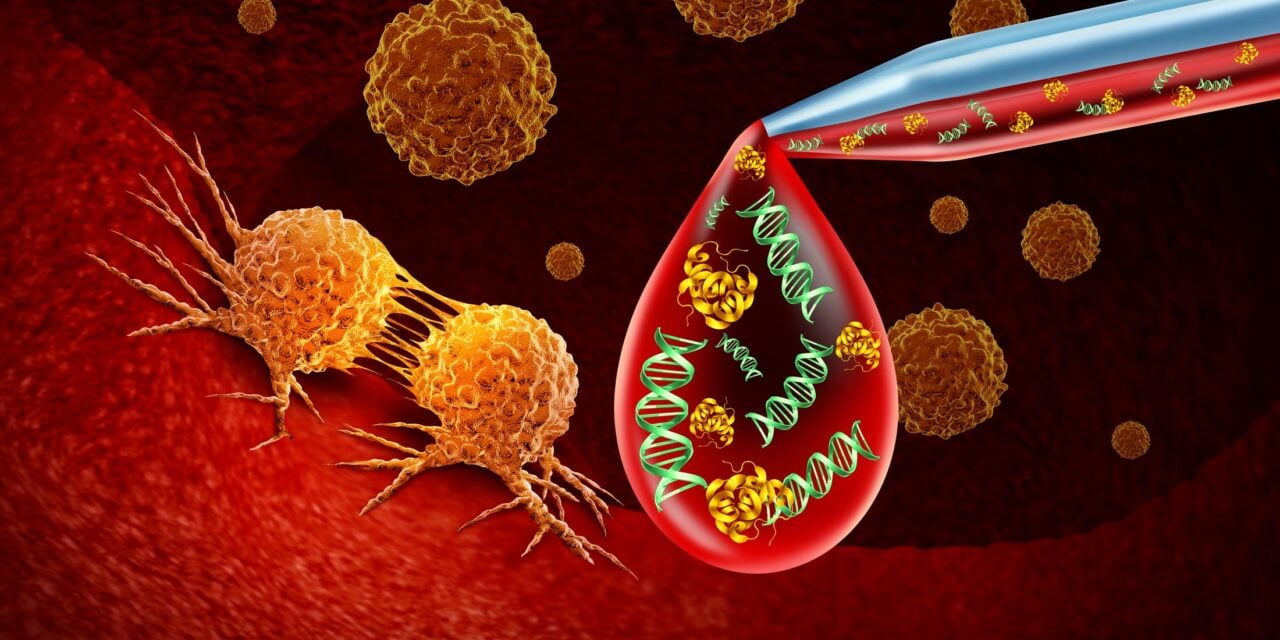
ID 463210143 © Skypixel | Dreamstime.com