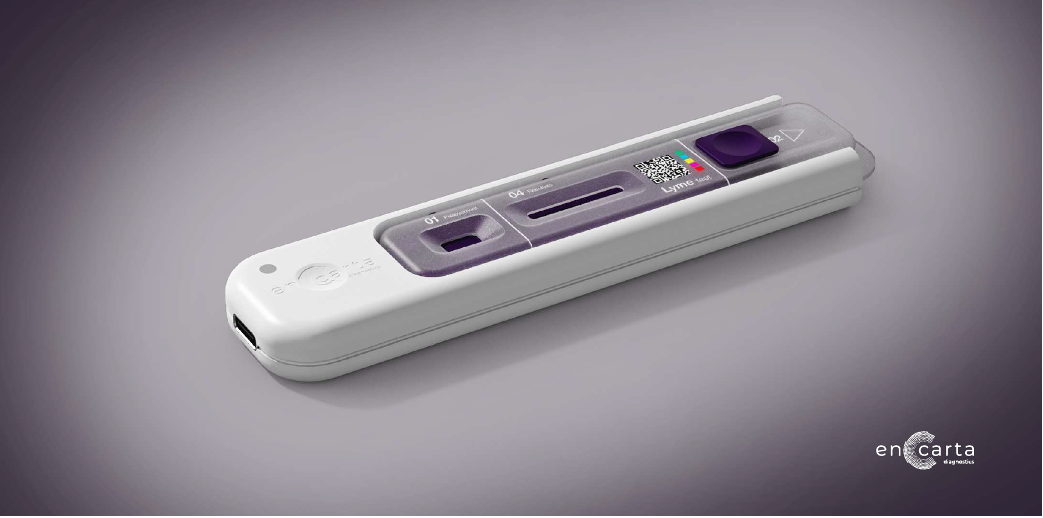
The test detects Borrelia bacteria directly from skin samples at tick bite sites.
En Carta Diagnostics announced that its EC Pocket Lyme test has received Breakthrough Device Designation from the US Food and Drug Administration (FDA) for early detection of Borrelia bacteria, which causes Lyme disease.
The molecular assay provides visual results and is designed to detect Borrelia bacteria directly from skin interstitial fluid samples from individuals with signs of tick bites or erythema migrans. The test comes in a single-use cassette format and is intended to aid in diagnosing Lyme disease infections alongside clinical findings and other laboratory tests.
FDA Breakthrough Device Designation is reserved for technologies that demonstrate potential to provide more effective diagnosis or treatment for life-threatening or irreversibly debilitating diseases. The designation provides En Carta with priority review and enhanced communication with FDA experts, supporting a more efficient path toward US commercialization.
“This Breakthrough Device Designation is a pivotal moment for us. It significantly strengthens our regulatory path by enabling closer collaboration with the FDA and accelerating our route to market, so patients can benefit from our technology sooner,” says Dr Margot Karlikow, co-founder and chief technology officer of En Carta Diagnostics, in a release.
Addressing Early Detection Challenges
Current Lyme disease diagnosis relies on visual identification of erythema migrans rash and tests that detect antibodies produced by the immune system, according to the company. However, the rash can go unnoticed, and antibodies become detectable only five to six weeks after a tick bite, making early-stage testing difficult.
EC Pocket Lyme aims to address these limitations through two approaches. The microneedle-based sampler accesses interstitial fluid at the tick bite site, unlocking a sample source previously inaccessible without invasive biopsy. The portable molecular test detects Lyme disease-causing bacteria via DNA identification before the immune response appears.
There are an estimated 476,000 new cases of Lyme disease in the US annually. The global prevalence is most widespread in the Northern Hemisphere, with cases steadily increasing for over 40 years.
Aptamer-Based Technology Platform
The EC Pocket Lyme platform leverages aptamer-based technology developed over more than a decade of research. The technology enables high-affinity and high-specificity binding to predefined targets. These molecular signatures can be programmed to detect genetic, pathogenic and veterinary indications, opening possibilities for future applications beyond Lyme disease.
“If approved, our diagnostics platform will be the first one to aid in the early detection of the bacteria responsible for Lyme disease,” says Guillaume Horreard, co-founder and chief executive officer of En Carta Diagnostics, in a release. “I am convinced our work will become a go-to solution for the 50 million people who see signs of a tick bite each year.”