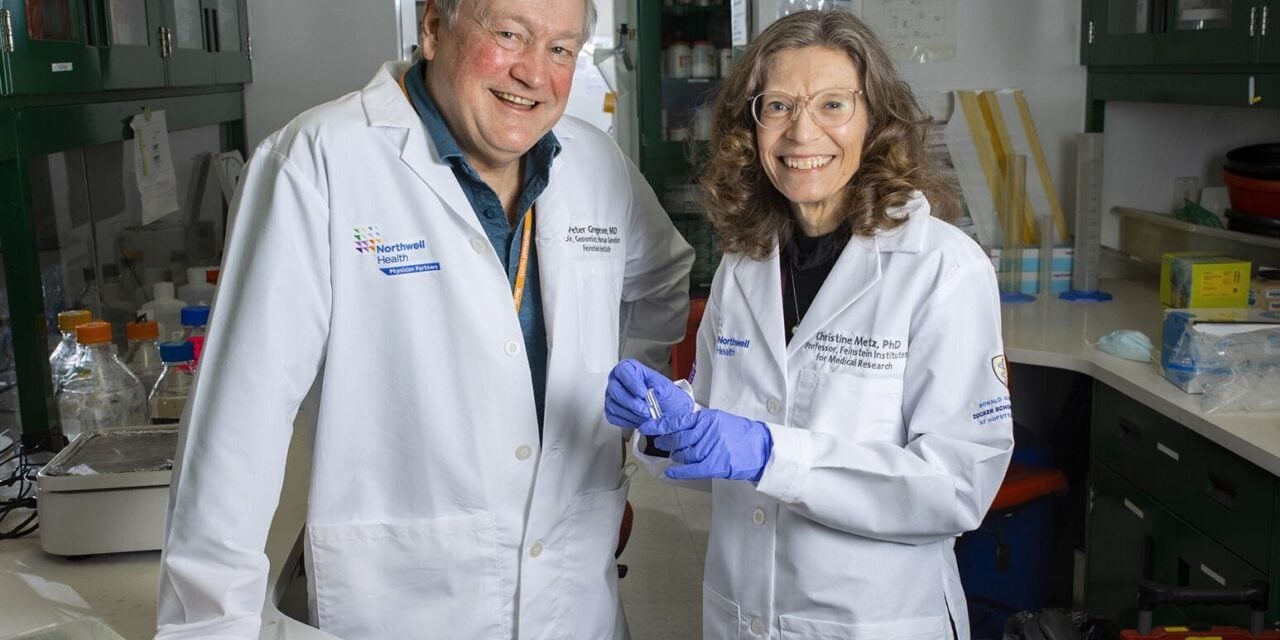
The Feinstein Institutes’ ROSE program is developing a noninvasive approach that analyzes menstrual blood collected at home and compares results with laparoscopic findings in an ongoing clinical trial.
Investigators at Northwell Health’s Feinstein Institutes for Medical Research have received a total of $850,000 in prize funding from the National Institutes of Health’s Rapid Acceleration of Diagnostics Technology (RADx Tech) program to accelerate development of a noninvasive diagnostic test for endometriosis.
Endometriosis is a chronic condition in which endometrial-like tissue grows outside the uterus. It affects about 10% of women and adolescents of reproductive age and is associated with pain, infertility, and reduced quality of life, the release notes. The condition is typically confirmed through surgery, contributing to diagnostic delays that can last years.
The Feinstein Institutes team leading the Research OutSmarts Endometriosis (ROSE) study, Christine N Metz, PhD, and Peter K Gregersen, MD, is working to develop a test that uses menstrual blood to identify biological markers associated with endometriosis.
“Many women tell us they’ve been dismissed by doctors, friends, coworkers, and even parents,” says Dr Metz, professor in the Institute of Molecular Medicine at the Feinstein Institutes, in a release. “Our goal with the ROSE study is to provide a reliable, early diagnostic tool that validates their experiences and enables timely treatment.”
ROSE study and ROSE II clinical trial
Launched in 2013, the ROSE study compares menstrual discharge, described in the release as effluent, from women with and without endometriosis to identify biological markers that could support diagnosis without invasive surgery. The researchers cite evidence that menstrual flow contains tissue from the uterine lining and that women with endometriosis have altered cells in that lining.
The ROSE study has enrolled more than 3700 participants, according to the release.
Building on earlier laboratory and clinical findings, the investigators launched the ROSE II clinical trial in 2022. The trial is recruiting women aged 18 to 40 years who suspect they may have endometriosis and are scheduled for diagnostic endometriosis surgery. Participants collect menstrual blood at home, and researchers compare results from the menstrual blood analysis with laparoscopic surgery findings to assess test accuracy, according to the release.
The team says the long-term goal is Food and Drug Administration approval for the diagnostic test, with the aim that menstrual effluent analysis could become a routine part of a gynecologic visit.
NIH prize funding and prior support
The Feinstein Institutes team received a $500,000 RADx Tech prize during Endometriosis Awareness Month, according to a release from the Feinstein Institutes for Medical Research. That award follows $350,000 the team received from RADx over the past year, bringing the total RADx prize funding to $850,000 over one year.
“Receiving this RADx Tech prize is a tremendous endorsement of the critical work we’ve been doing since 2013,” says Gregersen, professor in the Institute of Molecular Medicine at the Feinstein Institutes, in a release. “This federal support acknowledges the vital need and promise of our research in transforming endometriosis diagnosis from a long, arduous process into a simple, effective screening. This funding is crucial for moving our innovations from the lab to patients’ lives.”
The ROSE team previously received a $1 million award at the 2018 Northwell Innovation Challenge, a “Shark Tank”-style competition, and Northwell Innovations continues to support development of the diagnostic, according to the release.
Photo caption: Drs Peter Gregersen and Christine N. Metz
Photo credit: Feinstein Institutes
Related Reading:
Blood Test for Endometriosis Detection Validated in Multi-Center Clinical Study
Researchers Explore Emerging Solutions for Early Endometriosis Diagnosis