Staffing pressures are reshaping how labs evaluate hemostasis systems—and automation, standardization, and preanalytical safeguards are rising to the top of the checklist.
By Alyx Arnett
Staffing constraints continue to affect clinical laboratories across the United States, and hemostasis testing is among the areas feeling that pressure. According to Andrew Keller, product solutions manager at Sysmex, fewer experienced technologists and increased reliance on cross-training are influencing how labs evaluate and select coagulation systems.
“Staffing shortages are a nationwide challenge affecting laboratories across disciplines, and they are playing a major role in how hemostasis systems are evaluated and selected,” Keller says.
He says labs are placing more emphasis on standardization, ease of use, automation, and vendor support as they adapt to leaner staffing models.
Across different lab settings—from physician office labs running routine PT and aPTT testing to high-volume reference laboratories—Keller says these pressures are pushing labs toward systems that can deliver consistent results with less hands-on time. He links this to growing test volumes, expanding menus, and expectations for faster turnaround times.
Preanalytical Errors Remain a Top Concern
Preanalytical variables remain a significant challenge in coagulation testing. Keller says factors such as hemolysis, icterus, lipemia, and improper tube fill volumes account for an estimated 60% to 70% of laboratory errors.
“When these issues go unrecognized, they can lead to inaccurate results, unnecessary treatment, delayed therapy, or inappropriate clinical decision-making,” he says.
He notes that many of these checks have historically relied on visual inspection, which can vary between technologists and across shifts.
Newer hemostasis systems are increasingly designed to automate parts of this process. For example, some platforms can assess sample integrity—such as hemolysis, icterus, and lipemia—and verify proper tube fill volume before testing proceeds. These features are designed to reduce reliance on visual inspection and apply more consistent criteria when evaluating sample quality, according to Keller.
Matching System to Setting
Hemostasis systems are typically categorized by throughput, automation, and the complexity of testing they support. Keller says labs tend to group platforms based on how much testing they perform and how broad their coagulation menu is.
Low-volume labs—such as physician office labs, outpatient clinics, and smaller emergency departments—generally focus on routine assays like PT and aPTT. For these settings, Keller says systems designed for lower throughput and routine testing, such as the Sysmex CA-600 Series, can provide automation without adding unnecessary complexity.
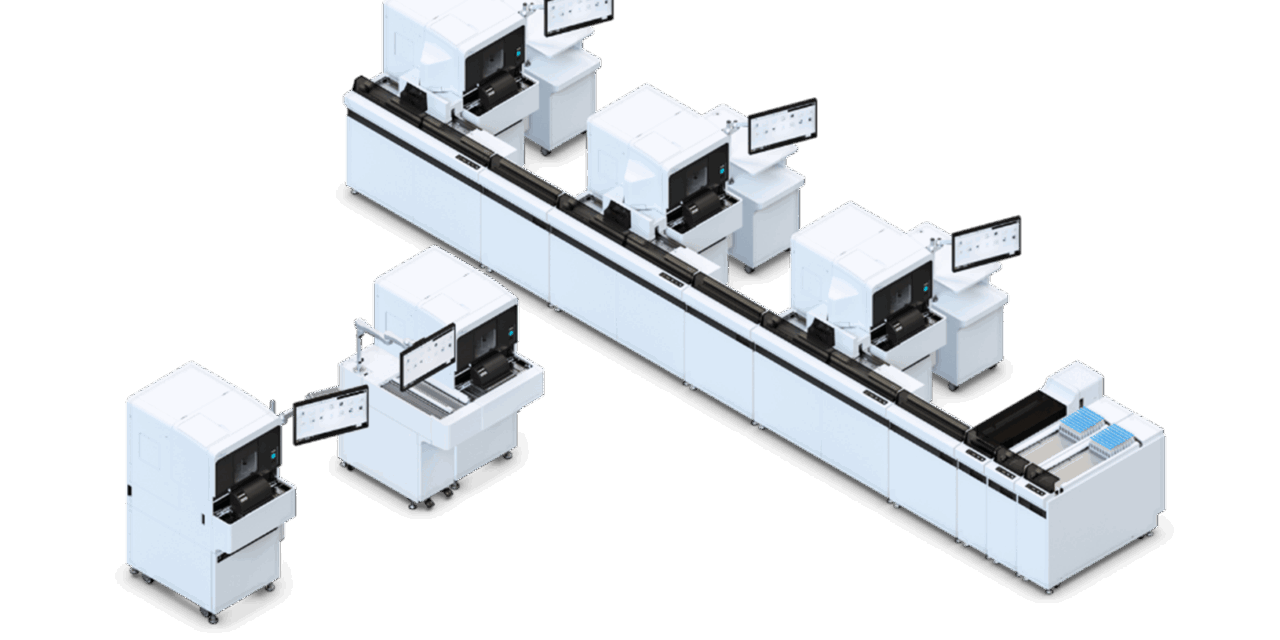
Mid-volume labs often expand their menus to include tests such as D-dimer, fibrinogen, and anti-Xa. These labs, which may include rural hospitals and smaller medical centers, typically need systems with more automation and flexibility. Keller points to platforms like the Sysmex CN-3000 as an example of systems designed to support both routine and expanded testing.
High-volume and reference laboratories support broader and more complex testing. These environments require higher-throughput systems with advanced automation and connectivity. Keller says configurations such as the Sysmex CN-6000, with options to scale to CN-9000 automated hemostasis solution, or alternatively, connect to total laboratory automation, are designed for these types of workflows.
Keller adds that labs should look beyond immediate testing needs when selecting a system.
“One of the most common oversights laboratories make when selecting a hemostasis system is focusing too heavily on immediate needs without fully accounting for long-term growth and operational impact,” he says.
Walkaway Capability Earns Its Place
Walkaway capability—the ability to load samples and step away from the analyzer—has become a practical necessity in lean staffing environments, Keller says. When personnel are limited, redirecting technologist time to other critical tasks without sacrificing turnaround time has real operational value.
Keller says Sysmex’s hemostasis systems incorporate features such as scheduled quality control, automated reflex testing, and preanalytical sample integrity checks to reduce manual steps and support more consistent workflows.
For high-volume labs looking to scale further, those capabilities can extend into broader automation. For labs already using Sysmex hematology systems, he says the CN-9000 configuration can create what he describes as “a familiar island of automation.”
Standardization Gains Traction
For health systems and multi-site laboratory networks, standardization is emerging as a key consideration during system selection, Keller says. Deploying the same analyzers, reagents, and workflows across multiple locations simplifies training, supports staff mobility between sites, and reduces inventory complexity, he says.
“Many organizations are prioritizing standardization across departments or multi-site networks to simplify training, improve staff flexibility, reduce inventory complexity, and enhance overall efficiency—especially in the face of ongoing staffing challenges,” Keller says.
Keller says this approach can help support more consistent workflows and reduce variability across sites—an increasingly important factor as health systems consolidate and centralize laboratory operations.
Maintenance and Uptime Matter More Than Ever
In a lean staffing environment, analyzer maintenance demands can have an outsized impact on daily operations. Keller says Sysmex’s CA-Series and CN-Series analyzers require less than three minutes of hands-on time for routine maintenance.
He adds that maintenance requirements and vendor service support can significantly affect day-to-day operations, particularly in lean staffing environments. He says labs should weigh vendor reliability and long-term service support alongside upfront cost and feature sets when evaluating systems.
Keller emphasizes the importance of taking a longer-term view when selecting a hemostasis system. He says decisions based only on current volume or short-term cost may overlook factors such as scalability, workflow integration, and the ability to adapt to changing staffing models or testing demands.
“Systems that are intuitive and consistent to operate help minimize training time and support reliable performance across users and shifts,” he says.
Photo caption: Sysmex CN-3000, CN-6000, CN-9000
Photo credit: Sysmex
Sponsored by

Medqor is committed to protecting and respecting your privacy. We may contact you about our products and services or share information with sponsorship partners, as well as other content that may be of interest to you. By submitting your information, you consent to us contacting you for this purpose in accordance with our privacy policy.
For further information, please check out our privacy policy here.