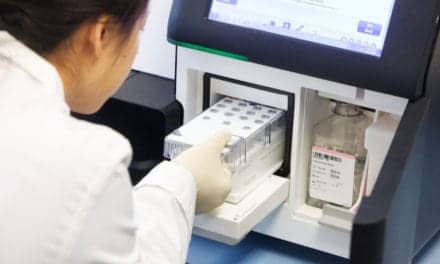

Johns Hopkins researchers use cell-free DNA fragmentation patterns and machine learning to identify chronic liver disease with high sensitivity.
Researchers at Johns Hopkins Kimmel Cancer Center have developed an artificial intelligence (AI)-based liquid biopsy test that can detect early liver fibrosis and cirrhosis using genome-wide cell-free DNA (cfDNA) fragmentation patterns.
The study, published March 4 in Science Translational Medicine, represents the first systematic application of fragmentome technology to chronic noncancer conditions, according to researchers. The research was supported in part by the National Institutes of Health.
“This builds directly on our earlier fragmentome work in cancer, but now using AI and genome-wide fragmentation profiles of cell-free DNA to focus on chronic diseases,” says Victor Velculescu, MD, PhD, co-director of the cancer genetics and epigenetics program at Johns Hopkins Kimmel Cancer Center and co-senior author of the study, in a release. “For many of these illnesses, early detection could make a profound difference, and liver fibrosis and cirrhosis are important examples.”
Analyzing Millions of DNA Fragments
The research team used whole-genome sequencing to analyze cfDNA fragmentomes from 1,576 people with liver disease and other comorbidities. In each analysis, roughly 40 million fragments spanning thousands of genomic regions were evaluated—more data than almost any other liquid biopsy test.
Machine-learning algorithms sorted through the large-scale data to identify disease-specific fragmentation signatures. The AI technology allowed researchers to develop a classifying system that detected early liver disease, advanced fibrosis, and cirrhosis with high sensitivity.
Unlike other liquid biopsy technologies that look for cancer-related gene mutations, the fragmentome analyzes how DNA pieces are cut, packaged, and distributed across the genome, making it applicable to diseases beyond cancer.
“The fact that we are not looking for individual mutations is what makes this study so powerful,” says first author Akshaya Annapragada, an MD/PhD student working in the Velculescu lab, in a release. “We are analyzing the entire fragmentome, which contains a tremendous amount of information about a person’s physiologic state.”
Addressing Clinical Need
An estimated 100 million people in the US have liver conditions that put them at high risk for cirrhosis and cancer. However, existing blood-based markers for fibrosis have limited sensitivity, particularly in early disease. Current blood testing does not detect early fibrosis and detects cirrhosis only about half the time.
Available imaging tools require specialized ultrasound or magnetic resonance equipment, which may not be accessible to all patients.
“Many individuals at risk don’t know they have liver disease,” Velculescu says in a release. “If we can intervene earlier—before fibrosis progresses to cirrhosis or cancer—the impact could be substantial.”
Liver fibrosis is reversible in its early stages, but if left undetected, it can progress to cirrhosis and ultimately increase the risk of liver cancer.
Disease-Specific Classifications
The research team also developed a fragmentation comorbidity index in a cohort of 570 individuals presenting with suspected serious illness. This index distinguished individuals with high versus low Charlson Comorbidity Index scores and independently predicted overall survival.
“The fragmentome can serve as a foundation for building different classifiers for different diseases, and importantly, these classifiers are disease-specific and do not cross-react,” Annapragada says in a release. “A liver fibrosis classifier is distinct from a cancer classifier.”
Beyond liver disease, the study detected fragmentomic signals associated with cardiovascular, inflammatory, and neurodegenerative conditions, suggesting broader applicability for future research.
The researchers note that the liver fibrosis assay described in the study is a prototype and not yet a clinical test. Next steps include further development and validation of the liver disease classifier as well as exploration of fragmentome signatures in additional chronic conditions.
The study origins trace back to a 2023 Cancer Discovery liver cancer fragmentome study, when the team observed individuals with fibrosis or cirrhosis whose fragmentation profiles showed subtle signals of disease-related changes.
Photo caption: AI blood-based cell-free DNA analyses detect early liver fibrosis and other diseases.
Photo credit: Carolyn Hruban
Recommended Reading
New Blood Test Score Identifies Hidden Alcohol-Related Liver Disease
HistoIndex Launches AI-Powered Fibrosis Assessment Test for MASH Diagnosis
Blood Test Detects Early-Stage Cancer Using DNA Methylation Patterns
Siemens’ Enhanced Liver Fibrosis Test Gets FDA Breakthrough Device Designation