MicroRNA analysis could enable earlier detection of both sporadic and familial cases of amyotrophic lateral sclerosis.
Scientists at Brain Chemistry Labs have developed a blood test that can identify amyotrophic lateral sclerosis (ALS) with 97% accuracy, potentially addressing a critical diagnostic challenge that leaves many patients waiting over a year for an accurate diagnosis.
The test, based on microRNA analysis, was validated using 788 patient blood samples, including 393 ALS patients and 395 age- and gender-matched healthy controls. The research was published in Molecular Neurobiology and presented at the International Symposium on ALS/MND in San Diego.
“For ALS, which typically results in loss of life within 2-5 years from the appearance of symptoms, a delay of one year in receiving a diagnosis is simply unacceptable,” says Dr Rachael Dunlop, lead author of the study and researcher at Brain Chemistry Labs, in a release. “This new test means that patients can initiate therapy early in the disease.”
Addressing Current Diagnostic Gaps
ALS affects approximately 1.6 per 100,000 adults, resulting in about 30,000 cases in the US at any given time. Despite its relatively low incidence, the disease presents significant diagnostic challenges, with up to 68% of ALS patients initially misdiagnosed. Patients often move between medical specialists before receiving evaluation by a neurologist experienced with ALS.
The microRNA-based test shows equal accuracy for both sporadic cases, which represent 90% of ALS patients with no known family history, and familial cases. Currently, no commercially available ALS tests can identify sporadic patients early in disease progression.
The test analyzes short genetic sequences that typically function to modulate protein synthesis, opening possibilities for diagnosing ALS at earlier stages when therapeutic interventions may be more effective.
Seeking Commercial Partnership
Brain Chemistry Labs, a not-for-profit organization based in Jackson Hole, Wyoming, has applied for a patent on the diagnostic test and is seeking partnerships with diagnostic companies for commercial development.
“We are seeking to identify a diagnostic firm to make this test commercially available,” says Dr Sandra Banack, who presented the results alongside Dr Dunlop at the recent symposium, in a release.
Dr Paul Alan Cox, executive director and co-founder of Brain Chemistry Labs, says the organization remains committed to developing diagnostics for ALS despite the disease’s smaller market compared to other neurodegenerative conditions.
“The ALS patient population is deeply underserved,” says Cox in a release. “That’s why as a not-for-profit organization we have doggedly pursued development of this new diagnostic test.”
The organization has built its approach on ethnobotanical studies of neurological diseases in small island villages, developing unique approaches to prevention, diagnosis, and treatment of progressive neurodegenerative diseases including Alzheimer’s, Parkinson’s, and ALS.
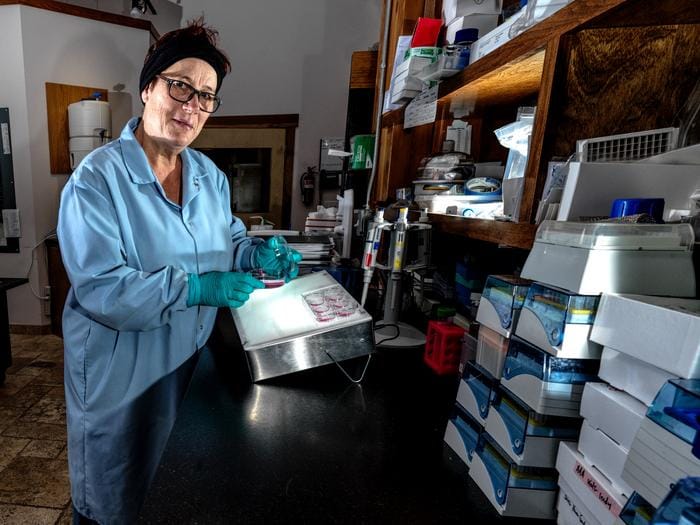
Photo caption: Dr Rachael Dunlop at Brain Chemistry Labs, Nov 20, 2025.
Photo credit: Paul Alan Cox