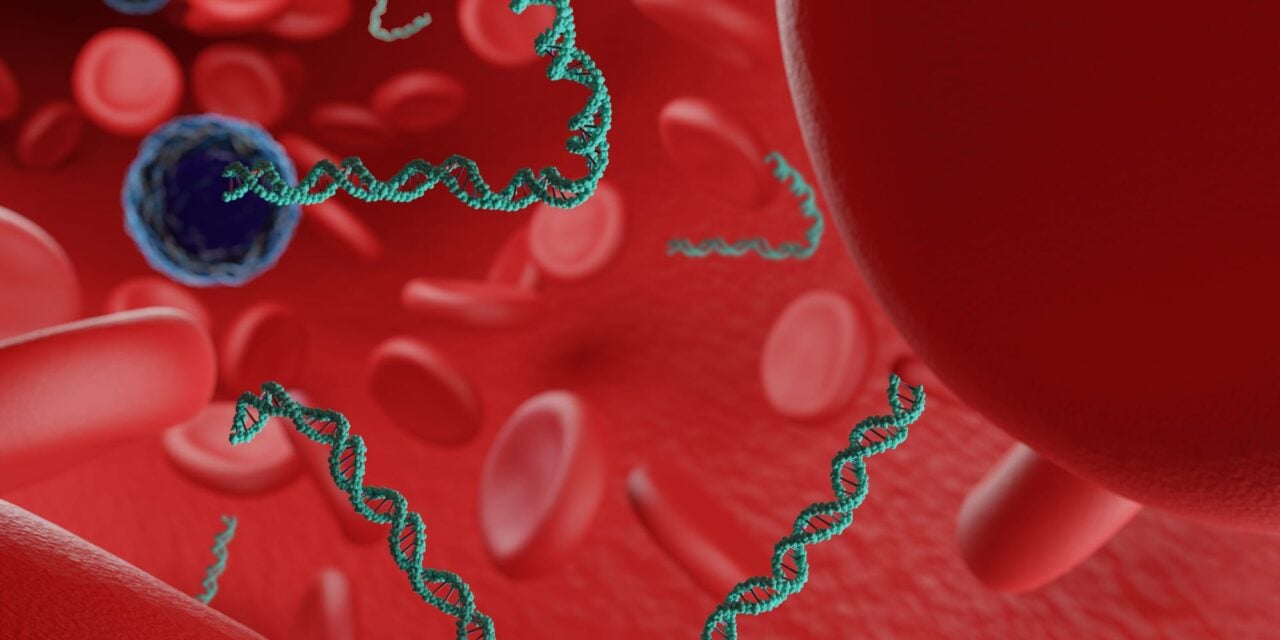
A study found that circulating tumor DNA testing detected residual disease signals missed by conventional prognostic measures in patients with breast cancer.
A new prospective study has found that circulating tumor DNA (ctDNA) testing using NeXT Personal, developed by Personalis, Inc, outperforms traditional prognostic markers—including pathologic complete response (pCR) status, nodal status, and tumor grade—in predicting outcomes for patients with breast cancer following neoadjuvant therapy (NAT).
The findings, published in the Journal of Clinical Oncology, stem from the Pathologic Response Evaluation and Detection In Circulating Tumor-DNA (PREDICT-DNA) study, which followed 227 patients with triple-negative and HER2+ breast cancer across more than 24 leading US cancer centers.
Key Findings
A central finding of the study was that ultrasensitive detection capabilities are critical for accurately monitoring patient response to NAT. According to the company, 55% of all ctDNA detections following NAT occurred at levels below 100 parts per million—signals that less sensitive assays would likely miss.
Additional highlights from the study include:
Detectable ctDNA post-NAT was associated with a 4 to 9 times higher likelihood of relapse.
In multivariate analyses, ctDNA status was the most significant independent prognostic signal, outperforming nodal status, tumor grade, and pCR status.
Patients who were ctDNA-negative post-NAT demonstrated excellent outcomes regardless of pCR status.
Patients with detectable ctDNA up to 12 months post-surgery were more than 100 times more likely to experience disease recurrence, according to the company.
“Many breast cancer patients receive neoadjuvant therapy as standard of care prior to surgery. The results of this study suggest that an ultrasensitive ctDNA assay like NeXT Personal could help patients better understand their response to neoadjuvant therapy, with the potential to help inform the need for additional therapy,” says Richard Chen, MD, chief medical officer and executive vice president of research and development at Personalis, in a release. “The publication of this data is important as we look to expand reimbursement and improve the tools used in neoadjuvant monitoring.”
Ultrasensitivity as a Clinical Differentiator
The NeXT Personal test detects ctDNA from a patient’s blood sample using a personalized approach that tracks up to approximately 1,800 tumor-specific variants unique to each patient’s tumor, according to Personalis. The company states that the test achieves detection sensitivity down to 1 to 3 parts per million.
“We partnered with Personalis because their technology offers a level of sensitivity down to 1 to 3 parts per million that allows for a higher cancer detection rate,” says Ben Park, MD, PhD, director of the Vanderbilt-Ingram Cancer Center, in a release. “The PREDICT-DNA results show that if a patient clears their ctDNA, their outcomes are excellent even if residual disease is found at surgery. Conversely, detectable ctDNA signals a very high risk. These insights allow us to more precisely risk-stratify breast cancer patients in future trials and clinical practice.”
ID 261106991 © Meletios Verras | Dreamstime.com