The company’s product, Slideflow Pro, is a scalable and modular platform designed to analyze digitized pathology slides and support the development of AI-based biomarkers that can help answer clinically important questions in cancer care.
Slideflow Labs, an artificial intelligence (AI) pathology company spun out of research conducted at the University of Chicago, is advancing the deployment of its cloud-based precision diagnostics platform across several institutions, including the University of Chicago.
The platform, Slideflow Pro, is designed to analyze digitized pathology slides and support the development of AI-based biomarkers to assist in cancer care. Alexander T Pearson, associate professor of medicine, has developed computer vision models to predict genomic alterations directly from histology slides of tumor biopsy samples. Research published in Nature Cancer showed that a single deep learning algorithm can be trained to predict molecular alterations, gene expression signatures, and molecular subtypes from routine slides.
“Our goal is to develop and deploy patient-facing biomarkers using histology samples that can answer questions in medicine that we can’t answer today,” says Sid Ramesh, co-founder and chief scientific officer of Slideflow Labs, in a release. “The first phase is to develop models and methods that are clinically impactful and can exceed the performance of highly utilized legacy tests.”
Scalability and Clinical Applications
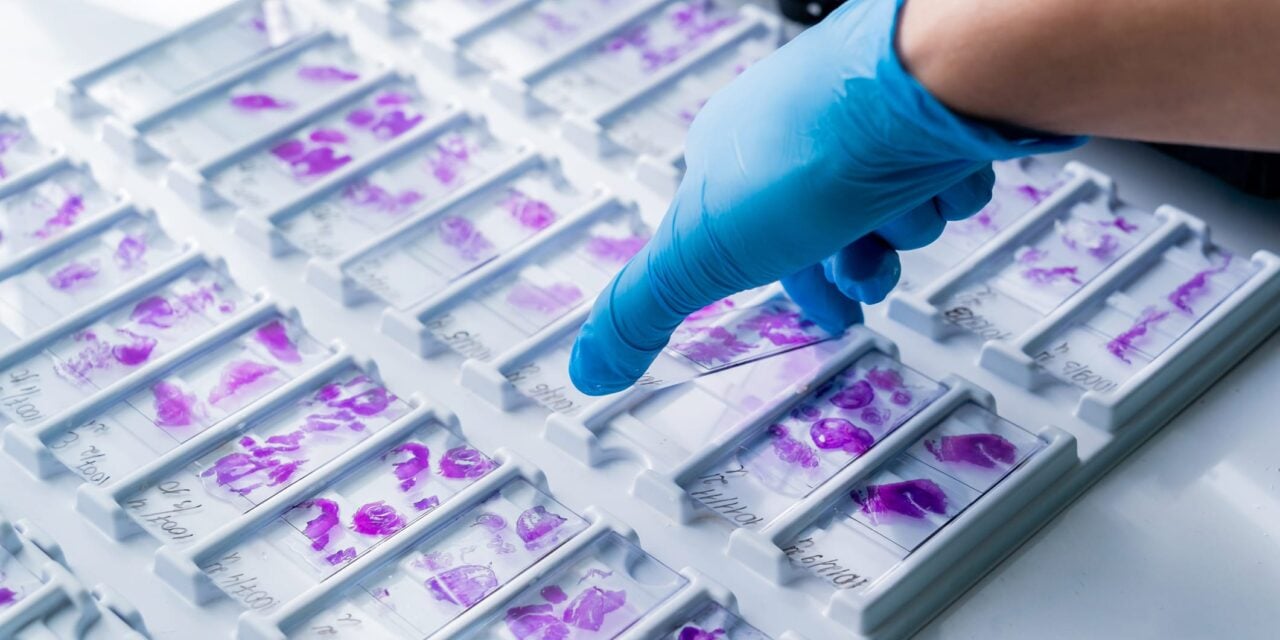
The platform is built to be scalable and modular, allowing for integration into various hospital settings. It works with multiple hardware options, allowing slides to be scanned, uploaded to the cloud, and analyzed in near real time, according to a release from the company. This approach is intended to reduce barriers for institutions that lack large-scale digital pathology infrastructure or machine-learning expertise.
“The goal is democratization; AI should not be something only a few major companies or institutions can use,” says Ramesh in a release. “Slideflow is built so physicians, pathologists, technicians, and health systems can all benefit from advanced AI capabilities in a practical and reliable way.”
The current clinical focus of the company is a breast cancer application. This tool is designed to predict molecular subtype and recurrence risk, which helps clinicians make decisions regarding adjuvant chemotherapy.
Commercialization Milestones
Slideflow Labs was recently selected for the 2026 Northwestern Medicine and Techstars Healthcare Accelerator, a three-month mentorship program. The company also won first place at the 2026 Edward L Kaplan, ’71, New Venture Challenge at the University of Chicago, receiving a $575,000 prize.
Future milestones for the company include expanding deployment, validating performance across institutions, and advancing regulatory pathways for clinical use. The team is also developing quality-control methods to ensure AI outputs are appropriate for patient-facing use.
“We are focused on making sure the platform performs safely and effectively in real-world clinical environments,” says Pearson in a release. “That means validating each model, meeting regulatory requirements, and building the infrastructure needed to scale across more institutions and more diagnostic applications.”
ID 240779282 © Roman Zaiets | Dreamstime.com