
Washington University researchers developed models using p-tau217 protein levels to estimate when patients will develop symptoms, potentially accelerating clinical trials.
Researchers at Washington University School of Medicine in St. Louis have developed a method to predict when someone is likely to develop Alzheimer’s disease symptoms using a single blood test, with accuracy within three to four years.
The study, published in Nature Medicine, demonstrates that blood-based models could accelerate clinical trials for preventive Alzheimer’s treatments and eventually help identify patients who would benefit from early intervention. The research analyzed data from 603 older adults across two independent Alzheimer’s research initiatives.
“Our work shows the feasibility of using blood tests, which are substantially cheaper and more accessible than brain imaging scans or spinal fluid tests, for predicting the onset of Alzheimer’s symptoms,” says Suzanne E. Schindler, MD, PhD, associate professor in the WashU Medicine Department of Neurology and senior author of the study, in a release.
More than 7 million Americans live with Alzheimer’s disease, with health and long-term care costs projected to reach nearly $400 billion in 2025, according to the Alzheimer’s Association.
P-tau217 Protein Serves as Predictive Clock
The models use levels of p-tau217 protein in blood plasma to estimate when patients will begin experiencing symptoms. This protein currently helps doctors diagnose Alzheimer’s in patients with cognitive impairment, though testing is not recommended for cognitively unimpaired individuals outside clinical trials.
Plasma p-tau217 correlates strongly with the accumulation of amyloid and tau proteins in the brain—the key hallmarks of Alzheimer’s disease that begin building up years before symptoms develop.
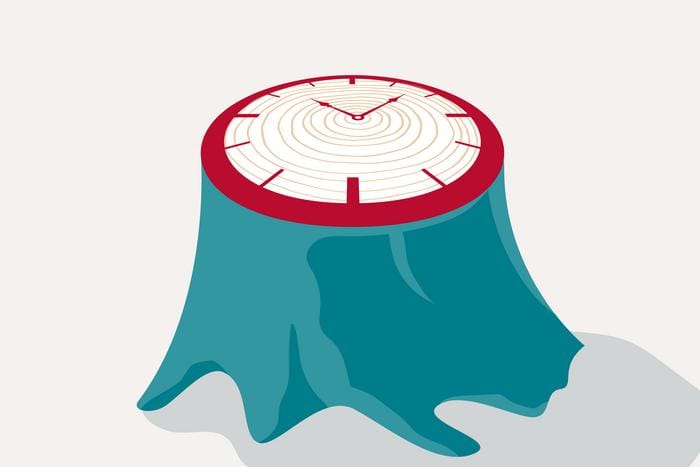
“Amyloid and tau levels are similar to tree rings—if we know how many rings a tree has, we know how many years old it is,” says lead author Kellen K. Petersen, PhD, instructor in neurology at WashU Medicine, in a release. “It turns out that amyloid and tau also accumulate in a consistent pattern, and the age they become positive strongly predicts when someone is going to develop Alzheimer’s symptoms.”
Age Affects Symptom Timeline
The research revealed that age influences the timeline between elevated p-tau217 levels and symptom onset. Younger individuals showed longer intervals between protein elevation and symptoms compared to older participants.
For example, patients with elevated p-tau217 at age 60 developed symptoms 20 years later, while those with elevated levels at age 80 developed symptoms within 11 years. This suggests younger brains may be more resilient to neurodegeneration.
The team tested their predictive model with multiple p-tau217-based diagnostic tests beyond PrecivityAD2 from C2N Diagnostics, including one cleared by the FDA, demonstrating the approach’s broad applicability.
Clinical Trial Applications
Researchers say the models could make clinical trials more efficient by identifying individuals likely to develop symptoms within specific timeframes, potentially reducing study duration and costs.
“In the near term, these models will accelerate our research and clinical trials,” says Schindler in a release. “Eventually, the goal is to be able to tell individual patients when they are likely to develop symptoms, which will help them and their doctors to develop a plan to prevent or slow symptoms.”
The researchers have made all code for model development publicly available and created a web-based application for other researchers to explore the clock models. Future research will incorporate additional blood biomarkers to refine symptom onset predictions.
The study was part of a Foundation for the National Institutes of Health Biomarkers Consortium project, with funding from AbbVie Inc., Alzheimer’s Association, Diagnostics Accelerator at the Alzheimer’s Drug Discovery Foundation, Biogen, Janssen Research & Development LLC, and Takeda Pharmaceutical Company Limited.
Photo caption: WashU Medicine researchers developed a model to estimate when Alzheimer’s disease symptoms will begin based on the accumulation of amyloid and tau proteins in the brain. These proteins build up predictably over time, like tree rings, providing scientists with a clock for Alzheimer’s symptoms.
Photo credit: Sara Moser/WashU Medicine