
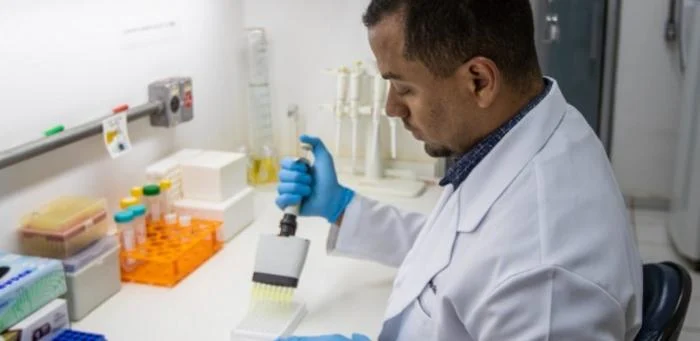
The diagnostic method combines a multi-antibody blood test with an artificial intelligence-supported questionnaire to identify cases before severe symptoms appear.
Researchers at the University of São Paulo (USP) have developed a diagnostic method for leprosy that combines a new blood test with an artificial intelligence-enhanced questionnaire. The approach aims to identify the disease in its initial stages, when traditional laboratory tests often fail due to low bacterial loads.
The study, published in BMC Infectious Diseases and supported by the São Paulo Research Foundation, utilized blood samples from a population survey in Brazil. Researchers analyzed the samples using a test that detects antibodies to the Mce1A antigen, a protein that facilitates the invasion of Mycobacterium leprae into human cells.
Unlike traditional anti-PGL-I tests that measure a single antibody class, this new method analyzes three classes: IgA, IgM, and IgG.
“The new test analyzes not just one, but three different classes of antibodies, which increases sensitivity and helps distinguish between exposure to the bacillus, active infection, and prior contact,” says Filipe Lima, a biomedical scientist and first author of the study, in a release.
Integrating Artificial Intelligence and Clinical Screening
The screening process utilizes two primary tools to improve diagnostic accuracy. The first is the Leprosy Suspicion Questionnaire, which consists of 14 questions regarding neurological signs and symptoms. This questionnaire is processed through an artificial intelligence system called MaLeSQs.
The second tool is the blood-based biomarker test for the Mce1A antigen. According to the researchers, the IgM antibody test for this antigen was the most effective laboratory component, identifying two-thirds of newly confirmed cases. When laboratory analysis was combined with the artificial intelligence tool, the method achieved 100% sensitivity in flagging suspected cases that were later confirmed through clinical consultation.
“The blood test doesn’t confirm a leprosy diagnosis on its own, but it’s an important tool for identifying who truly needs to be evaluated by a specialist,” says Lima in a release.
Implementation in the Clinical Laboratory
The researchers designed the test to be easily adopted by existing clinical laboratories. The techniques required are low-cost and similar to standard methods already in use.
“From a laboratory standpoint, these are very similar techniques—low-cost and easy to perform. Any clinical laboratory has the technical capacity to carry them out. In practice, the only thing that changes is the molecule being analyzed,” says Lima in a release.
Brazil currently ranks second globally in leprosy cases, following India. Early diagnosis remains a challenge because more than 60% of patients may test negative on standard smear tests during the initial phase of the disease.
The next phase of the project involves validating these tools for large-scale use within Brazil’s national public health system. Researchers are also studying specific segments of the Mce1A protein to further increase the accuracy of the diagnostic test.
Photo caption: Filipe Lima, first author of the article.
Photo credit: FMRP-USP
Related Reading:
TB Diagnostic Based on Digital Imagery Analysis Excels in Clinical Trial
AI-Assisted Digital Parasitology Workflow Shows Strong Agreement with Traditional Microscopy
CDC Lists Dozens of Infectious Disease Tests as Unavailable in Lab Directory