
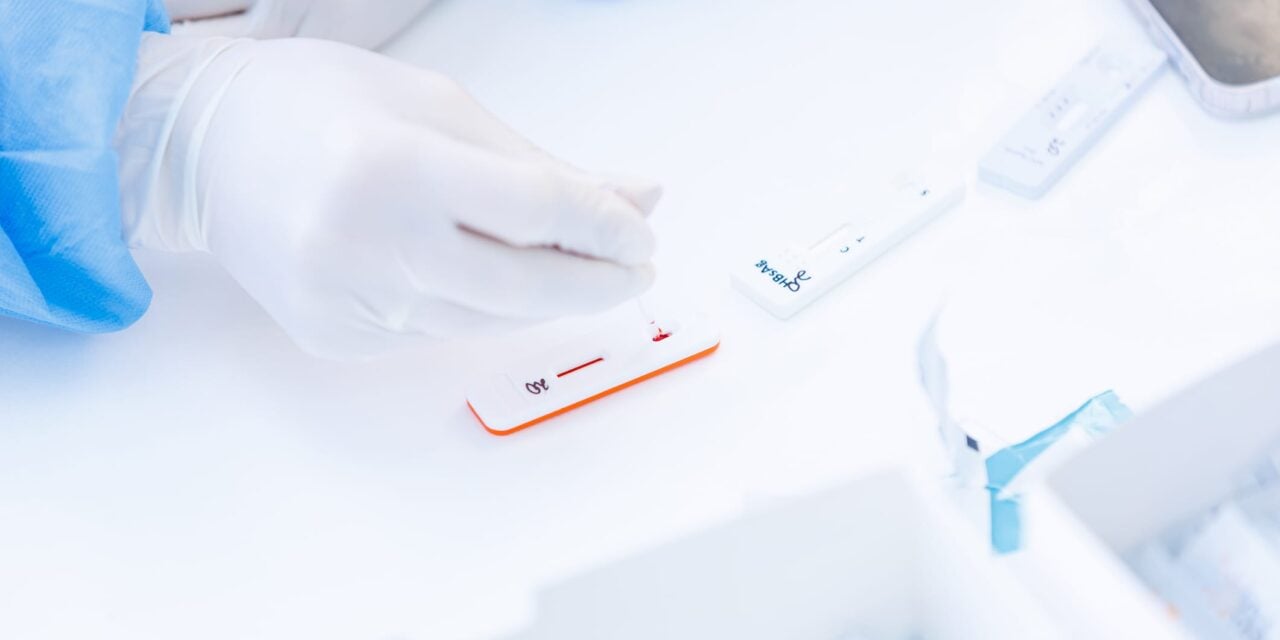
The document lays out what manufacturers should show regulators when validating in vitro diagnostics for emerging pathogens during a declared public health emergency.
The US Food and Drug Administration (FDA) has finalized guidance on how manufacturers should validate in vitro diagnostic tests for emerging pathogens when the secretary of health and human services has declared that circumstances justify emergency use authorizations under section 564 of the Federal Food, Drug, and Cosmetic Act. The document was issued Nov 10, 2026, following a draft released Jan 7, 2025.
The recommendations apply to test data submitted in a pre-EUA or an EUA request, or to tests offered under an applicable enforcement discretion policy. The FDA says the guidance is meant to help manufacturers prepare for future outbreaks. As with all FDA guidance, the recommendations are nonbinding.
Scope and Background
The guidance covers diagnostic tests, such as molecular or antigen tests, intended to detect a pathogen to aid in diagnosing a serious or life-threatening infectious disease. These tests may be designed for use in CLIA-certified laboratories, at point-of-care sites, or at home. Serology and antibody tests are outside its scope.
The FDA says the document responds to two independent assessments of its COVID-19 response. An October 2021 Booz Allen Hamilton report recommended that the agency develop a framework for validating diagnostic tests for emerging pathogens. A September 2022 report from the HHS Office of the Inspector General recommended a suite of EUA templates for future emergencies involving novel pathogens.
The agency notes that during COVID-19 and mpox, it issued enforcement discretion policies to expand testing capacity quickly. It stresses that any test, whether it receives an EUA or is offered under such a policy, must be appropriately validated, and that FDA may act against tests that lack appropriate validation.
Clinical Performance Recommendations
The guidance reflects the agency’s view that the “may be effective” standard for EUAs allows a lower level of evidence than the effectiveness standard used for product approvals.
For a viral nucleic acid test built on established, highly sensitive technology, at a stage of the outbreak when samples and comparators are available, at least 30 positive and 30 negative specimens from the intended use population are typically adequate. The agency cautions that smaller sample sets can mislead. It cites an EUA request for a COVID-19 molecular test that was validated with only 12 positive samples and showed perfect performance. After 12 more samples were evaluated, cumulative positive percent agreement fell to 71%, and the request was withdrawn.
Other clinical recommendations include:
- Preferred study design: A prospective, all-comers study in the intended use environment, with natural clinical specimens, is the ideal.
- Early-outbreak alternatives: When natural specimens are unavailable, archived specimens, and then contrived samples, may be acceptable. Synthetic material would likely be acceptable where pathogen stocks are unavailable, and it should closely mimic natural material. For an RNA virus, that means synthetic RNA rather than synthetic DNA in most cases.
- Conditions of authorization: Authorization based on contrived samples would likely require a post-authorization clinical performance evaluation with natural patient specimens once feasible.
- Data analysis: FDA generally recommends calculating positive and negative percent agreement against a highly sensitive comparator, with 95% confidence intervals using the Wilson Score method. For screening tests in asymptomatic individuals, a higher negative percent agreement has generally been expected.
Analytical Validation
On analytical sensitivity, the guidance defines the limit of detection as the lowest concentration consistently detected in 95% of replicates. It should be confirmed by testing at least 20 replicates at the preliminary limit. Simulated or artificial matrices, such as clean transport media spiked with mucin, human DNA, and HeLa cells, should not be used in limit of detection studies.
For inclusivity of molecular tests, FDA generally recommends 100% nucleotide sequence identity, evaluated through in silico analysis and supplemented by wet testing of circulating variants when available. The agency also recommends monthly inclusivity evaluation to account for new mutations. If analytical sensitivity drops more than 3-fold for a variant with a mutation, manufacturers should conduct a risk analysis and consider further mitigations.
On specimen stability, manufacturers that follow CDC’s stability specifications likely need no additional data. Otherwise, studies should include contrived positive specimens near the limit of detection and at least 10 negative specimens.
The guidance also covers safety, software, cybersecurity, and electromagnetic compatibility testing, along with usability and flex studies. It describes situations where additional work may be warranted, such as high-dose hook effect evaluation for antigen tests and carry-over testing for tests at risk of cross-contamination.
Change Protocols and Specific Test Types
Manufacturers seeking an EUA may develop a change protocol for future modifications, such as adding new instruments or collection devices. Changes made under a protocol included in the initial authorization are considered covered by it. The draft referred to predetermined change control plans, and FDA revised the term to avoid confusion with those plans, which apply only to marketing submissions.
The guidance includes additional considerations for three categories of tests:
- Multi-analyte panels: Each analyte should be validated, and manufacturers should address cross-reactivity and microbial interference between analytes.
- Home collection and home use tests: These should use only noninvasive collection methods that require no specialized training, with instructions limited to one to two pages at no higher than a 7th grade reading level. Validation of home collection kits should cover the entire workflow, from kit distribution through shipment to a CLIA-certified laboratory.
- Point-of-care tests: For tests intended for CLIA-waived settings, clinical evaluation should take place at one or two US sites with four to six operators who have no laboratory training. Performance near the limit of detection should be assessed by intended users with 10 contrived samples near the limit and 10 negatives per site, demonstrating at least 95% positive and negative agreement.
The FDA says it generally will work interactively with manufacturers during EUA review and that validation approaches may be adjusted as an outbreak evolves. Manufacturers can use a general IVD EUA request and pre-EUA template available on the agency’s website. Comments on the guidance can be submitted at any time under docket number FDA-2024-D-2707.
ID 470817291 © Denistkaci | Dreamstime.com