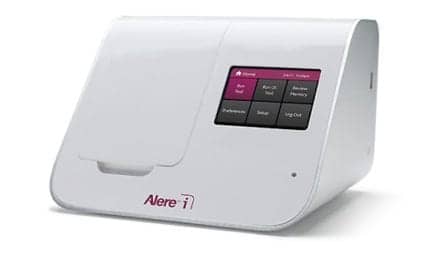
The rapid PCR test delivers results up to 75% faster than other point-of-care hepatitis C virus diagnostics, enabling same-day treatment initiation.
Northwestern University scientists have developed a rapid hepatitis C virus test that delivers results in 15 minutes, up to 75% faster than other rapid hepatitis C virus diagnostics currently available.
The test, described in research published Dec 10 in The Journal of Infectious Diseases, uses the diagnostic analyzer for specific hybridization (DASH) PCR platform originally developed at Northwestern for COVID-19 detection. The hepatitis C virus version uses whole blood specimens and demonstrated 100% agreement with commercial platforms in independent testing at Johns Hopkins University using 97 clinical specimens.
“We were able to develop a diagnostic test that can be performed at the point of care during a patient’s clinical visit, which could enable same-day diagnosis and treatment in support of [hepatitis C virus] elimination efforts,” says Sally McFall, corresponding author and co-director of the Center for Innovation in Global Health Technologies at Northwestern University McCormick School of Engineering, in a release.
Addressing Treatment Delays
Current hepatitis C diagnosis requires a two-step process. After an initial antibody test determines virus exposure, a PCR test detects viral RNA to confirm active infection. Healthcare workers typically send PCR samples to central laboratories, creating delays of days or weeks before patients receive results and return for treatment.
The FDA has approved one other point-of-care hepatitis C virus test, but results require 40 to 60 minutes—longer than typical clinical appointments, according to McFall.
Chronic hepatitis C infection affects an estimated 50 million people globally and causes approximately 242,000 deaths annually from resulting cirrhosis and liver cancer. While curable with an 8- to 12-week medication course, treatment rates remain low partially due to lack of affordable and accessible diagnostic tests.
Clinical Performance Data
The DASH hepatitis C virus test demonstrated excellent analytical and clinical performance, McFall says. The platform’s flexibility was demonstrated through its adaptation from nasal swab COVID-19 testing to whole blood hepatitis C virus detection.
Northwestern scientists shipped DASH analyzers and hepatitis C virus cartridges to Johns Hopkins University collaborators for independent validation using clinical specimens.
“This test could revolutionize [hepatitis C virus] care in the US and globally by dramatically improving diagnosis, accelerating treatment uptake, and enabling more people to be cured faster,” says Claudia Hawkins, MD, MPH, study co-author and director of the Havey Institute for Global Health’s Center for Global Communicable and Emerging Infectious Diseases at Northwestern, in a release. “By reducing delays and simplifying testing pathways, it has the potential to save millions of lives from the devastating liver-related complications of untreated HCV.”
The research could support the World Health Organization’s goal to eliminate hepatitis C virus by 2030.
The study received support from the National Cancer Institute, National Institute of Biomedical Imaging and Bioengineering, and National Institute of Allergy and Infectious Diseases. McFall was an inventor of the DASH technology and owns stock in Nuclein, LLC, which is commercializing the platform.
ID 177311668 © Designer491 | Dreamstime.com