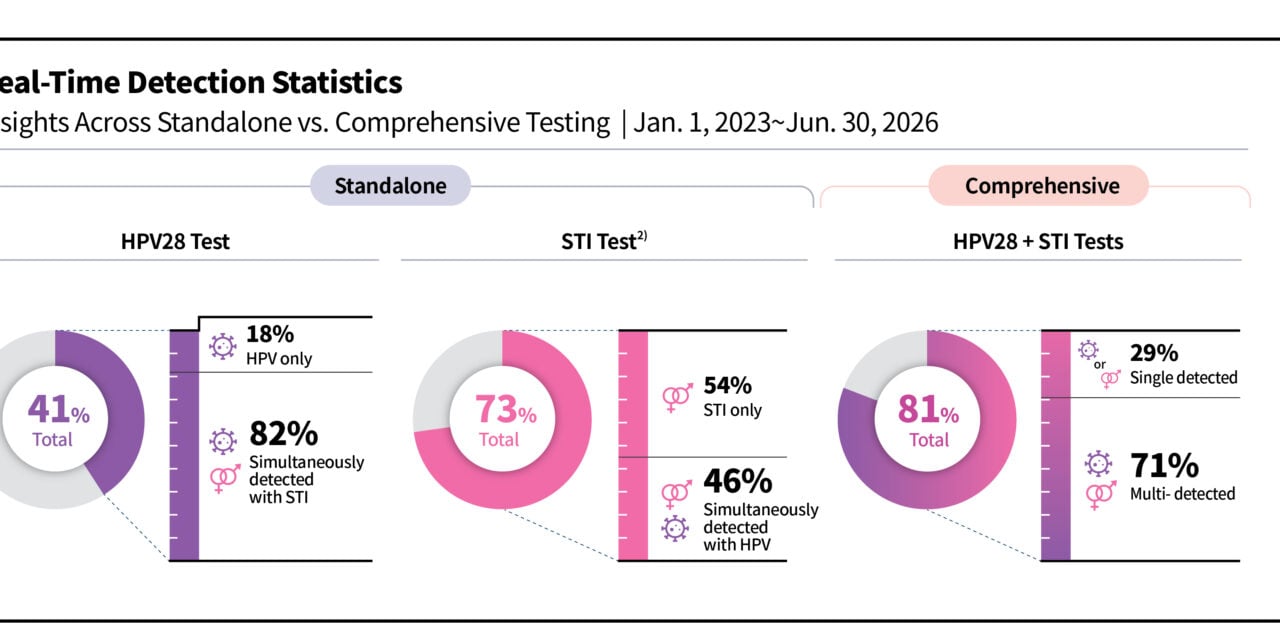
The approach uses syndromic PCR to detect sexually transmitted infections and human papillomavirus simultaneously.
Seegene Inc announced a syndromic polymerase chain reaction (PCR)-based testing approach for reproductive tract infections through the simultaneous detection of sexually transmitted infections and human papillomavirus (HPV). The company presented the details and future direction of its testing approach at the Association for Diagnostics & Laboratory Medicine meeting in Anaheim, California.
The announcement follows the launch of the Global Million Clinical Study on July 8. The initiative aims to generate scientific evidence for a “comprehensive” testing approach by accumulating real-world clinical data from healthcare institutions and evaluating the clinical utility of diagnostic strategies, according to a Seegene press release.
The company analyzed approximately 60,000 HPV and sexually transmitted infection co-testing results over a 42-month period using its STAgora data analytics platform. The internal analysis showed that sexually transmitted infection pathogens were detected in 82% of HPV-positive cases, while HPV was detected in 46% of sexually transmitted infection-positive cases. Additionally, co-detection of both types of pathogens was observed in 71% of positive cases identified through the dual testing approach.
These findings suggest potential applications for concurrent testing, including the identification of asymptomatic infections and supporting reproductive health evaluations during pregnancy planning or infertility assessments. Research indicates that sexually transmitted infections and vaginal dysbiosis may influence how HPV is acquired, persists, or is cleared by changing the cervical microbial environment. Clinical context, including patient age, symptoms, sexual history, exposure risk, and pregnancy plans, remains critical for interpreting results.
“Together, these findings provide a scientific rationale for further evaluating a comprehensive HPV and STI testing approach that assesses HPV risk alongside concurrent sexually transmitted and reproductive tract infections,” the company says in a release.
Seegene plans to continue accumulating clinical evidence through the Global Million Clinical Study.
Photo credit: Seegene Inc