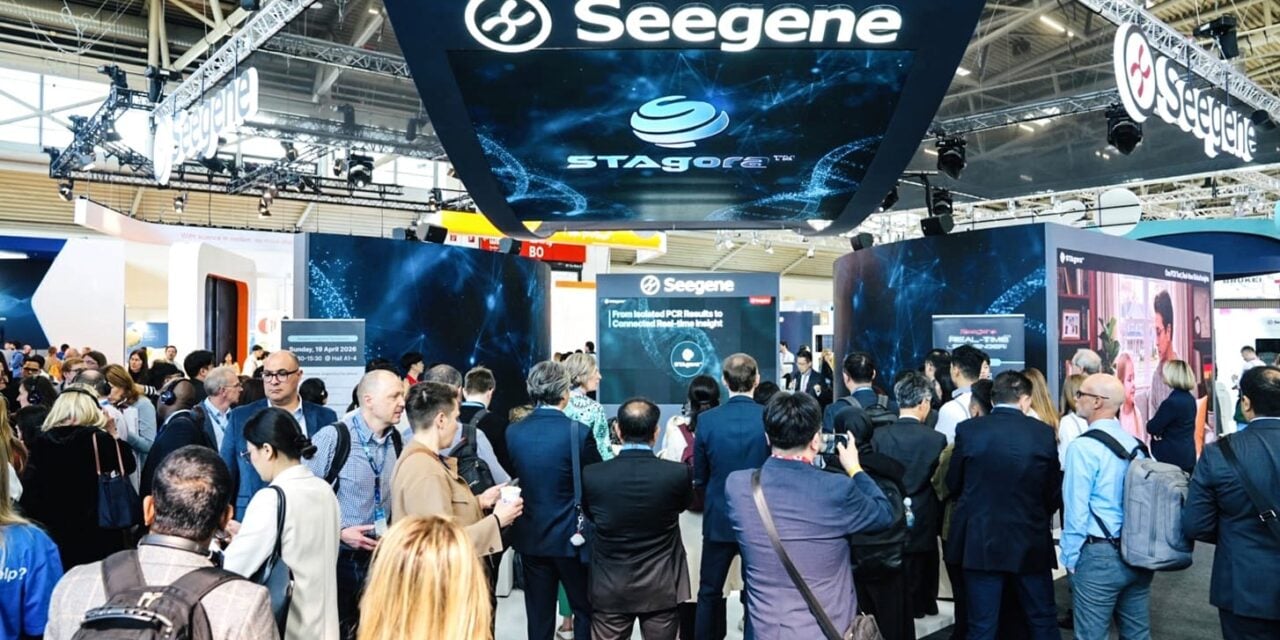
The STAgora platform and CURECA system aim to integrate real-time data analytics with automated laboratory workflows for infectious disease monitoring.
Seegene introduced STAgora, a real-time data analytics platform, along with an updated model of its automated PCR workflow, CURECA, at the European Society of Clinical Microbiology and Infectious Diseases (ESCMID) Global 2026 meeting in Munich, Germany.
The company highlights an approach that combines automated testing infrastructure with aggregated statistical data to support a better understanding of population-level health trends. The platform is designed to connect PCR testing data in real time to provide a view of infectious disease patterns based on aggregated statistics.
Real-Time Data Visualization
The STAgora platform utilizes aggregated testing data to provide real-time dashboards for laboratory professionals. These dashboards display comparative data between single-target and syndromic PCR testing, regional infection trends over time, pathogen-specific positivity rates, and co-infection patterns.
“STAgora is designed to connect PCR testing data generated around the world in real time and provide a clearer view of infectious disease trends based on aggregated statistics,” says Young Seag Baeg, new business officer at Seegene, in a release.
The platform allows for the analysis of aggregated test results alongside regional epidemiological data, which the company says supports broader analysis of infection patterns across different healthcare settings. This approach aligns with syndromic PCR testing, which enables the simultaneous detection of multiple pathogens.
Automated Laboratory Workflows
In addition to the data platform, Seegene presented an enhanced model of CURECA, its automated PCR workflow system. The system features a modular structure designed to integrate various stages of molecular testing into a single workflow.
The automation process includes:
Preprocessing,
Nucleic acid extraction,
Amplification, and
Result processing.
The system is intended for use in real laboratory environments to streamline the path from sample to result. Many attendees at the conference engaged in discussions regarding the system’s architecture and its applicability for future workflow automation.
“Interest in STAgora’s real-time data capabilities and practical applications was strong throughout the event,” says Daniel Shin, executive vice president and chief global sales and marketing officer at Seegene, in a release. “We plan to expand pilot programs and collaborative evaluations with healthcare and laboratory institutions to further evaluate the platform and support its potential future adoption.”
Seegene plans to further expand collaboration with clinical, academic, and research partners to support the implementation and validation of its data-driven diagnostics platform. The company previously introduced these technologies at other major international conferences, including the Association for Diagnostics and Laboratory Medicine.
Photo caption: Seegene introduces STAgora at the European Society of Clinical Microbiology and Infectious Diseases (ESCMID) Global 2026 meeting in Munich, Germany.
Photo credit: Seegene
Related Reading:
Seegene Unveils Fully Automated PCR System and Real-Time Analytics Platform
SPT Labtech and EMBL GeneCore Partner to Advance Automated Genomics Workflows
Rapid Molecular Test for Flu and COVID-19 on FINDER Platform Gets FDA Clearance and CLIA-Waiver
Seegene, Springer Nature Launch $600K Grant Program for UTI Antibiotic Resistance Research