The resource provides information on contamination sources, symptoms, and next steps to customers whose qPCR stool tests detect the intestinal parasite.
GI–MAP Test, a service that provides access to the GI-MAP comprehensive stool test in the United States and Canada, has launched a guidance resource for customers whose test result detects the intestinal parasite Cyclospora.
The resource is delivered via email alongside a customer’s test results only when Cyclospora is detected. It is not provided at the time of the initial test purchase. According to the company, the resource explains what Cyclospora is and what a detected result may mean, describes common sources of contamination to reduce repeat exposure risks, and identifies symptoms that may require urgent medical attention.
The company states that the resource does not provide medication instructions, diagnose conditions, or offer self-treatment pathways. Customers are directed to a licensed clinician for medical evaluation and treatment.
“A laboratory result is only useful if the person holding it knows what to do next,” says Madison Ordway, functional diagnostic nutrition practitioner, in a release. “The purpose of this resource is to help people arrive at their appointment prepared, and to explain why recovery can take time even after treatment is complete. It is not a replacement for a prescriber.”
The GI-MAP test is an at-home stool test analyzed by Diagnostic Solutions Laboratory, a Clinical Laboratory Improvement Amendments-certified laboratory in the United States. The panel uses quantitative real-time polymerase chain reaction DNA analysis to detect and measure more than 85 gut targets from a single sample. These targets include bacterial, parasitic, and viral pathogens, fungi and yeast, commensal bacteria, and markers of digestion, inflammation, and immune function.
Results are typically returned within 14 to 16 days after the laboratory receives the sample and are reviewed by a practitioner. Because qPCR identifies specific DNA sequences rather than relying on culture or microscopy, it can detect organisms that are present in small numbers, according to the company.
Public health authorities, including the US Centers for Disease Control and Prevention, describe Cyclospora as a microscopic single-celled parasite that infects the lining of the small intestine. Infection occurs through the consumption of contaminated food or water. Because symptoms such as watery diarrhea, loss of appetite, and fatigue resemble other digestive infections, laboratory testing is required for identification, and treatment requires prescription therapy ordered by a clinician.
The guidance resource is available to customers who ordered their test through GI MAP Test and received a result detecting the parasite. Due to state laboratory regulations, the test cannot be processed for residents of New York, New Jersey, or Rhode Island.
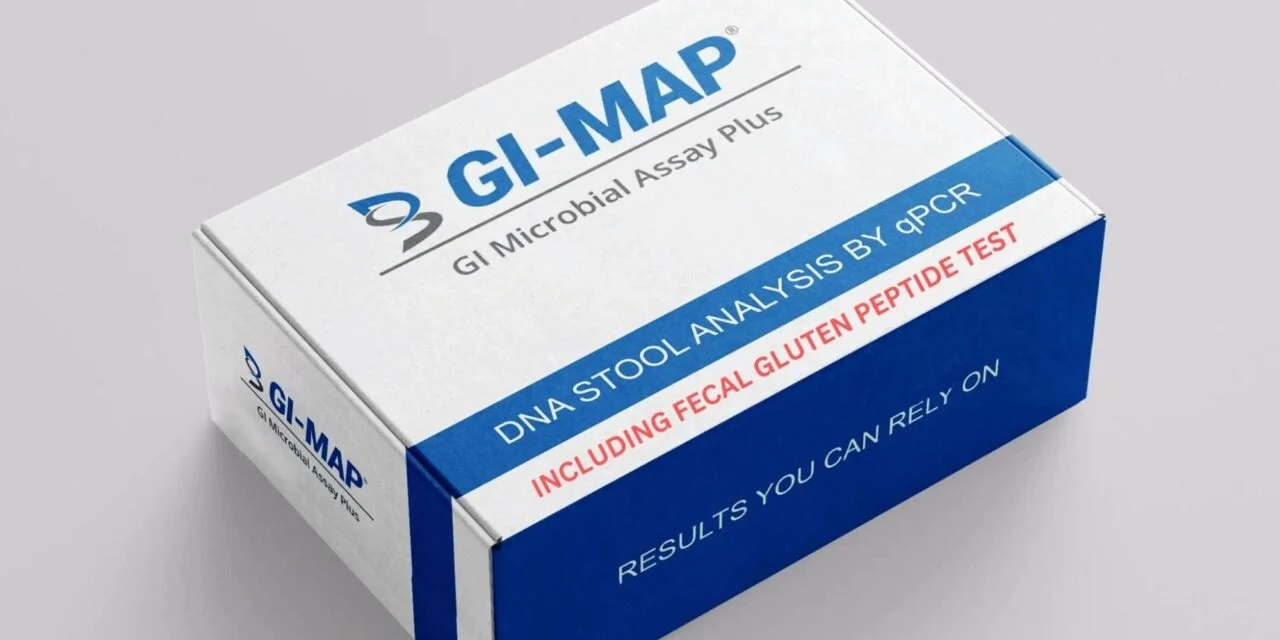
Photo caption: GI-MAP Test
Photo credit: GI-MAP