
As at-home HPV self-collection expands access to cervical cancer screening, laboratories will play a critical role in turning that opportunity into meaningful patient outcomes.
By Jeff Andrews, MD, obstetrician-gynecologist
Over the last six years we have seen a tremendous rise in global awareness, public policy, and diagnostic technology advancements that have transformed the landscape of HPV testing for cervical cancer screening and prevention.
Major momentum began in 2020 when the World Health Organization (WHO) launched its global strategy for cervical cancer elimination. With a few public and behind the scenes advancements in between, it was in 2024 when the Biden Cancer Moonshot brought together healthcare leaders, policy makers, researchers and more at the White House Forum on Advancing Cervical Cancer Prevention, Early Detection, and Survival. This forum event included the announcement of the SHIP Trial Network by the National Cancer Institute that would conduct research on determining if self-collection for HPV was a viable option.
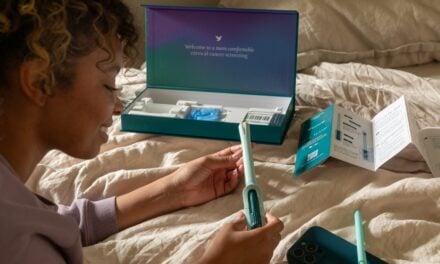
Soon after, these initiatives moved to regulatory action. In May of 2024 the FDA approved the BD Onclarity HPV Assay for self-collection in healthcare settings. Most recently, in April 2026, barriers to screening were overcome with FDA clearance of the Onclarity Self-Collection Kit, extending self-collection to home and private settings, allowing patients to collect a sample without stepping into a clinic.
Why are these advancements so groundbreaking? Access. Despite being one of the few preventable cancers with a clear path to elimination, every 90 seconds a woman dies of cervical cancer worldwide. In the US about 4,000 women die from it each year. Of particular importance, 60% of cervical cancer cases in the US occur among people who are unscreened or under-screened. 1
We are at the start of a new era in which cervical cancer screening can extend beyond the clinic, produce more personalized risk assessment, reach people who have historically gone under- and un-screened, and ultimately save more lives.
As we move full swing into this exciting era, it is important that we address what this means for the future of laboratories. The promise and potential of at-home self-collection for HPV depends heavily on what happens after samples reach their destination, the laboratory.
Laboratories need the technology and capacity to be able to process new and hopefully growing volumes of self-collected samples efficiently and return actionable results at scale.
It is too soon to know how significantly these new collection options will change screening participation. What we do know is that to be successful means more screening tests will be processed in laboratories. As regional and national rollouts of at-home HPV self-collection kits begin, laboratories have a critical role.
What Laboratories Should Be Planning for Today
There is a clear desire for a home or private settings HPV self-collection test option. Over 80% of women want a more comfortable, less invasive HPV testing option vs a pelvic exam. At-home self-collection has the potential to reach people who may have avoided or been unable to complete a traditional clinical exam for a multitude of barriers—such as discomfort, socioeconomic factors, scheduling challenges, limited access to care, or past trauma—helping to expand cervical cancer screening in under-screened populations.2,3
Bridging the information gap about at-home self-collection for HPV starts with wider education. Many women and people with a cervix don’t know there is an option to self-collect privately, often in under a minute, without stirrups or a speculum. Providing clinicians and patients with clear, accessible guidance on how self-collection works is essential to turning new testing options into higher screening rates.
As the work is done to close this gap, laboratories should evaluate capacity planning, optimize operational workflows, and leverage technology to improve efficiency. This allows laboratories to handle greater sample volumes while maintaining the quality and performance clinicians rely on. Laboratories and clinicians are partners in this movement. The opportunity to expand screening will only reach its full potential if the laboratory infrastructure behind it can support that growth.
Considerations for Extended Genotyping
The next consideration for laboratories is a clinical value proposition. Extended HPV genotyping, which is supported in the ASCCP Enduring Risk-Based Management Guidelines (2025), 4 allows for a more precise way to measure a patient’s risk for developing cervical precancer and cancer compared to a pooled, high-risk assay.5,6 Extended genotyping beyond types 16, 18, and, in some assays, 45, detects all the high-risk, carcinogenic genotypes of HPV by identifying six individual HPV genotypes and three pooled genotype groups, enabling personalized risk stratification. Results from extended genotyping can enable timely referral to a specialist in high-risk cases and avoid unnecessary follow-up testing in lower-risk patients.
This level of detail within the results can help clinicians make more informed decisions about patient management, enabling timely referral to a specialist for patients at higher risk while helping avoid unnecessary follow-up testing for those at lower risk. For laboratories, providing more actionable results upfront can also help reduce avoidable downstream colposcopy, shifting the follow-up to repeat laboratory testing of self-collected samples 12-months later.4
Automation Will Be Critical to Sustainable Growth
As testing volumes begin to scale-up, automation technology that supports end-to-end pre-analytical and analytical automation will be essential to managing workflow. Today there are platforms specifically designed to help laboratories overcome pain points like staffing shortages and economic shortages.
Automated, streamlined workflows have the potential to cut hands-on time and equipment footprint significantly. Delivering a load-ready sample to the lab avoids the manual task of swab-breaking and related injuries to staff. As a result, laboratories can manage greater volumes while maintaining quality, performance, and turnaround time, without scaling headcount and lab space at the same rate.7
That efficiency will matter if the promise of expanded access becomes a reality. The goal should not simply be to generate more tests, but to build laboratory workflows capable of absorbing greater demand without compromising results. For at-home self-collection for HPV to become a sustainable part of cervical cancer screening, laboratories need systems that can grow with demand rather than become a bottleneck.
Delivering on Access and Opportunity
Over the next year we will continue to see momentum toward expanded access to care.
In January 2027, the updated Health Resources and Services Administration (HRSA) guidelines will take effect, which emphasize zero out-of-pocket coverage for preventive services, effectively removing financial barriers and expanding patient access to self-collection. We will also see continued regional and national program rollouts of at-home self-collection HPV kits.
The combination of these factors put laboratories at the very center of this exciting time of change. A swab collected at-home is only a specimen until it yields a result. Turning that swab into a meaningful clinical outcome requires a high-performing laboratory to process it efficiently, determine risk accurately, and deliver actionable data back to the ordering clinician.
Laboratories are vital partners in the global push to eliminate cervical cancer. Public policy, coverage mandates, and at-home self-collection tools can bring historically under and unscreened populations opportunity, while laboratories hold the key to ensuring meaningful patient outcomes.
About the author: Jeff Andrews is vice president, medical affairs at Waters Advanced Diagnostics. He is a practicing obstetrician-gynecologist who has performed cervical cancer screenings for decades.
References
- Scarinci IC, Garcia FA, Kobetz E, Partridge EE, Brandt HM et al. (2010) Cervical cancer prevention: new tools and old barriers. Cancer 116 (11): 2531-2542.
- Sk Abd Razak R, Amsah N, Heng PP, Jane Ling MY, Mohtar N, Masdor NA, Othman R, Hod R, Idris IB. Barriers and facilitators of cervical cancer screening among female healthcare professionals: a systematic review. BMC Public Health. 2026. doi:10.1186/s12889-026-27501-2.
- Farajimakin O. Barriers to Cervical Cancer Screening: A Systematic Review. Cureus. 2024;16(7):e65555. doi:10.7759/cureus.65555.
- Massad LS, Clarke MA, Perkins RB, et al. Applying results of extended genotyping to management of positive cervicovaginal human papillomavirus test results: Enduring guidelines. J Low Genit Tract Dis. 2025;29(2):134-43.
- Perkins RB, Guido RS, Castle PE, et al. 2019 ASCCP Risk-based management consensus guidelines for abnormal cervical cancer screening tests and cancer precursors. J Low Genit Tract Dis. 2020;24(2):102-31.
- Demarco M, Hyun N, Carter-Pokras O, et al. A study of type-specific HPV natural history and implications for contemporary cervical cancer screening programs. EClinicalMedicine. 2020;22:100293. Published 2020 Apr 25.
- COR PX-GX System_User Manual_L011486(07)_2020-10 (v0.1).