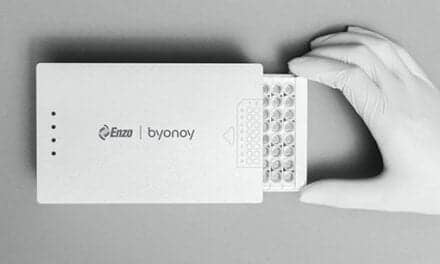

A 12-week study involving a Premier League soccer club will use twice-weekly blood samples to examine whether plasma proteomics can identify signals associated with soft tissue injuries.
English Premier League club Nottingham Forest is partnering with Glasgow-based biotechnology company Entourage on a 12-week study to explore whether a blood test can show that players are becoming more susceptible to injury. The project is supported by Scottish Enterprise.
The study will initially involve the club’s 25-player men’s B-Team squad. It is described as the first high-frequency plasma proteomic trial of its kind involving a professional club in any sport.
Players in the proof-of-concept trial will have blood samples analyzed twice a week. This will allow researchers to track thousands of proteins and build a picture of how individuals respond to training, matches, injury, and recovery. The findings will be examined alongside the club’s existing training, workload, and clinical information to determine whether specific patterns could indicate increased risk of non-contact soft tissue injuries.
“One of the questions we are trying to answer is whether there are signals in the blood that could indicate an increased risk of a non-contact injury,” says Patrick Gunning, CEO and cofounder of Entourage, in a release. “That is something we need to investigate through the study.”
Targeting Soft Tissue Injuries
The study focuses on soft tissue injuries in part because of the burden hamstring problems place on elite teams. UEFA research tracking 54 clubs across 20 European countries found that hamstring injuries accounted for one in five days lost to injury in 2021/22, double their share two decades earlier. Separate research across English professional football found a median absence of 19 days for hamstring injuries.
Researchers will follow changes in blood markers associated with processes including inflammation and immune function. They also will examine protein signals associated with senescent cells, which have stopped dividing but remain in the body and can contribute to inflammation. The team will explore how these signals change after injury and during recovery.
The study also will help develop a reference profile, or baseline, for professional footballers, building on Entourage’s existing dataset covering thousands of people aged 18 to 96.
“A professional athlete’s profile can look different from that of someone in the general population,” says Gunning, in a release. “We need to understand what is normal for those athletes so that we have something meaningful against which to compare changes.”
Possible Applications in Recovery and Player Assessment
If the tests prove able to predict or prevent injuries, Gunning sees another potential use: understanding why players exposed to similar workloads need different recovery approaches.
“If one player’s inflammation remains much higher than another’s after a match, that could help the medical team consider whether they need a different recovery approach,” says Gunning, in a release.
Entourage also suggests the technology could lead to a “Moneyball for biodata,” with biological information eventually complementing performance statistics when clubs assess players’ long-term availability and transfer value.
Dimitrios Kalogiannidis, head of medical at Nottingham Forest, says in a release that the club is “deeply committed to evidence-led player care.” He adds that building a more robust biological profile of each player is important, and that the study “could benefit Nottingham Forest and the wider game for years to come.”
Dr Mark Lindsay, cofounder of Entourage, says in a release: “We’re moving soft-tissue care from estimation to measurement.”
Implications Beyond Sport
Entourage says the approach could have uses outside football. Gunning says advances in instruments and computing, including artificial intelligence, have made protein analysis faster and less expensive.
“There are already published examples of how plasma proteomics could help identify conditions including cardiovascular disease, Alzheimer’s and type 2 diabetes,” says Gunning, in a release.
Entourage is a University of Glasgow spin-out. It launched with a $5 million pre-seed raise and operates its research center at Kelvin Campus in Glasgow. The company will report its findings to Forest at the end of the study.
Photo caption: Blood samples ready for analysis at the Entourage lab.
Photo credit: Elaine Livingstone