

With the first FDA-cleared Alzheimer’s blood tests and a clinical practice guideline arriving since May 2025, laboratories are evaluating how blood-based biomarkers fit into their diagnostic protocols.
By Alyx Arnett
Over the past year, Alzheimer’s blood testing has moved from research into clinical practice. Since May 2025, the field has seen its first US Food and Drug Administration (FDA)-cleared blood test and its first clinical practice guideline for blood-based biomarkers.
These milestones come as anti-amyloid therapies such as Leqembi (lecanemab) and Kisunla (donanemab) are increasing demand for accessible methods to confirm amyloid pathology, a role that has traditionally relied on PET imaging and cerebrospinal fluid (CSF) testing.
Now, laboratories are making decisions about which biomarkers to offer and how blood-based testing fits into the diagnostic workup.
“We’re at a bit of an inflection point right now,” says Mike Banville, CEO and president of ALZpath, a developer of antibodies used in blood-based tests for Alzheimer’s disease. “It’s a shift from a lot of good research work going on around Alzheimer’s to diagnostics and some of the treatment solutions in a clinical setting.”
How Blood Testing Could Reshape the Diagnostic Workup
Blood-based biomarkers may help determine which patients need additional testing—and which do not—potentially changing how clinicians use CSF testing, PET imaging, and specialty referrals.
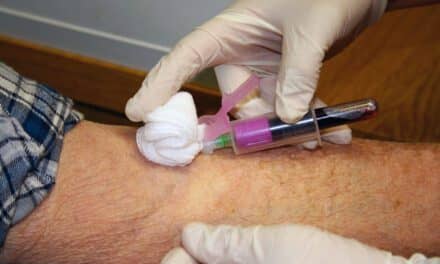
CSF biomarkers were the first Alzheimer’s biomarkers to become clinically available, but lumbar puncture limits access because it is invasive and requires specialized collection, says Alicia Algeciras-Schimnich, PhD, professor of laboratory medicine and pathology at Mayo Clinic. Blood testing, she says, offers a simpler first step and can be performed through routine phlebotomy,
Still, she says CSF testing will continue to play an important role, particularly when blood test results are inconclusive or when underlying conditions complicate interpretation.
“There are some patients that maybe a blood biomarker is not the right test to perform,” she says, pointing to patients with advanced chronic kidney disease, where some blood-based biomarkers may be associated with false-positive results.
Blood testing may also reduce the number of patients referred for amyloid PET imaging. Michael Racke, MD, medical director of neurology at Quest Diagnostics, points to research he co-authored suggesting that a blood test measuring amyloid beta 42 and 40 proteins (Aβ42/40) could reduce PET scan evaluations by about 40% by helping rule out Alzheimer’s disease as the cause of mild cognitive impairment.1
“Ruling out Alzheimer’s disease can prompt investigation of non-Alzheimer’s disease causes of mild cognitive impairment or dementia. When patients receive the right care at the right time, unnecessary costs may be reduced,” Racke says.
In a separate cost-effectiveness analysis, Racke and colleagues found that a blood-based biomarker triage strategy identified 98.2% of patients with amyloid pathology while reducing the average cost of diagnosis compared with PET imaging alone.² The authors concluded that blood-based testing could help make more efficient use of limited PET imaging capacity.
Banville says specialist shortages can create lengthy delays for patients with memory concerns. He frequently hears from patients who wait six to 12 months for a neurology appointment. A blood test ordered in primary care, he says, could help identify patients with likely amyloid pathology earlier and prioritize them for specialist evaluation.
“The idea here is to speed the process,” Banville says. “That’s where the blood test at primary care can really play a key role.”
Building on Amyloid and Tau
Phosphorylated tau biomarkers have become a major focus in Alzheimer’s blood testing. The first FDA-cleared Alzheimer’s blood test, Fujirebio’s Lumipulse G pTau217/β-Amyloid 1-42 Plasma Ratio, includes p-tau217, while Roche’s FDA-cleared Elecsys test for primary care measures p-tau181. In May 2026, Roche also received CE mark approval for a pTau217 assay.
Banville says p-tau217 has drawn particular interest because studies have shown performance comparable to amyloid PET imaging in some settings, and a substantial body of evidence has accumulated around it.
“For a blood-based biomarker to get any kind of traction, it’s got to be at least as good,” Banville says, referring to incumbent diagnostic approaches such as PET imaging.
Racke says amyloid and tau remain the foundation of many current testing strategies, providing “complementary insights into Alzheimer’s status.” While plasma Aβ42/40 may detect amyloid pathology earlier in the disease process, p-tau217 appears to perform better in identifying patients near the onset of cognitive impairment who have a positive amyloid PET scan, he says. As a result, Quest has focused on combining the biomarkers, which Racke says provides more reliable results than using either biomarker on its own.
While amyloid and tau remain central to Alzheimer’s testing, researchers are evaluating whether additional biomarkers can improve diagnostic performance and provide a more complete picture of disease biology. Racke points to neurofilament light chain (NfL), glial fibrillary acidic protein (GFAP), and alpha-synuclein as areas of ongoing interest. However, he notes that NfL and GFAP are associated with a range of neurological conditions and are not specific to Alzheimer’s disease.
That broader biological picture is one reason some developers are pursuing multi-analyte approaches. In February 2026, Quanterix submitted a 510(k) application to the FDA for a blood test that combines five biomarkers: p-tau217, Aβ42, Aβ40, GFAP, and NfL. The test is designed to assess multiple aspects of the disease, including amyloid pathology, tau pathology, neuroinflammation, and axonal damage.
“By moving to a multi-analyte algorithmic approach…we shift the diagnostic paradigm from a simple yes/no binary to a more comprehensive, multidimensional profile,” says Geoffrey Albrecht, senior vice president and general manager of diagnostics at Quanterix.
Albrecht says markers such as GFAP and NfL may be particularly useful in borderline cases. A patient who is amyloid-negative but has elevated NfL, for example, may warrant evaluation for other neurodegenerative conditions, such as frontotemporal dementia or vascular dementia.
Algeciras-Schimnich also expects the field to expand beyond today’s leading biomarkers. As more therapies become available, she says researchers are evaluating biomarkers that could help monitor treatment response, identify treatment-related complications, and distinguish Alzheimer’s disease from other causes of cognitive decline.
“We need many more biomarkers,” she says.
A Performance-Based Framework
One of the most significant contributions of the Alzheimer’s Association guideline was establishing performance thresholds for blood-based biomarkers based on their intended clinical use.³ Rather than recommending specific biomarkers, the guideline says triage tests should achieve at least 90% sensitivity and 75% specificity, while confirmatory tests should achieve at least 90% sensitivity and 90% specificity.
Algeciras-Schimnich says that places the emphasis on assay performance. “If I want to offer a confirmatory test, from all of the biomarkers that are available—Aβ42, p-tau181, p-tau217—which of those will provide me with that diagnostic performance that I need?” she says.
Quanterix’s Albrecht says the guideline also established a common benchmark for developers. He notes that the 90% sensitivity and 90% specificity threshold was intended to identify tests that could potentially serve as stand-alone confirmatory tools rather than requiring follow-up PET imaging or CSF testing.
Beyond Analytical Performance
Test performance, however, is only part of the equation. Racke says blood biomarker results still need to be interpreted in the context of the individual patient.
“Test performance is highly dependent on the patient being evaluated and what the probability is that they have a ‘true positive’ versus a ‘false positive’ result,” he says.
A positive result in a 75-year-old patient with memory concerns may carry a much higher positive predictive value than the same result in a 55-year-old with subjective cognitive complaints, he says. Racke also notes that comorbidities such as kidney disease can affect biomarker levels in blood.
Specimen handling is also important. Because many Alzheimer’s biomarkers circulate at very low concentrations, Racke says, “Laboratories must enforce strict pre-analytical protocols because amyloid peptides can stick to standard plastic collection tubes, potentially lowering values artificially.”
Joe Marino, vice president of global scientific services at LabConnect, says preanalytical variability remains one of the biggest challenges in large Alzheimer’s biomarker studies, particularly when it comes to processing time.
“Biomarkers like Aβ degrade quickly if delayed, impacting accuracy,” he says. Differences in anticoagulants, handling, storage, and protocol compliance across sites can also affect reproducibility.
Albrecht says laboratories should also plan for cold-chain requirements, time-to-centrifugation expectations, and storage conditions. “A deviation that may be trivial for a standard metabolic panel can degrade a plasma p-tau or amyloid signal, creating analytical noise,” he says.
Even as blood-based Alzheimer’s testing becomes more widely available, Algeciras-Schimnich says laboratories may underestimate how much remains to be learned about interferences and comorbidities. While the immunoassay technologies themselves are well established, she says interpretation can become more complicated when results do not align with a patient’s clinical presentation.
“It’s the understanding of other factors that can affect the interpretation of the biomarker and also helping clinicians understand how to interpret these biomarkers if they get an unexpected result,” she says.
Scaling Alzheimer’s Testing
A key factor in broader adoption, Banville says, is the ability to run Alzheimer’s biomarker assays on high-throughput laboratory instruments that are already widely used in hospital and reference laboratories. He says ALZpath has licensed its p-tau217 antibody nonexclusively to diagnostics companies including Roche Diagnostics, Beckman Coulter, and Siemens Healthineers because laboratories are more likely to adopt tests that run on existing immunoassay systems.
“If you think about just the workflow in a hospital lab, they’re going to run tests on the immunoassay machine they have there,” he says. “They’re not going to go buy a separate machine just for this test.”
As testing volumes grow, that compatibility with existing automated platforms could make it easier for laboratories to scale Alzheimer’s testing without major changes to infrastructure. Marino says the automation component will be critical.
“Supporting large-scale screening and routine clinical adoption requires high-throughput, standardized processes,” he says. “Automation improves consistency, reduces manual variability, and enables faster turnaround times.”
Standardization will remain important as more assays enter the market. Albrecht says industry groups are working toward common reference materials and interpretation frameworks, but full harmonization may take time because vendors use different assay architectures and antibody clones. Marino adds that laboratories will need to understand each assay’s validated cutoffs, intended use, and performance characteristics as interpretation frameworks continue to evolve.
But scaling Alzheimer’s testing involves more than laboratory capacity. Banville says clinicians need confidence in when to order the tests, how to interpret the results, and how to use the information in patient care.
“We all need to come together to provide the right education to the clinicians and also the education the clinicians can provide to the patient,” Banville says.
Albrecht says workflow integration and clinical decision support will also become increasingly important as testing moves beyond specialists.
“For clinical labs, this means delivering immediate, actionable results that feed directly into clinical decision-support infrastructure, rather than an array of individual test outputs that place additional interpretive burden on already overstretched clinicians,” he says.
Looking Beyond Today’s Use Cases
The first clinical use case for Alzheimer’s blood biomarkers remains the diagnostic evaluation of symptomatic patients, according to Algeciras-Schimnich. But Mayo Clinic researchers are already evaluating whether blood biomarkers could be used to monitor response to anti-amyloid therapies and identify Alzheimer’s pathology before symptoms appear.
Patients receiving anti-amyloid therapy are currently monitored with amyloid PET imaging or CSF testing, often 18 to 24 months after treatment begins. Algeciras-Schimnich says blood biomarkers could eventually provide a less invasive alternative if changes in plasma biomarkers correlate with amyloid clearance.
She says clinical trials have shown population-level decreases in biomarkers such as p-tau181 and p-tau217 following treatment, but researchers are still evaluating whether those changes can reliably monitor response in individual patients. As of now, “We still don’t have enough data to support their use,” Algeciras-Schimnich says.
Albrecht adds that markers such as p-tau, GFAP, and NfL may eventually help monitor therapeutic efficacy or disease slowing. He also notes that biomarkers are increasingly important for identifying patients whose biology and disease stage make them appropriate candidates for specific therapies.
Algeciras-Schimnich says Mayo Clinic researchers are studying whether blood biomarkers can help identify which individuals with Alzheimer’s pathology are most likely to develop symptoms. Not everyone with Alzheimer’s-related changes in the brain develops symptoms, she says, and when symptoms do occur, they may not appear for 15 to 20 years.
That uncertainty raises questions about who should be tested and when. In a recent study, Algeciras-Schimnich and colleagues examined age-related breakpoints for Alzheimer’s biomarkers and cognition and found that biomarker changes were most pronounced from around age 60 through the early 70s.4
The findings may help inform when biomarker testing is most useful. “We don’t want to test people too early or people too late,” she says.
Banville says earlier testing could become more important if preventive therapies emerge, but he emphasizes that current use remains focused on symptomatic patients “and getting them onto some of the treatments that are available today,” he says.
Albrecht also urges caution about testing asymptomatic individuals. “Uncovering latent pathology in an asymptomatic patient today, without an FDA-approved therapeutic for that population, risks creating psychological distress and clinical ambiguity without a clear path forward,” he says.
What Labs Should Watch Next
Even with two FDA-cleared tests now available, stakeholders say many important questions remain about where Alzheimer’s blood testing goes next.
Algeciras-Schimnich says one area to watch is biomarkers that help monitor treatment-related complications, including amyloid-related imaging abnormalities. She also expects demand for biomarkers that help distinguish Alzheimer’s disease from other dementias or identify co-pathologies.
Racke says the biggest future change may come if ongoing studies show that anti-amyloid therapy in asymptomatic patients can delay onset and reduce disease burden. If that happens, he says, earlier diagnosis and intervention could take on greater importance.
Banville says health systems are still building the infrastructure needed to support broader adoption of Alzheimer’s blood testing. “Health system preparedness is real,” he says, “just making sure we have that workflow built out, so this all flows down through the clinician and patient.”
For Algeciras-Schimnich, who has worked in the field for more than a decade, the pace of change is striking. She notes that CSF biomarkers took roughly two decades to move from research into clinical implementation and FDA approval, while blood biomarkers have advanced much more quickly.
“When you look at the trajectory of blood biomarkers from their discovery to their clinical implementation, it’s only been like five years,” she says.
References
- Weber DM, Taylor SW, Lagier RJ, et al. Clinical utility of plasma Aβ42/40 ratio by LC-MS/MS in Alzheimer’s disease assessment. Front Neurol. 15:1364658.
- Li Y, Lagier RJ, Racke MK, et al. Cost-effectiveness analysis of blood-based biomarker testing in the diagnosis of Alzheimer’s disease pathology. J Prev Alzheimers Dis. 2026;13(3):100474.
- Palmqvist S, Whitson HE, Allen LA, et al. Alzheimer’s Association clinical practice guideline on the use of blood-based biomarkers in the diagnostic workup of suspected Alzheimer’s disease within specialized care settings. Alzheimers Dement. 2025;21(7):e70535.
- Hu M, Knopman DS, Therneau T, et al. Breakpoints in Alzheimer’s disease biomarkers and cognition across the aging spectrum: The Mayo Clinic study of aging. Alzheimers Dement. 2026;22(4):e71227.
ID 451977899 © dotshock | Dreamstime.com
Alyx Arnett is chief editor of CLP. Questions or comments? Email [email protected].




Very important test
How do you convivence a doctor to order the test. Most doctors said they will not order the test because there is no cure.