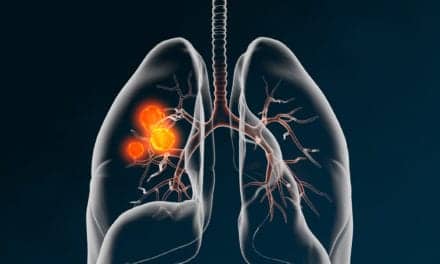

The new test uses patient-specific genomic alterations to detect residual cancer and requires as little as 5% tumor cellularity in tissue samples.
Guardant Health announced the US clinical launch of Guardant Reveal Ultra, a molecular residual disease (MRD) platform for solid tumors. The test is built on the company’s Smart Platform. It uses tumor-informed, patient-specific genomic alterations to detect residual cancer.
Guardant Reveal Ultra has been validated on thousands of clinical samples and has demonstrated detection sensitivity of 1 part per million or below across major tumor types. The test incorporates patient-specific alterations from thousands of genomic targets spanning all major variant classes, including structural variants.
Lower Tissue Requirement
The company says the test has also been validated with tissue samples containing as little as 5% tumor cellularity, well below the typical industry requirement of 20%. That threshold could allow testing across a broader range of clinical specimens.
“While detecting cancer at one part per million has become an important benchmark, what truly matters is delivering that level of sensitivity reliably across real clinical samples and a broad range of tumor types,” says Helmy Eltoukhy, chairman and co-CEO of Guardant Health, in a release. “Reveal Ultra was built to meet that challenge.”
Connection to Guardant360 Liquid
Guardant designed Reveal Ultra as a connected experience that gives physicians the option of a direct path from MRD detection to clinical action through Guardant360 Liquid.
The launch completes Guardant’s precision oncology portfolio. The portfolio also includes Guardant Reveal, which offers tissue-free MRD detection and therapy monitoring, along with Guardant360 Liquid and Guardant360 Tissue for genomic profiling. According to the company, the tests are intended to help physicians select therapies, monitor treatment response, detect residual disease, and manage cancer throughout the patient journey.
ID 92915894 © Arne9001 | Dreamstime.com