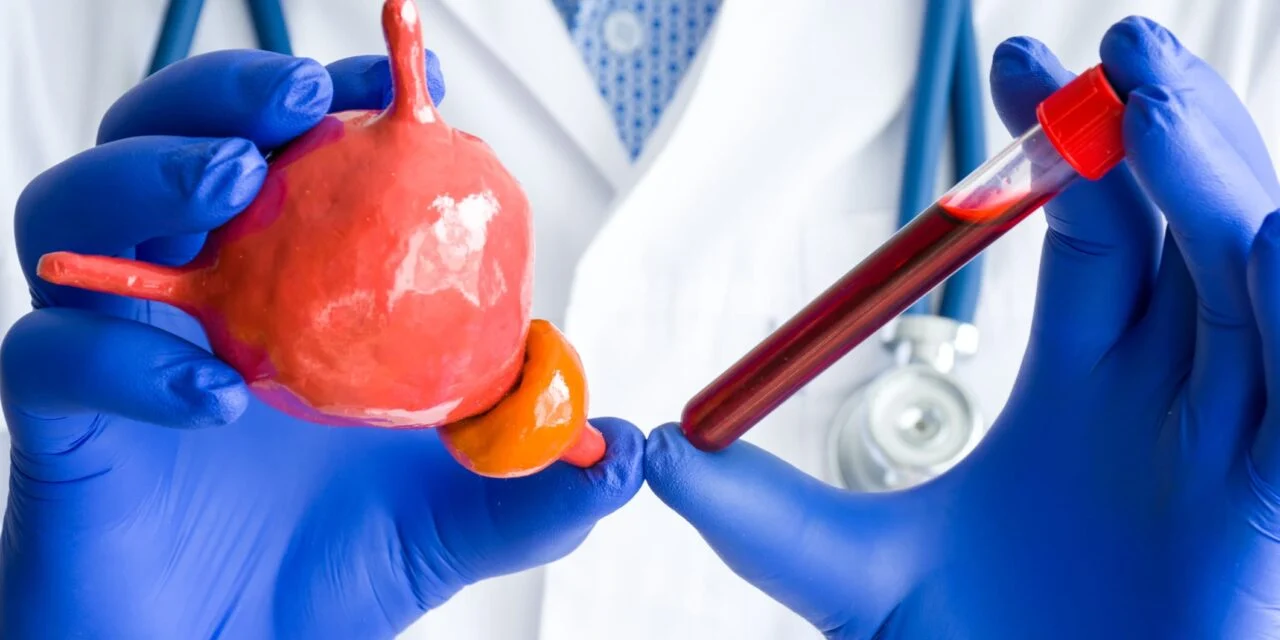
A study of more than 12,000 men found that the blood-based test reached 90% sensitivity, identifying more high-grade cases than traditional screening.
A3P Biomedical announced the publication of a population-based screening study in Annals of Internal Medicine showing that its Stockholm3 test identified aggressive prostate cancer with higher sensitivity than traditional prostate-specific antigen (PSA) testing, amid a broader push to deploy AI-driven prostate cancer screening in clinical settings.
The study, which included 12,670 men aged 50 to 74 years, compared Stockholm3 to standard PSA screening for the detection of aggressive disease, defined as Grade Group 2 or higher. Data showed that Stockholm3 had a sensitivity of 90% and a specificity of 89% in a first-line screening setting. In comparison, a PSA level of 3 ng/ml or higher showed a sensitivity of 74% and a specificity of 90%, while a PSA level of 4 ng/ml or higher reached a specificity of 95% but a sensitivity of only 52%.
“This large-scale, high-quality trial compares a promising alternative screening test to PSA. This may be the breakthrough for prostate cancer screening that we have all been waiting for,” says Kevin C Oeffinger, MD, director of the Duke Cancer Institute Center for onco-primary care, professor of medicine at Duke University, and member of the American Cancer Society Guideline Development Group, in a release.
The Stockholm3 test is a blood-based diagnostic that integrates PSA, additional protein biomarkers, a polygenic risk score, and clinical variables into a risk algorithm. This is similar to other innovative approaches like Myriad Genetics’ Prolaris test, which combines genomics and artificial intelligence to predict cancer aggressiveness. During the study, the test identified 400 out of 443 men with cancer, while a PSA of 4 ng/ml or higher identified 231. False-positive rates were similar for Stockholm3 and a PSA of 3 ng/ml or higher, at 11% and 10% respectively.
“PSA is well known to have significant limitations in prostate cancer screening. The increasing adoption of a pre-biopsy magnetic resonance imaging (MRI) into clinical practice has greatly reduced unnecessary biopsies. However, a longstanding limitation of PSA is its poor sensitivity for detection of aggressive disease,” says David C Grossman, MD, MPH, previous chair of the United States Preventive Services Task Force and former vice president for social health and equity for Kaiser Foundation Health Plan, in a release. “These data suggest that Stockholm3 offers the potential to improve detection of clinically significant prostate cancers without increasing false negatives.”
The US reports more than 300,000 new prostate cancer cases annually. While survival rates are high when the disease is detected early, approximately 36,000 men in the US are expected to die from prostate cancer in 2026. These deaths are largely driven by aggressive tumors that can go undetected with conventional PSA-based screening, prompting researchers to develop alternative diagnostic methods such as rapid urine-based tests and companion diagnostics.
“This study adds to the already extensive clinical evidence supporting Stockholm3, which includes more than 90,000 men evaluated across over 40 peer-reviewed publications in leading medical journals,” says Martin Steinberg, CEO at A3P Biomedical, in a release. “We believe this growing body of evidence brings us closer to establishing Stockholm3 as a first-line test for prostate cancer screening.”
Stockholm3 is currently an investigational device and is not available for sale in the US.