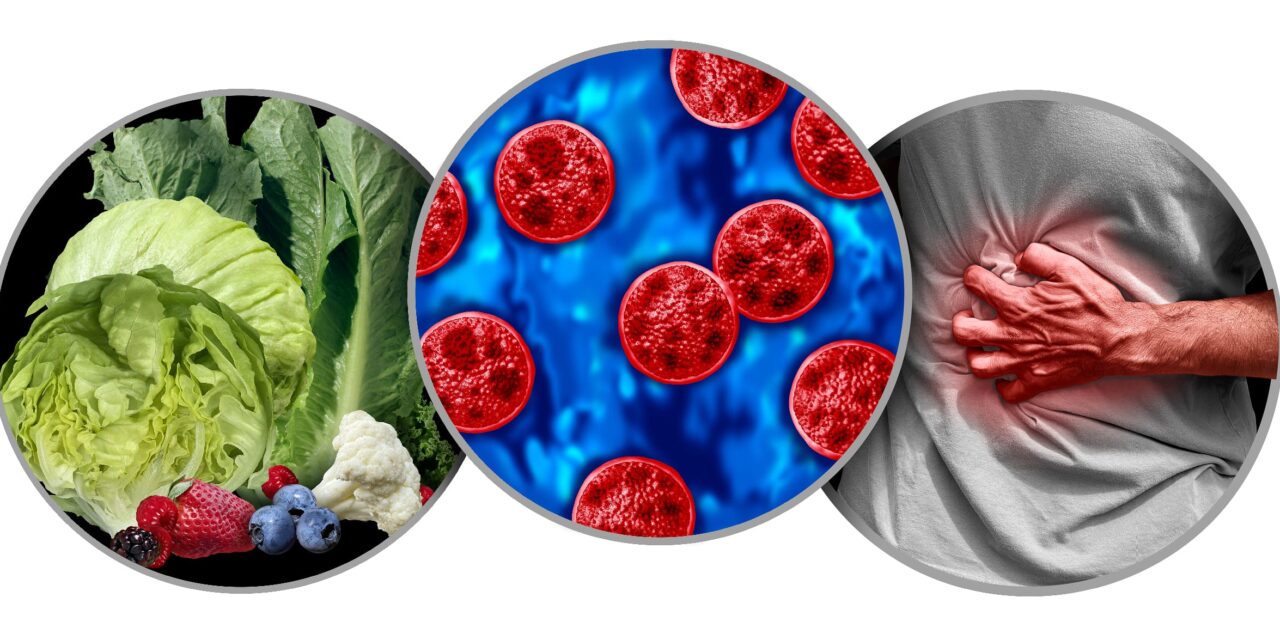
As cases continue to climb across the US, laboratories face a familiar challenge: distinguishing Cyclospora from other causes of gastrointestinal illness quickly enough to guide treatment and support public health response.
By Alyx Arnett
Cyclospora outbreaks present a familiar challenge for clinical laboratories: Patients arrive with gastrointestinal symptoms that could be caused by any number of viruses, bacteria, or parasites, but identifying the culprit quickly is essential because treatment depends on the underlying pathogen. As cases continue to climb across the United States, laboratories are playing a central role in helping clinicians make that distinction.
The current outbreak is among the largest seen in recent years. As of July 24, the Centers for Disease Control and Prevention (CDC) had reported at least 1,947 confirmed Cyclospora infections and 98 hospitalizations across nine states.
Clinical Lab Products spoke with John Osiecki, vice president of medical affairs at bioMérieux, about how Cyclospora testing has evolved, the advantages of multiplex molecular panels, and the role laboratories play in identifying cases, guiding treatment, and helping public health officials respond to outbreaks.
As Cyclospora cases have been rising across the US, what should clinical laboratories know about the current outbreak?
Laboratories should be aware of the outbreak and actively monitor what is circulating in their region. The CDC maintains a surveillance program that publicly provides information about where cases have been identified. There are also free tools available, such as SyndromicTrends.com, that allow labs to monitor circulating pathogens in real time and see GI, including Cyclospora, and respiratory pathogen activity across the country.
The critical issue labs must recognize is that some patients presenting with gastrointestinal symptoms may not be identified as having Cyclospora because certain molecular testing panels do not include it as a target, and it can be missed using traditional microscopy methods, which may require multiple rounds of testing. Laboratories need to ensure they have testing capabilities that can effectively detect Cyclospora or have protocols in place to send suspected cases to public health labs for confirmation.
As Cyclospora can present with symptoms similar to other gastrointestinal infections, what diagnostic challenges does that create for laboratories and clinicians?
This is the core of the syndromic approach to diagnosis. Patients present with gastrointestinal symptoms that could be viral or even adverse reactions to medications. The challenge is determining the actual causative agent.
Cyclospora is not normal flora—it should never normally be present in the human gut. Historically, laboratories used traditional methods of concentrating stool samples and examining them under a microscope to identify specific parasitic forms. However, many laboratories have shifted toward molecular methods because they detect the genetic signature of viruses, parasites, and bacteria from a single sample. This approach has improved sensitivity, offers better workflow efficiency, quicker test results for the patient, and provides a true syndromic perspective to identify the actual causative agent—which is critical because treatment is pathogen-specific. Parasites are treated differently than viruses, which are treated differently than bacteria.
How has testing for Cyclospora changed over the past several years? Are there advances that have improved detection or turnaround times?
There has been significant innovation in Cyclospora testing across a few different fronts. Molecular testing is where most innovation is focused. Molecular methods provide high sensitivity and high specificity, giving clear performance in identifying these pathogens and definitively identifying the pathogen of interest against the background of all other potential targets that could be present.
Additionally, the way samples are processed has improved significantly. With traditional methods, when a patient has diarrhea, the body dilutes the causative agent through fluid accumulation and release. A single small sample may not contain the organism, leading to false negatives and the need for multiple samples over several days. With molecular methods, which detect even a single strand of DNA amplified millions of times through PCR, sensitivity is dramatically increased. This eliminates the potential need for multiple samples and significantly reduces turnaround time—from multiple days with traditional methods to approximately one hour with molecular approaches.
When should clinicians consider ordering testing for Cyclospora, and what information can laboratories provide to help support that decision?
It’s important that clinicians are aware of Cyclospora outbreaks occurring in their region and understand that Cyclospora gastroenteritis requires specific testing and treatment. Patients presenting with gastroenteritis symptoms in areas where Cyclospora has been identified should be tested with methods capable of detecting Cyclospora.
This is critical because treatment is specific and effective. Trimethoprim-sulfamethoxazole is the appropriate treatment for Cyclospora infections. Early identification is essential because untreated Cyclospora can lead to prolonged infections lasting weeks to months, with some patients becoming seriously ill and requiring hospitalization. Additionally, identifying cases helps prevent further spread of the organism.
Laboratories should ensure they have testing capabilities to detect Cyclospora or have protocols in place to send suspected cases to public health labs for confirmation. Tools like wastewater surveillance and syndromic trends reporting can help both laboratories and clinicians understand what pathogens are actively circulating in their communities, enabling them to be more proactive in testing and treatment decisions.
How do multiplex gastrointestinal panels fit into the diagnosis of Cyclospora compared with traditional testing methods?
Multiplex gastrointestinal PCR panels typically contain 11 or 22 targets and include Cyclospora as a target, providing clear identification of the pathogen’s presence along with other potential GI pathogens.
The key advantages are speed and simplicity. Molecular panels can provide results in approximately one hour, compared to the much longer time required for traditional microscopy-based methods. Traditional testing requires processing the stool sample, reviewing multiple microscope fields, and identifying specific structures—a time-intensive process that can take multiple days.
There are also critical workforce considerations. Historically, laboratories had specialists who understood how to process these samples and identify structures. Due to recent workforce shortages, laboratories may lack the specialized expertise to perform traditional microscopy reliably. Cyclospora outbreaks in the United States are rare occurrences, so maintaining that level of expertise is challenging.
Multiplex molecular methods simplify the process. A sample is placed in a cartridge, inserted into an automated system, and a definitive result is generated—requiring only a few minutes of hands-on time per sample. Multiple samples can be processed simultaneously on stacked systems. This automation provides more confidence in the diagnosis, reduces operator dependency, and improves laboratory efficiency. Not all commercially available multiplex panels include Cyclospora testing, so it’s important for laboratories to verify their testing capabilities.
Once a laboratory identifies a Cyclospora infection, what role does that result play in helping clinicians and public health officials respond to an outbreak?
When a laboratory identifies Cyclospora, the results are reported to local public health agencies, who report back to the CDC.
This reporting is critical for outbreak response and community awareness. Once a case is confirmed, public health officials can track the outbreak, investigate the source, and communicate with the community. Wastewater surveillance also plays an important early warning role, as Cyclospora is spread through human stool, so its detection in wastewater indicates active infection in a community. These detections should be reported to state and federal public health agencies, supporting alerts and communications to doctors and labs about what is circulating locally and what to look for when patients present with symptoms.
Physician awareness of circulating Cyclospora is essential because there is a specific, effective treatment available. When cases are identified and reported, the community can be alerted, enabling physicians to suspect cyclospora in symptomatic patients and provide appropriate treatment quickly. If outbreaks can be identified earlier through improved surveillance and testing, public health can drive a more proactive response.
What are some common misconceptions about Cyclospora testing and diagnosis?
A major misconception is that all tests will detect Cyclospora. This is not the case—some traditional methods and certain molecular assays do not include Cyclospora as a target. It’s critical for laboratories and clinicians to understand the testing limitations and verify that their testing method includes cyclospora.
Regarding diagnosis, many people are not aware that Cyclospora requires specific treatment and has a unique lifecycle. It’s often assumed that gastroenteritis requires only supportive care—hydration and rest—but Cyclospora is different. The organism has a complex lifecycle allowing only viable organisms to cause illness. This parasite is not transmitted person-to-person like other GI pathogens such as Giardia. Cyclospora ingested in the right form, a sporulated oocyst, from contaminated food will cause illness. Infected patients release unsporulated oocysts in their stool that takes a week or two in the environment to mature before they can cause illness in the next host.
Because of this unique lifecycle, untreated Cyclospora can persist for extended periods, causing prolonged illness lasting weeks to months. This is not like typical viral gastroenteritis, which often resolves within a few days. Early identification and appropriate treatment are essential for managing cyclospora infections effectively and preventing serious complications.
Looking ahead, what improvements would you most like to see in gastrointestinal infectious disease diagnostics?
I’m an advocate for rapid, definitive testing. Molecular solutions that provide one-hour turnaround times generate benefit for suffering patients who can receive appropriate treatment quickly.
Speed is also critical for outbreak control. Faster identification enables quicker containment and control, which benefits the community at large by reducing potential new cases due to exposure of the contaminated source. Improved access to comprehensive syndromic testing is also contributing to more accurate case identification.
I’m also enthusiastic about improved communication and feedback systems. Tools like SyndromicTrends.com and FIREWORKS software provide valuable insights about what pathogens are being detected and where, creating awareness around evolving disease trends. Additionally, enhanced wastewater surveillance as an early warning system can help public health and healthcare professionals monitor which pathogens are circulating in their communities and better allocate resources. If clinicians know what pathogens are active in their area, they’re in a better position to know what to test for and can provide faster diagnosis and treatment to their patients.
ID 467869979 © Skypixel | Dreamstime.com