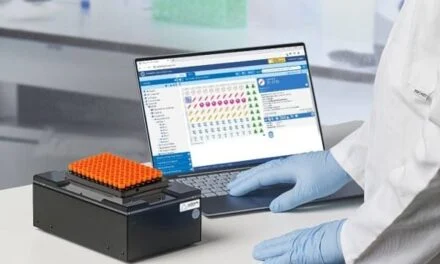

Laboratories hold years of patient test results, but much of that data remains fragmented and underused despite its potential value for patient care and reimbursement.
By Mika Newton
A national reference laboratory holds a longer, more continuous record of a patient than any hospital in America. Quest Diagnostics alone serves one in three American adults and half the country’s physicians and hospitals in a given year. Every result adds to a picture that follows the patient across ordering physicians and institutions, through decades of moves and insurance changes.
No electronic health record has that continuity because hospital records stop at the hospital’s walls. Yet laboratories discard their most valuable asset at the point of delivery. The laboratories that start managing the result stream will end up stronger than the ones that keep selling documents.
This discarding is not deliberate. A result leaves the laboratory as a report. The ordering clinician reads it once, and it settles into the chart as a filed document. The laboratory keeps the billing record and moves to the next specimen. Downstream, office staff fax and rekey the same values into whatever system needs them next. A large share never reaches structured form at all.
Laboratories built the report format to deliver an answer to one physician at one moment. The business model on top of it still behaves the same way. Payers pay the laboratory for a document, so the laboratory produces a document. Whatever 10 years of accumulated results could reveal about a patient becomes nobody’s product.
Why Lab Data Remains Fragmented
Even results that move electronically arrive as fragments. Laboratory information systems run on internal test codes. LOINC exists to give every test one universal identity, but laboratories apply it so unevenly that the same assay leaves two hospitals under different names.
Every receiving system therefore runs its own normalization project and re-identifies tests that the system before it already re-identified. The industry calls this duplicated labor integration. The laboratory that generated the result is best positioned to end the duplication. It has never taken on that work because nobody pays for it.
Data Exchange Expands as Reimbursement Pressure Grows
Two developments make this the moment to reconsider. The first is infrastructure. TEFCA, the federal exchange framework, has moved more than a billion records across roughly 70,000 participating organizations. Federal rules require the major government-program payers to stand up FHIR data interfaces by January 2027. A laboratory’s results can now travel, lawfully and technically, well beyond the physician who ordered them.
The second development is economic. Fee schedules keep compressing while payers expand utilization management, and Congress keeps postponing the next round of laboratory fee cuts rather than canceling them.
The per-test document business is deteriorating on a published schedule. A laboratory that links a result to the treatment that followed and the outcome that appeared in another chart can document medical necessity with evidence. It can show a payer exactly what a test changed, which is a stronger position than defending a fee. The acquisition happens on treatment rails. A laboratory queries for the context it needs to interpret and act on its own results: prior values, medications that affect an assay, the diagnosis behind a reflex test. That is the exchange purpose the networks honor today, and for a laboratory it is genuine. The reimbursement value comes later, from the record the laboratory then lawfully holds.
Labs Already Monetize Their Data
The strongest objection is that laboratories already treat their data as an asset. Laboratories have licensed deidentified datasets to drug developers and public health agencies for years, and the revenue is real. But licensing stripped-down rows to third parties is a different business from managing the longitudinal stream. The deidentified version leaves the building without the linkage that gives results their meaning. None of that revenue helps the laboratory at the claim line. Coverage disputes and medical necessity reviews decide its margin there.
A second objection is that EHR vendors and record aggregators already claim the longitudinal role. Their view is stitched together from encounters after the fact, one integration at a time, while the laboratory holds its slice of the record at the source. Managing the stream as an asset means keeping the linkage and applying it first to the laboratory’s own reimbursement position. Federal privacy law permits a laboratory to use records it lawfully holds across treatment, payment, and operations. The record arrives for treatment. Its value compounds from there.
I have spent years assembling medical records from care sites across the country. The most complete and reliable sections of those records almost always come from laboratories. The document business built that reach as a byproduct, and that reach doesn’t have to stay a byproduct. The rails to move the result stream exist, and the pricing environment is punishing the per-document model.
The open question is whether laboratories will decide to manage the record they already hold. Those that do will end up in a better business than those that keep shipping reports while the fee for each one shrinks.
About the author: Mika Newton is the chief executive officer of xCures, a healthcare data infrastructure company based in Oakland, California.
ID 467224384 © Andrey Popov | Dreamstime.com