
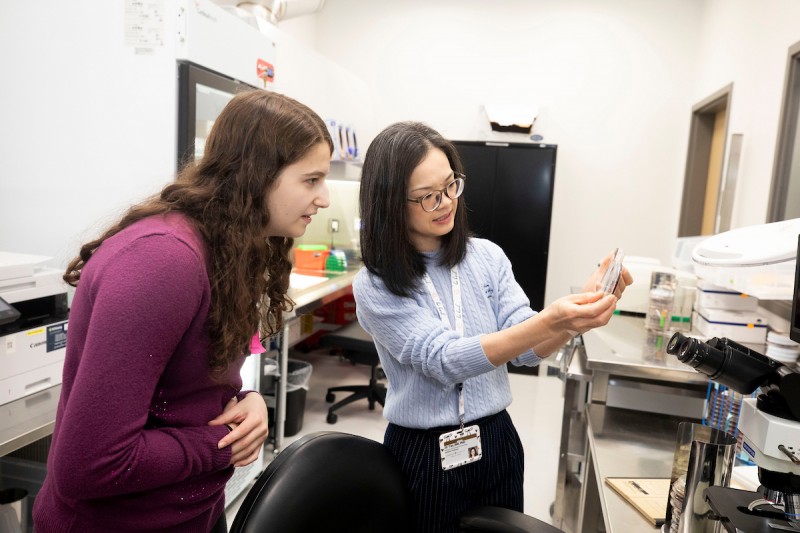
The lab’s investment in rapid antigen testing helped diagnose and monitor treatment for a 15-year-old patient with disseminated infection.
Vanderbilt Medical Laboratories (VML) has demonstrated the clinical impact of bringing histoplasmosis testing in-house, reducing turnaround times for diagnosis and treatment monitoring of the potentially serious fungal infection.
The laboratory’s capabilities were highlighted during a recent patient case presentation featuring 15-year-old Maggie Weiss, who battled histoplasmosis for a month in summer 2025. Weiss, who takes immunosuppressive medications for autoimmune arthritis, developed disseminated histoplasmosis that spread throughout her body and attacked her liver.
“Having next-day turnaround is really huge,” says Daniel Dulek, MD, associate professor of pediatrics and director of pediatric immunocompromised infectious diseases service at Vanderbilt Health. “Getting results back quickly definitely helped keep her from getting much sicker.”
Reducing Reference Lab Dependencies
VML now offers highly sensitive urine testing for Histoplasma antigen and has acquired blood testing capabilities for the antigen. Previously, blood samples required shipment to a reference laboratory in Utah, creating delays of several days.
“The investment that Vanderbilt Health made in this facility and VML is what is allowing us to in-source this test,” says David Vinson, senior vice president for diagnostic laboratory services. “For us to be able to turn out labs more quickly leads to better outcomes for our patients.”
The combination of urine and blood antigen testing provides clinicians with a more complete picture of patient condition and treatment response, according to VML staff.
Regional Disease Surveillance Impact
Weiss’ case was among several histoplasmosis infections from Middle Tennessee evaluated at VML last fall. Romney Humphries, PhD, professor of pathology, microbiology and immunology, and executive medical director of pathology and clinical laboratory services, notes that medical director of mycology and immunoserology Lili Tao, MD, PhD, reported the cases to the Tennessee Department of Health.
The state subsequently issued a health alert in December about increased pulmonary and disseminated histoplasmosis cases in Williamson and Maury counties, south of Nashville.
Histoplasmosis results from inhaling spores of the fungus Histoplasma capsulatum, which grows in soil throughout Middle Tennessee, particularly in areas contaminated with bird or bat droppings.
“We’re all exposed to it,” says Dulek in a release. “Most of us have had it and just have nonspecific symptoms including headaches, chills, body aches, almost flu-like symptoms. But when your immune system is weakened from medications or other conditions, you can have progressive infection that can become quite severe.”
Laboratory Operations
More than 550 pathologists, laboratory scientists, and support staff work at VML, Vanderbilt Health’s main diagnostic core laboratory. The facility moved in March 2024 to a new 110,000-square-foot location in MetroCenter, five miles north of Vanderbilt Health’s Nashville campus.
VML hosts quarterly clinical presentations, sometimes featuring patients and their physicians, to connect laboratory staff with patient outcomes. Weiss continues to receive regular histoplasmosis testing at the facility as part of her ongoing monitoring.
“I’m so grateful for my doctors and the lab staff for all their wonderful care,” says Weiss.
Photo caption: Lili Tao, MD, PhD, medical director of Mycology and Immunoserology, shows Maggie Weiss a culture plate on which the fungus that causes histoplasmosis is growing.
Photo credit: Susan Urmy