The 18-month roadmap includes 40% output increase, faster turnaround times, and new flow cell options for the sequencing platform.
Illumina has unveiled an 18-month roadmap of performance enhancements for its NovaSeq X sequencing system, including technology that will deliver Q70 quality scores for the first time and increase output by 40% to 35 billion reads.
The updates, which will be rolled out across all 8,901 NovaSeq X systems installed globally, also include 30% faster turnaround times and new flexible workflow modes. The enhancements are designed to increase daily sequencing productivity and expand the range of applications that can be run at scale on a single instrument.
“The NovaSeq X is already the gold-standard in sequencing, and Illumina is constantly innovating to meet the growing needs of our customers’ ambitious projects,” says Steve Barnard, PhD, chief technology officer of Illumina, in a release. “With our roadmap of advances in quality, speed, output, and flexibility, we are bringing the industry the latest in cutting-edge technology and chemistry.”
Key Performance Improvements
The roadmap includes four main areas of enhancement over the next 18 months:
- Data quality: Q70 quality score technology will enable oncology applications with enhanced accuracy, particularly for ultrasensitive applications like molecular residual disease testing.
- Output: Maximum output will increase from 25 billion to 35 billion reads (40% increase), while the 10 billion read option will expand to 14 billion reads.
- Speed: The system will deliver 14 billion reads in 20-22 hours, representing a 30% average improvement in speed for whole genome sequencing workflows.
- Flexibility: Enhanced batching flexibility and new high-throughput modes will optimize flow cell usage for single-cell, proteomics, and Perturb-seq applications.
New Flow Cells and Software Features
Illumina will introduce new flow cell options in the coming weeks, including 5 billion read kits designed for proteomic studies and 1.5 billion read 600-cycle kits for longer read applications like metagenomics and immune repertoire studies.
The company is also implementing staggered starts, which allow near-independent flow cell sides to run asynchronously as samples become available. Additional DRAGEN software advances will support multiomics, oncology, and genetics pipelines.
Texas A&M AgriLife, which participated in early access trials of the 1.5 billion 600-cycle kit, reported positive results with the platform improvements.
“The NovaSeq X is becoming better, cheaper, and faster,” says Charlie Johnson, PhD, director of genomics and bioinformatics at Texas A&M AgriLife, in a release. “Since we purchased the NovaSeq X, the data yield for a run has increased by 30% on average, thanks to the advances Illumina continues to introduce.”
The updates will benefit both current NovaSeq X users and future adopters, with applications spanning research and clinical laboratories working in oncology, rare disease diagnosis, non-invasive prenatal screening, and molecular residual disease testing.
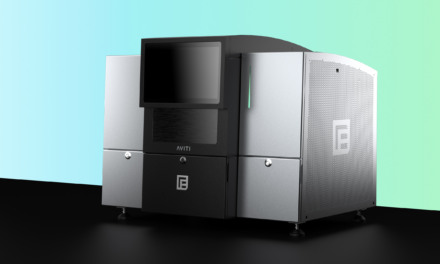
Photo caption: NovaSeq X
Photo credit: Illumina