Data from nearly 1,900 SEER-linked patients show the test identifies meaningful survival differences within the same AJCC stage.
New data show that a gene expression profile test for cutaneous melanoma significantly refines mortality risk stratification within standard staging categories, potentially enabling clinicians to tailor management decisions more precisely for individual patients.
Castle Biosciences presented the findings at the 2026 American Academy of Dermatology (AAD) Annual Meeting, demonstrating that its DecisionDx-Melanoma test identifies clinically meaningful differences in five-year melanoma-specific survival (MSS) among patients assigned to the same American Joint Committee on Cancer (AJCC) stage.
The analysis drew on registry data from 22 Surveillance, Epidemiology, and End Results (SEER) program sites, linked to data from 1,868 patients with stage I–III cutaneous melanoma who were clinically tested with DecisionDx-Melanoma between 2013 and 2019 and had at least five years of follow-up or died from their disease.
Key Survival Differences Within Stages
Among patients with T1 (thin) tumors, five-year MSS was 96.7% for those with low-risk (Class 1A) results, compared to 70.0% for those with high-risk (Class 2B) results. Among patients with Stage IIB–III disease, five-year MSS was 87.4% for low-risk results versus 48.5% for high-risk results. All comparisons reached statistical significance (log-rank test; p<0.05).
The findings indicate that traditional AJCC staging, which groups tumors based on clinicopathologic features alone, may underestimate or overestimate a patient’s true risk of poor outcomes. Notably, the data identify a subset of T1 thin tumors carrying mortality risk approaching that of thicker melanomas—a distinction that staging alone would not capture.
“The findings being presented at AAD reinforce that staging alone does not tell the whole story,” says Harrison Nguyen, MD, MBA, MPH, lead study author and double board-certified dermatologist and fellowship-trained Mohs micrographic surgeon, in a release. “Incorporating DecisionDx-Melanoma into routine risk assessment provides physicians with biologic information that complements staging and supports more personalized management decisions, helping to identify patients who may warrant closer monitoring or earlier intervention, while also recognizing those who may be safely managed less intensively.”
About the Test
DecisionDx-Melanoma is a gene expression profile test designed to analyze tumor biology and deliver a personalized risk assessment for patients with stage I–III cutaneous melanoma. The test provides two distinct outputs: a personalized risk of sentinel lymph node positivity and a personalized risk of recurrence and/or metastasis. The test has been clinically validated in more than 10,000 patient samples and ordered more than 220,000 times since launch.
The test is supported by more than 50 peer-reviewed publications, including prospective studies and meta-analyses, and was developed in collaboration with more than 100 leading US institutions.
Full abstract content will be available in the AAD online viewing portal and onsite at viewing stations beginning at the start of the meeting, and will also be published via the Journal of the American Academy of Dermatology supplement in fall 2026.
ID 391133216 © Wave Break Media Ltd | Dreamstime.com
Related Reading:
Studies Find Merlin CP-GEP Test Improved Melanoma Risk Stratification
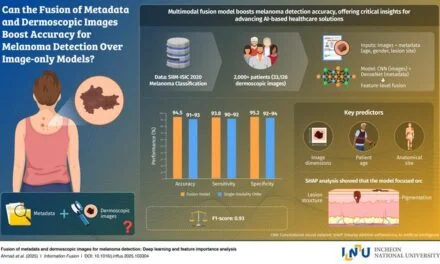
AI Model Achieves 94.5% Accuracy in Melanoma Detection Using Combined Data Sources
Test to Guide Radiation Therapy for Skin Cancer Patients Could Save Millions in Medicare Costs
FDA Grants Breakthrough Device Designation to AI-Powered Dermatopathology Solution