New research suggests that remote capillary sampling for Alzheimer’s biomarkers correlates with cognitive test performance in older adults.
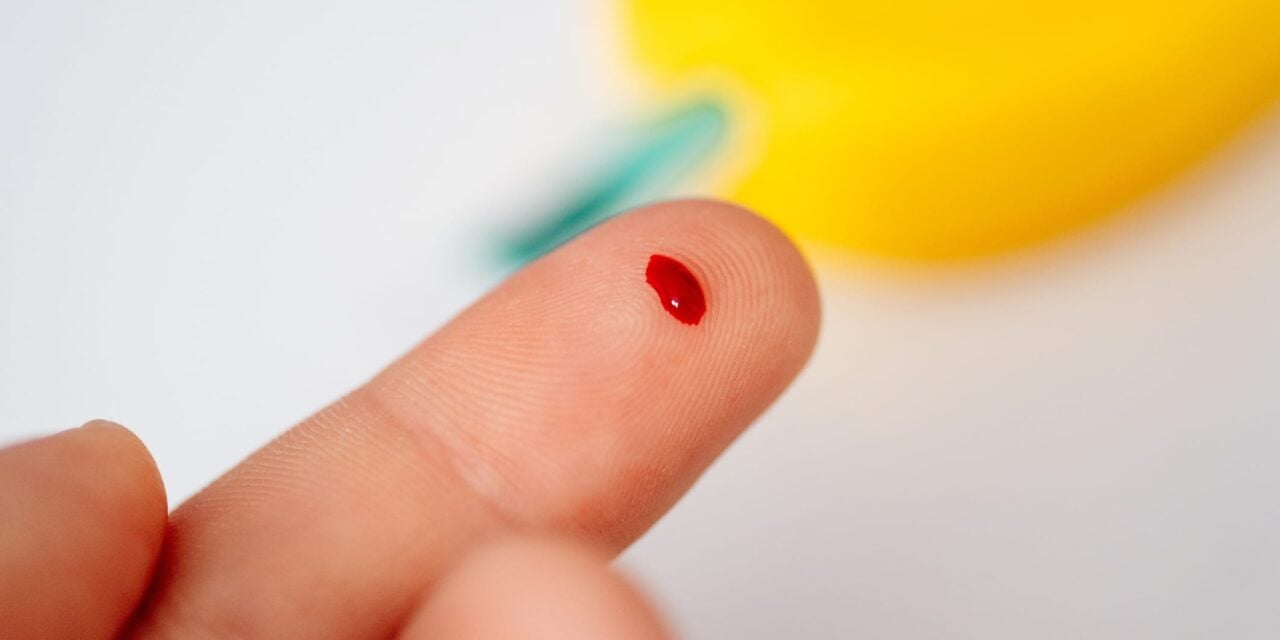
A finger prick blood test combined with online brain testing performed at home could identify the risk of developing dementia, according to a study led by the University of Exeter.
The research, published in Nature Communications, found that levels of dementia-linked proteins measured in postal blood tests correlated with performance on a series of online cognitive assessments. The study suggests that at-home testing could prioritize individuals at high risk for further clinical evaluation, treatment, and support while providing assurance to those at low risk.
“Our previous research has shown that a finger-prick blood test can effectively be taken at home and posted to labs and that we can identify the biomarkers in blood linked to dementia,” says Anne Corbett, PhD, professor at the University of Exeter Medical School, in a release. “This new study builds on that to show that we can link these biomarkers with performance on brain tests, giving us a potential way to predict risk of dementia.”
The research was conducted through the online PROTECT study, which involves more than 30,000 United Kingdom (UK) participants aged 40 and older who take regular cognitive tests to measure memory, attention, and executive function.
For this specific study, 174 participants administered the tests themselves and mailed them back to the researchers. The team measured two proteins: Ptau 217, which is associated with Alzheimer’s disease, and Gfap, which is linked to broader brain decline. The results showed that cognitive test performance correlated with the presence of these proteins, particularly tau, allowing researchers to categorize participants into low, medium, and high risk groups.
“Our approach of combining our robust cognitive testing with measuring proteins via a postal blood test could provide a straightforward, efficient and cost-effective method to reach large numbers of people in the community who would not otherwise be prioritised for the next steps of diagnosis or support,” says Clive Ballard, MD, professor at the University of Exeter Medical School, in a release.
The research was funded by the National Institute for Health and Care Research (NIHR) Exeter Biomedical Research Centre.
“The potential of this combination of cognitive and blood tests—both of which can be done at home—is really exciting,” says Marian Knight, NIHR scientific director for NIHR infrastructure, in a release. “Not only could it reduce the burden on the National Health Service by screening people in their own homes rather than in hospitals or clinics, but it also might mean we can identify people with dementia earlier, tailor treatments more effectively, and improve outcomes for patients.”
The study was also supported by the NIHR HealthTech Research Centre in Brain Health and the NIHR Applied Research Collaboration South West.
ID 147487252 © Djedzura | Dreamstime.com