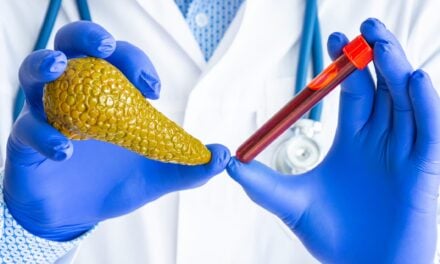
The digital seed amplification assay identifies protein seeds in cerebrospinal fluid to help diagnose a subtype of frontotemporal lobar degeneration.
Investigators from Mass General Brigham have developed an ultrasensitive test capable of detecting abnormal clumps of a protein called TDP-43, which identifies a specific subtype of frontotemporal lobar degeneration (FTLD).
The findings, published in Alzheimer’s & Dementia: The Journal of the Alzheimer’s Association, focus on FTLD-TDP. While biomarkers currently allow for the diagnosis of Alzheimer’s disease, there have been fewer tools available for rarer pathologies like FTLD or its subtypes. The new test could improve research, drug development, and the accuracy of patient diagnoses.
“In this study, we found elevated concentrations of a biomarker that correlates with FTLD-TDP disease severity,” says David R Walt, PhD, of the Mass General Brigham department of pathology, in a release. “This is just a first step, but it’s an important one because it gives us something measurable. Our vision is to create a test to diagnose patients, monitor treatment efficacy in clinical trials, and follow patient progression.”
Methodology of the Digital Seed Amplification Assay
To develop a biomarker specific to FTLD-TDP, the research team adapted a strategy previously used to detect misfolded alpha-synuclein in Parkinson’s disease. The digital seed amplification assay (dSAA) separates a patient’s cerebrospinal fluid (CSF) into tiny, nano-liter-sized compartments. It then digitally counts the number of TDP-43 protein seeds contained within those compartments using a microscope.
The study involved an analysis of 30 CSF samples from individuals with FTLD-TDP and 10 samples from healthy controls. Results showed that individuals with the pathology had higher concentrations of TDP-43 seeds. Furthermore, the seed levels correlated with disease severity; patients with more severe symptoms had a higher number of detected seeds.
“Much more work is needed to validate this test rigorously, but this study establishes a framework for developing better tools for diagnosing this devastating disease and monitoring molecular pathology among patients with FTLD,” says Andrew M Stern, MD, PhD, a principal investigator with Mass General Brigham Neuroscience Institute, in a release. “Our test is one of several in development across the world which show promise in eventually giving FTD patients an accurate diagnosis, which is necessary for developing an accurate treatment.”
Diagnostic Challenges and Future Research
Current diagnostic tools for FTLD, such as imaging tests, can determine if brain degeneration is occurring but cannot differentiate the specific molecular pathology. Because symptoms alone do not always predict microscopic brain changes, biomarker tests are necessary to distinguish between FTLD subtypes that impair behavior, emotional regulation, verbal expression, and organization.
The researchers note that the study is limited by a small number of participants and a lack of autopsy-confirmed diagnoses. Future larger studies that include diverse neurodegenerative pathologies and long-term follow-up are needed to validate the specificity of the dSAA for detecting FTLD-TDP in clinical applications.
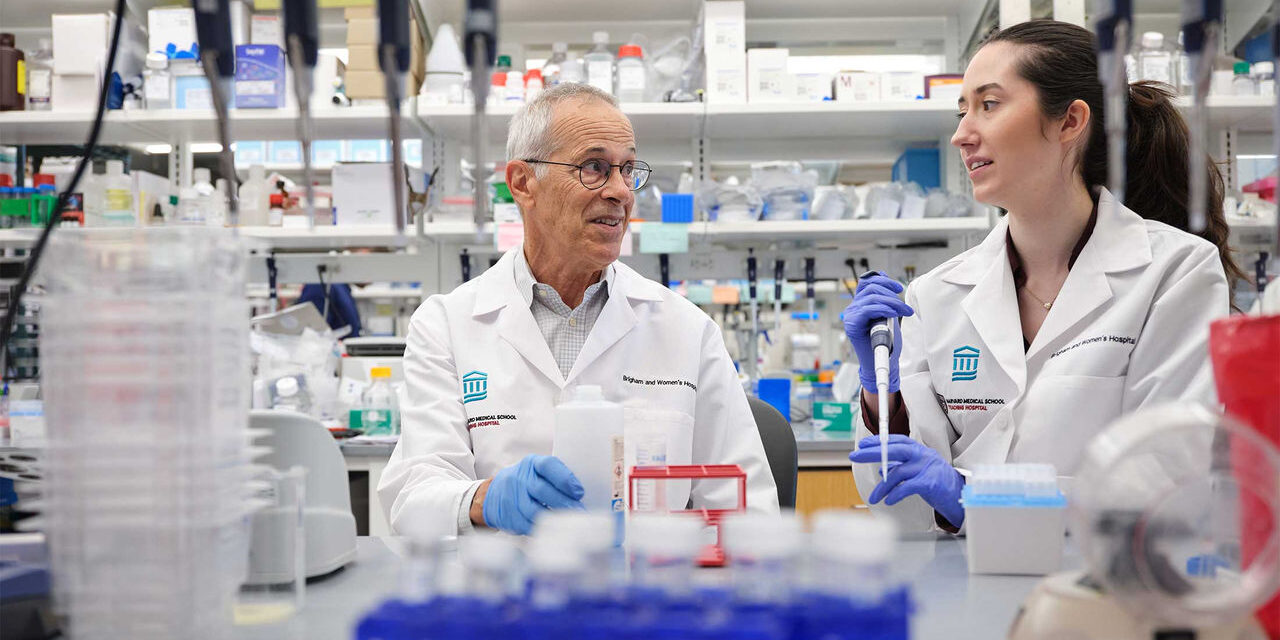
Photo caption: David Walt (left) and Kathryn Lyon (right) in the Walt Laboratory
Photo credit: Mass General Brigham