As laboratories weigh new hemostasis investments, Sysmex experts discuss the questions that can help guide system selection.
Choosing a new hemostasis platform has become more complex than comparing throughput specifications or analyzer features. Laboratories are balancing staffing constraints, evolving automation capabilities, increasing connectivity requirements, and the need for systems that can adapt as testing demands change. Those realities are prompting many labs to take a broader view of what defines value when evaluating new instrumentation.
To explore those issues, Clinical Lab Products spoke with Sysmex America’s hemostasis team about the questions laboratories should be asking vendors, the implementation challenges that are often overlooked, and the operational trends influencing hemostasis system selection today.
What are the biggest misconceptions labs still have when evaluating hemostasis analyzers today?
A few misconceptions surface consistently when labs evaluate hemostasis analyzers and addressing them early can significantly improve the quality of the selection process.
Cost versus value. The financial price of a system is one consideration—what that system delivers for the lab and the patients it serves is another. A lower acquisition cost that comes with limitations in throughput, reagent performance, or service support often proves more expensive over time.
Throughput claims. The figures in a brochure or data sheet are not a substitute for real world throughput data. Labs should ask vendors to share performance data from comparable laboratory settings, alongside full transparency on day-to-day maintenance requirements.
The value of automated preanalytical checks. Automated sample volume checks (for both underfilled and overfilled tubes) and Hemolysis, Icterus and Lipemia (HIL) checks do more than flag problem samples—they standardize result integrity and protect the accuracy of clinical decision making.
Detection technology differences. Optical systems from different vendors are not always equivalent. Labs should ask vendors to explain exactly what detection technologies their analyzers use, since performance differences between systems are real and clinically meaningful.
Reagent and test equivalence. Tests from different vendors are not interchangeable. Labs should seek thorough data on reagent performance, including sensitivities and limitations, for every test the vendor proposes.
Total Allowable Error and measurement uncertainty. These parameters remain underweighted in many evaluations. Both analytical and reagent performance data should be part of any serious system assessment.
How have staffing shortages changed what laboratories prioritize in hemostasis instrumentation?
Staffing pressures are reshaping what labs ask for during system selection, and the shift is visible across facilities of every size. More than ever, labs need solutions built around their actual operational realities: test volumes, staff capacity, and workflow configuration. Generic product proposals no longer meet the brief.
Sysmex responds to this by leading with workflow consultancy. Through the Sysmex Workflow and Trending Analysis (SWFT) program, Laboratory Solution Consultants apply Lean and Six Sigma principles to assess each laboratory’s specific environment before recommending a configuration. The outcome is a solution designed for that lab’s actual needs, not a standard offering repackaged for the conversation.
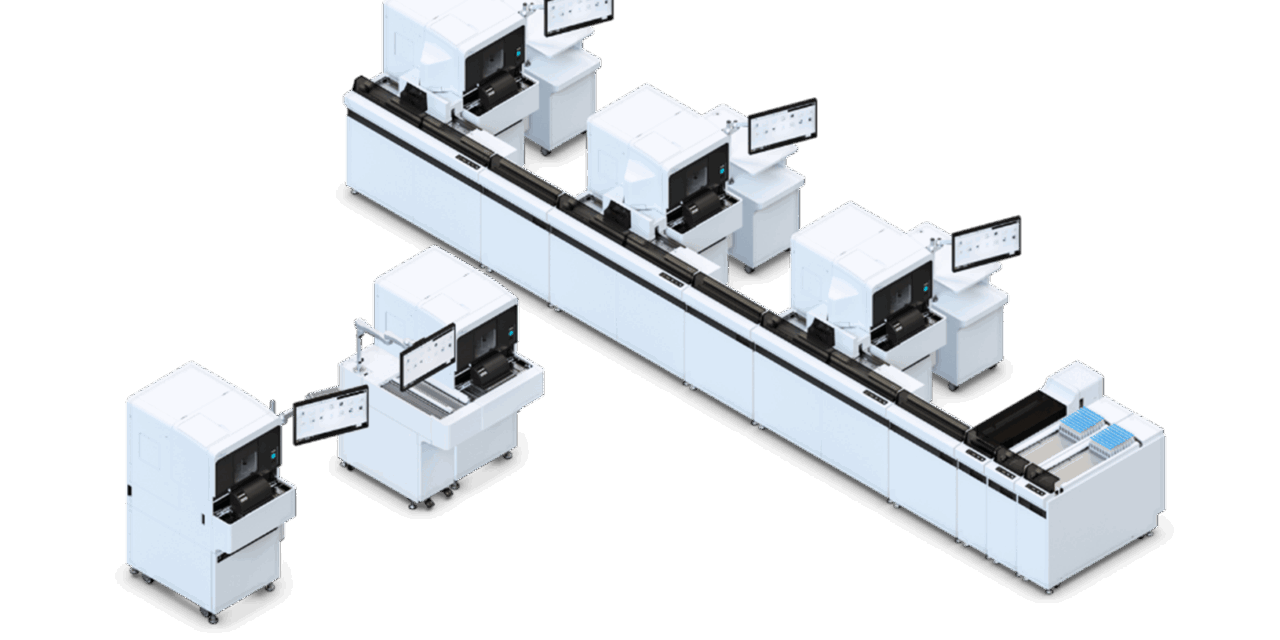
From the instrumentation side, walkaway time is a priority Sysmex addresses across its full portfolio. The Sysmex CA-620TM and CA-660TM analyzers serve smaller laboratories effectively, while the CN-3000TM and CN-6000TM systems scale to mid-to-high volume labs. The CN-9000TM configuration can connect up to three CN systems along the same sample transport line as Sysmex’s XN-9100TM hematology system, enabling a true island of automation for hemostasis testing.
Maintenance demands are equally significant. Every Sysmex hemostasis analyzer requires less than three minutes of daily maintenance, with no manual sample probe maintenance required. For labs already stretched thin, that is a meaningful operational benefit.
Are labs evaluating hemostasis systems differently now than they were five years ago? If so, what has changed most?
Absolutely. The past five years have brought a genuine shift in how labs approach hemostasis platform evaluations, and COVID-19 was one of the most visible inflection points. The pandemic’s focus on airborne and bloodborne risks underscored the clinical and safety benefits of closed tube analysis; cap piercing became a priority for labs when selecting new instrumentation.
Beyond infection control, the past two decades have seen substantial advances in standardization across coagulation and hemostasis testing. The past five years reflect a more sophisticated understanding of what standardization requires, not just at the analytical phase but across the preanalytical and postanalytical phases too.
Sysmex’s CN-SeriesTM (the CN-3000, CN-6000 and CN-9000 configuration) was developed in direct response to these demands. The platform addresses the full testing continuum:
Preanalytical Phase
- Sample fill checks for both underfilled and overfilled capped and uncapped tubes across multiple tube types including BD and Sarstedt.
- Test-specific HIL checks with sensitivity indices provided per reagent combination.
- Double-clog detection to ensure accurate aspiration and dispensing from the primary tube to the reaction cuvette.
- Optional automated tracked centrifugation for labs where that capability is a priority.
Analytical Phase
Sysmex provides test-to-system application sheets for every analyzer, covering analytical performance, reagent and test performance, and, where applicable, clinical performance data. Independently published, open access studies further evidence system performance in real laboratory settings.
Post-analytical Phase
- Enhanced walkaway time through an optional extended sampler (up to 120 samples) and the CN-9000 configuration’s ability to accommodate up to 250 samples simultaneously.
- Automated sample archiving via the Sysmex TS-10TM sample sorter/archive module, directing samples to designated areas based on review flags, error flags, or incomplete test status (including factor assays, lupus anticoagulant testing and thrombophilia assays). This significantly simplifies downstream processing and batch testing workflows.
What questions should laboratories be asking vendors that they often overlook during the evaluation process?
Laboratories rarely scrutinize FDA medical device recall history as closely as they should. A recall involving an analyzer or reagent can compromise regulatory compliance, invalidate clinical test results, and create genuine health hazards for patients. The consequences extend further than the lab itself: a recall can erode patient trust in their physician, a physician’s confidence in their laboratory, and a laboratory’s confidence in its vendor. These are not hypothetical risks, and they should be part of every evaluation conversation.
Labs should ask the following questions into every vendor assessment:
- Are there any current or historical FDA recalls associated with the proposed analyzers or reagents?
- If so, what were the implications for result reporting and patient safety?
- What processes does the vendor have in place to monitor safety alerts and proactively notify labs of any recalls?
Beyond regulatory history, labs often underestimate the operational value of comprehensive support services. Given today’s staffing environment and regulatory landscape, a vendor relationship needs to deliver more than hardware—it needs to deliver a genuine partnership.
That means asking:
- What does implementation support look like, including IT connectivity and go live planning?
- What service network coverage is available for this facility (or across a hospital network)?
- What vendor guarantees exist around continuous delivery of reagents, consumables, and parts?
- What service continuity provisions apply if supply or access is disrupted?
Sysmex provides defined answers to each of these questions, including a dedicated project manager for implementation, onsite and remote Clinical Application Specialist support for test setup, verification, and lot rollover, and supply chain commitments backed by an established logistics infrastructure.
Where do labs most commonly underestimate complexity when implementing or upgrading hemostasis systems?
Changing hemostasis vendors is genuinely complex; understanding where that complexity concentrates allows labs to plan proactively and select a vendor whose support infrastructure is equipped to manage it. None of these challenges need to be carried by the lab alone.
| Typically Defined as Complex | Considerations | How Sysmex Supports |
| Preanalytical Variables and Sample Integrity | Has the hemostasis system been evaluated for preanalytical variables and sample integrity checks? | Sysmex provides onsite support at implementation for the setup of automated sample volume checks (covering multiple tube types) and test-specific HIL checks on all CN-Series systems. |
| Reagent and Test Performance Claims Including sensitivity and limitations. | Has each reagent and test been assessed as part of the system evaluation? | Sysmex provides test-to-system application sheets for every analyzer, covering analytical, reagent and test performance, and where applicable clinical performance data, alongside independently published peer review data. |
| Establishing Reference Intervals For routine and esoteric tests/assays, this can be highly labor intensive. | Have reference interval requirements been defined for each test on the proposed system? | Sysmex provides onsite support at implementation to establish reference ranges and intervals for every test on the proposed system. |
| LIS Integration Often more complex than anticipated. | Will the proposed system connect to LIS? Have the development or upgrade requirements for that connectivity been scoped? | Sysmex’s Caresphere Workflow Solution (CWS) is a web-based software solution that supports LIS connectivity and enhances lab workflow through rule-based result validation. CWS for Hemostasis will be available from Fall 2026. |
| Multisite Standardization Harmonizing reagent lots and reference ranges across a hospital network. | What is the process for new reagent lot verification? Does it account for all acceptance criteria steps in a standardized, networkwide manner? | Sysmex provides onsite reagent lot rollover support when a new lot is introduced. Where onsite support is not needed, remote services are available, including the generation of lot rollover reports for each new reagent lot. |
| Systematic Error Identification and Regulatory Compliance | Have peer review QC programs been considered? These evaluate a facility’s analytical performance against a wider peer group in real time. | Sysmex’s Beyond Care Quality Management (BCQM) monitors QC data beyond Westgard rules and Levey Jennings charts. BCQM captures data in real time through the Sysmex Network Communication System (SNCS), a remote management platform that reduces unscheduled service calls by identifying developing issues proactively. |
How are expectations around automation evolving in coagulation testing?
Understanding where automation is headed benefits from a look at where it has been. The evolution of automation in coagulation testing has unfolded across three broad phases:
- 1980s to 2000: The emergence of fully automated coagulation analyzers offering multi-test parameter analysis and walkaway sample loading capability.
- Early 2000s to 2020: Growing connectivity between automated coagulation analyzers and Total Laboratory Automation (TLA) solutions.
- 2020 to present: Rapid development and adoption of island of automation solutions purpose built for coagulation testing.
Over the past decade, and with increasing momentum in recent years, labs have been seeking automation that delivers specific operational and clinical benefits:
Island of automation. By containing all aspects of testing within the hemostasis solution, labs eliminate the bottlenecks that slow turnaround time. The island configuration also provides a more compact physical footprint, which matters for space-constrained facilities.
Preanalytical checks without compromise. A capability frequently lost when vendors connect systems to TLA infrastructure is cap piercing. The Sysmex CN-Series delivers cap piercing, sample fill checks (for both underfilled and overfilled tubes), and test-specific HIL checks consistently across every solution configuration.
Minimal maintenance demands. Automation increasingly requires low daily maintenance time so that skilled staff can focus on work that fully utilizes their expertise. The CN-9000 configuration draws on the automated line concept pioneered in Sysmex hematology and applies it to hemostasis, with new options for maximizing workflow and resource utilization.
Automated centrifugation. The CN-Series supports onsite centrifugation as an optional component.
Postanalytical archiving. The CN-9000 configuration with the TS-10 module enables automated archiving of sample tubes based on incomplete test status and review or error flags, making sample retrieval for batch testing or specialist referral significantly more efficient.
What operational challenges tend to emerge as testing volumes grow, even in labs that initially felt well-equipped?
As volumes increase, pressure points tend to be predictable even if their timing is not. Sample capacity limits are reached sooner than expected. Testing bottlenecks appear as specific detector channels become saturated. TAT begins to suffer as a downstream consequence. Reagent packaging sizes that worked at lower volumes create preparation burdens at higher ones.
| Operational Challenge as Testing Volume Increases | How Sysmex addresses these Operational Challenges |
| Bottlenecking of sample tubes | Sysmex offers modularity and scalability across the CN-Series. Sample capacity can be expanded at any point: through the extended sampler (up to 120 samples at one time) or the CN-9000 configuration (up to 250 samples simultaneously). There is no need to replace or upgrade systems as capacity needs change. |
| Bottlenecking of test analysis | The CN-6000 provides 26 flexible detector channels; the CN-3000 provides 13 flexible detector channels. Unlike systems from other vendors where channels are restricted to specific methodologies, every CN-Series channel is fully capable of clotting, chromogenic, and immunoturbidimetric testing. This prevents analysis bottlenecks both today and as volumes grow. |
| Negative impact on turnaround times | TAT for clot-based tests on the CN-Series is improved over all previous generation Sysmex systems and comparable systems from other vendors, through time interval endpoint checking. Time to result can be achieved in under 4.5 minutes. |
| Reagent packaging limitations | Sysmex provides multiple kit sizes for routine hemostasis tests (PT, APTT, Fibrinogen, and D-Dimer). As volumes increase, the right kit size can be selected to optimize usage, minimize wastage, and reduce reagent preparation time for lab staff. |
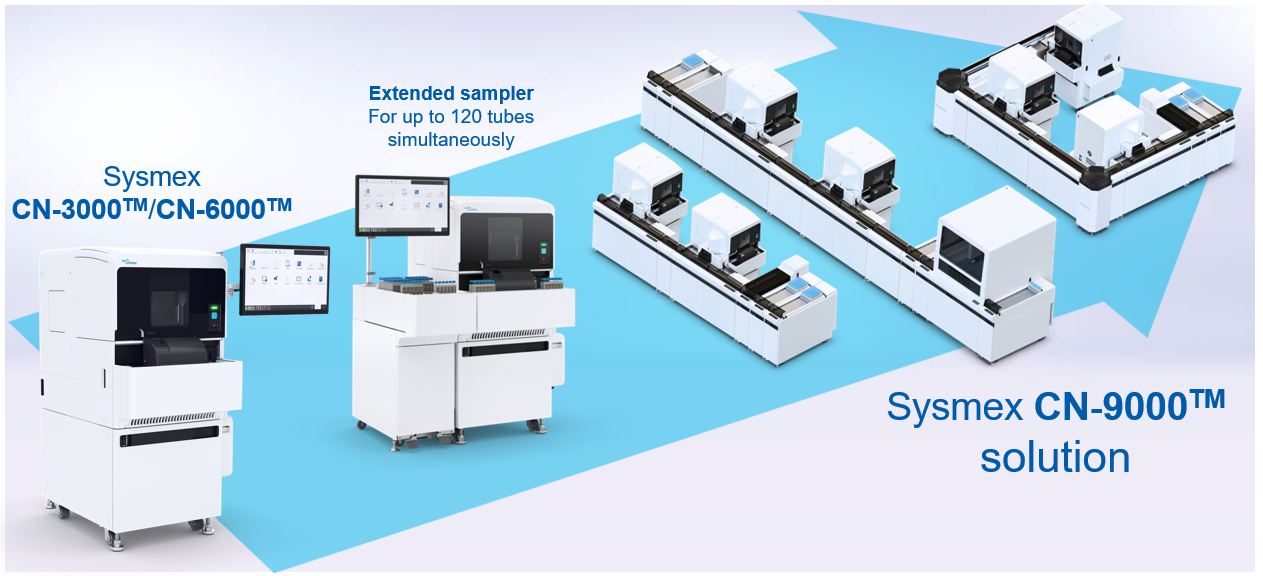
Figure 1 – Modularity and Scalability with the Sysmex CN-Series. (Left to Right): Standalone CN-systems (30 sample capacity), CN-system with extended sampler (120 sample capacity), to multiple configuration options with the CN-9000 configuration.
What are laboratories increasingly looking for beyond raw analyzer speed or throughput?
Throughput figures in vendor brochures typically focus on PT testing. That is not a representative picture of what most labs fully perform as part of their coagulation testing service. Laboratories should request ‘real-world’ throughput data reflecting random access, multi-test parameter performance from comparable laboratory settings.
Beyond speed, labs are increasingly looking for a trusted partner capable of delivering high quality results reliably over time. Specifically:
- Intuitive software navigation and low daily maintenance requirements, particularly important given the staffing pressures most labs are navigating.
- A dedicated project manager from the vendor for installation and go live, alongside a Clinical Application Specialist to support test setup, analyzer verification, and ongoing lot rollover support (onsite and remotely).
- Tailored training options, whether delivered onsite for staff development, or through Virtual Instructor Led Training (VILT) for remote delivery, aligned to the skillset of the individuals being trained.
Sysmex provides all of these as standard components of its partnership model, not as optional extras. Labs choosing Sysmex gain a support structure that extends well beyond the instrument.
What role do connectivity, middleware, and data management now play in analyzer selection decisions?
Middleware and data management have become meaningful, standalone decision factors. Alongside traditional analyzer considerations, these elements contribute to optimized result workflow, data integrity, and regulatory compliance.
Key questions for vendors in this area include:
- What middleware solutions are available, and what specific benefits do they deliver to this lab (or across a hospital network)?
- What peer review QC program does the vendor offer, and does it assess both accuracy and precision in real time?
- Are there cross-discipline connectivity benefits (for example, connecting Hematology and Hemostasis data within a single middleware environment)?
Sysmex has offered middleware, data management solutions, and peer review QC programs for its Hematology XN-Series for several years. From Fall 2026, these capabilities extend fully to the CN-Series.
Caresphere Workflow Solution (CWS): A web based clinical laboratory workflow management software offering rule-based result validation. CWS currently supports Sysmex Hematology and Urinalysis solutions, with CN-Series connectivity available from Fall 2026.
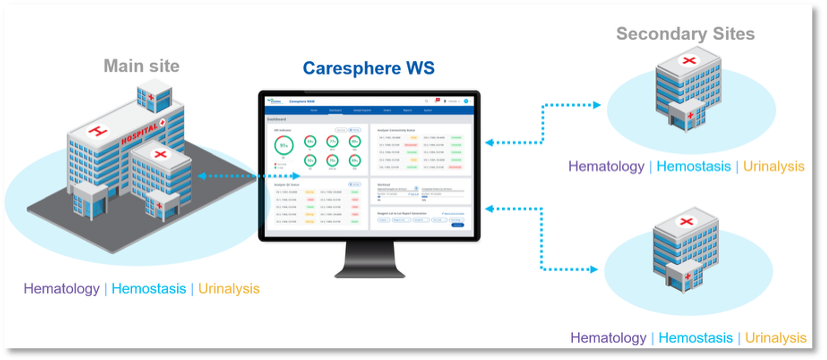
Figure 2 – Sysmex Caresphere Workflow Solution (CWS) – a web-based data manager solution for result validation and rule-based workflow dashboard (CWS for Hemostasis will be available from fall 2026).
Beyond Care Quality Management (BCQM): Sysmex’s proprietary, patented QC monitoring system applies rules beyond Westgard rules and Levey Jennings charts. Already widely adopted across North American hematology labs, BCQM extends to hemostasis from Fall 2026.
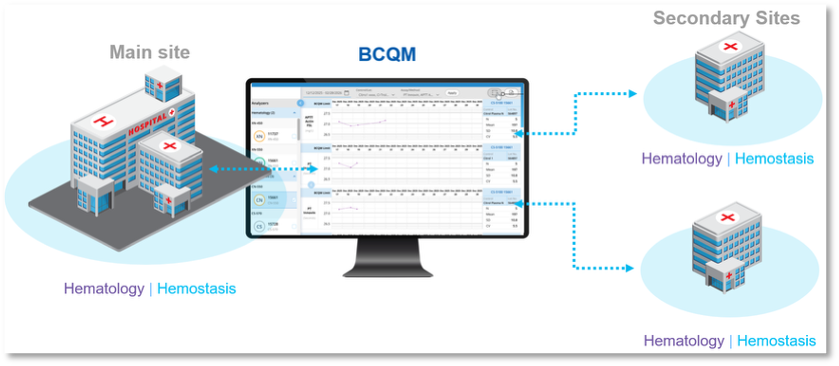
Figure 3 – Sysmex’s Beyond Care Quality Management™ (BCQM) system for peer-review Quality Control (QC) monitoring (BCQM for Hemostasis will be available from fall 2026).
Sysmex Network Communication System (SNCS): A remote management system that continuously collects and monitors instrument performance data, connecting it to the Sysmex Technical Assistance Center operating 24 hours a day, 365 days a year. This proactive capability reduces unscheduled service calls by identifying and addressing developing issues before downtime occurs.
Are there particular pain points around specialty coagulation testing that labs continue to struggle with?
Specialty coagulation testing has historically demanded specialized equipment, highly trained laboratorians, and expert clinical pathology interpretation to diagnose rare bleeding and clotting disorders. The need for clinical expertise remains; what has changed is the degree to which workflow complexity can be managed without that expertise becoming a barrier to operational efficiency.
The Sysmex CN-Series provides operational and clinical efficiencies for labs performing esoteric tests such as factor assays, von Willebrand Factor (vWF) testing, thrombophilia panels and Lupus Anticoagulant testing. For Lupus Anticoagulant in particular, labs frequently apply multistep workflow rules aligned with ASH and ISTH guidelines to ensure diagnostic accuracy. The CN-Series supports rule-based workflow automation for these pathways, simplifying what were once among the most operationally demanding test sequences in the coagulation laboratory.
| Pain Point for Specialty Coagulation Testing | How Sysmex Minimizes It |
| Complexity of Workflow and Result Interpretation Result interpretation for patients with bleeding or thrombotic disorders requires deep diagnostic expertise. | The CN-Series allows labs to customize formula calculations and reportable ratios, delivering direct clinical benefit. For factor assays, automated redilution rules streamline testing without manual intervention or repeated sample aspirations. |
| Strict Sample Integrity: Preanalytical Errors Specialty tests are highly sensitive to variables including overfilled and underfilled collection tubes (which alter the critical 9:1 blood to anticoagulant ratio), clotted specimens, and improper centrifugation. | The CN-Series delivers automated preanalytical checks and cap piercing capability across every system in the range. The CN-9000 configuration with the TS-10 module enables automated archiving of samples flagged for fill volume errors, allowing lab staff to action these quickly and efficiently. |
| Sample Processing and Handling for Batch Testing Many labs perform specialty tests on designated days, meaning samples may have been aliquoted and frozen with limited remaining volume. | CN-Series systems have a sample dead volume of 90 µL, enabling labs to perform more tests from each primary tube and significantly reducing the need for patient redraws. |
What implementation or transition mistakes can create headaches later if labs don’t plan carefully upfront? And what advice would you give laboratories trying to future-proof their hemostasis operations amid staffing and testing demand uncertainty?
Labs sometimes hold back from changing hemostasis vendors because the validation process is perceived as prohibitively rigorous. That hesitation is understandable. The long-term cost of remaining with a system that no longer meets a lab’s needs—worsening turnaround times, increasing burden on already strained staff, and compounding clinical risk—will typically outweigh the short-term investment of transition.
The answer to both questions is the same: vendor support at every stage, from pre-implementation planning through go live and beyond.
Sysmex offers the Workflow and Trending Analysis (SWFT) program to laboratories considering a change or upgrade. Sysmex Laboratory Solution Consultants apply Lean and Six Sigma principles to assess each lab’s workflow environment, considering:
- Onsite observations of workflow and staff utilization
- Benchmarking metrics
- Workload volume data
- Physical space requirements and constraints
- The lab’s immediate and longer-term goals for test menu, volumes, and automation
The resulting report delivers workflow recommendations, value stream simulations, TAT metrics, facility layout guidance, staffing models, and return on investment projections for proposed solutions. Recommendations may include specific instrument configurations, varying degrees of automation, and IT solutions which are all designed to fit the individual laboratory. Post-implementation assessments follow to confirm the lab’s goals are being met.
Is there anything else you think laboratories should be considering today as they evaluate or upgrade hemostasis systems?
Every laboratory’s evaluation will be shaped by its own context, but several considerations apply universally:
- Staff satisfaction: Is the system genuinely easy to use? What does the day-to-day experience look like for the people running it?
- System reliability: What Mean Time Between Failure data can the vendor provide, and how does it compare across the alternatives?
- Vendor support services: Does the vendor prvide verification and validation support, lot rollover assistance, and troubleshooting? Is this evidenced, or simply promised?
- Publications and regulatory study data: What independent clinical and regulatory evidence supports the performance claims being made?
- Cost: Both operational and financial, assessed over the life of the system rather than at the point of acquisition.
- Value: What does this system deliver for the lab’s hemostasis testing service, for the clinicians who rely on its results, and ultimately for the patients whose care depends on them?
Sysmex’s position is that cost and value should always be evaluated together. A reliable system that supports staff and adapts to the lab’s evolving needs will deliver stronger long-term value, especially when backed by a partner committed to supporting its technology every step of the way.
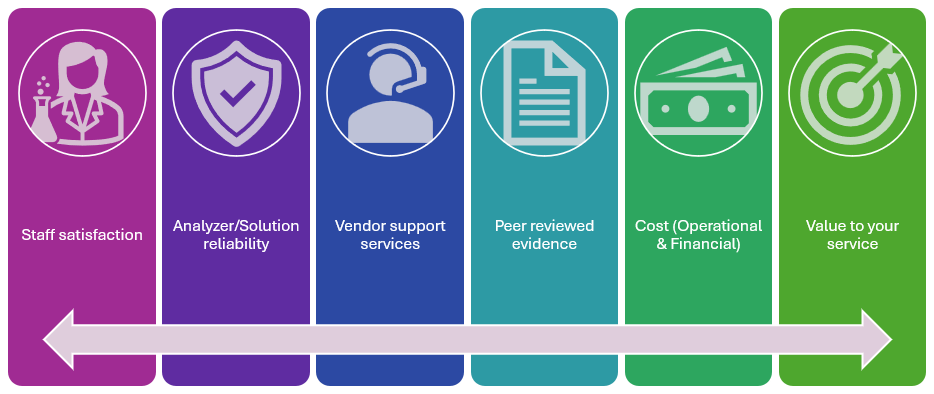
Figure 4 – Important considerations that every lab should evaluate, when considering a new hemostasis vendor, system or solution.
(Featured photo: CN-3000, CN-6000, CN-9000. Photo credit: Sysmex)
Sponsored by

Medqor is committed to protecting and respecting your privacy. We may contact you about our products and services or share information with sponsorship partners, as well as other content that may be of interest to you. By submitting your information, you consent to us contacting you for this purpose in accordance with our privacy policy.
For further information, please check out our privacy policy here.