
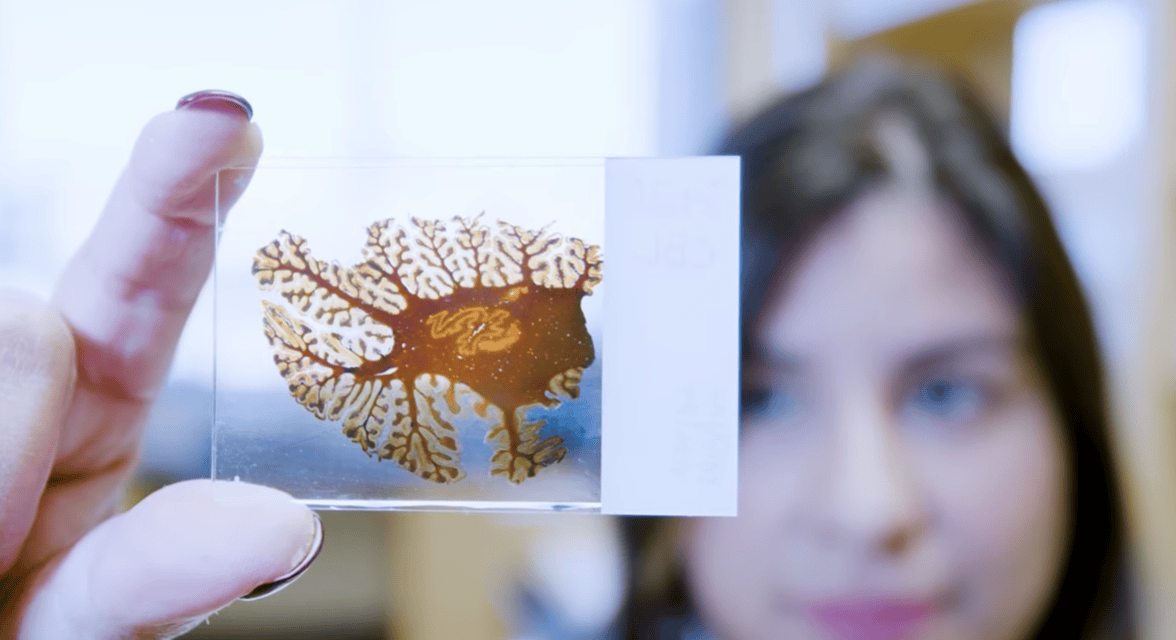
Researchers found a five-marker panel that distinguished cerebral amyloid angiopathy, a major driver of brain swelling and bleeding associated with anti-amyloid therapies.
Researchers at Banner Sun Health Research Institute have identified a blood-based biomarker panel that may identify Alzheimer’s disease patients at increased risk for brain swelling or bleeding associated with new anti-amyloid therapies.
The study, published in Acta Neuropathologica, provides proof-of-concept that researchers can identify blood-based biomarkers for cerebral amyloid angiopathy. Cerebral amyloid angiopathy is a condition where amyloid protein accumulates in the walls of blood vessels in the brain, and it is a major driver of amyloid-related imaging abnormalities. Amyloid-related imaging abnormalities, which includes fluid buildup, swelling, and bleeding, is a known side effect of new Alzheimer’s medications that work by removing amyloid protein from the brain.
In clinical trials of anti-amyloid therapies, amyloid-related imaging abnormalities-related brain swelling has been reported in approximately 12% to 40% of patients, while small brain bleeds have been observed in about 14%.
“This is the first study to identify a panel of plasma biomarkers that, if validated through further research, could one day predict risk for [cerebral amyloid angiopathy],” says Alpana Singh, PhD, postdoctoral fellow with the fluid biomarker program, in a release. “This could help us identify individuals at risk for developing the abnormalities seen in the brain scans of some people receiving the new anti-amyloid therapies and who therefore would not be good candidates for clinical trials or prescription medications.”
Limitations of Current Imaging
Currently, magnetic resonance imaging and other imaging modalities are the only ways to identify probable cerebral amyloid angiopathy and monitor for amyloid-related imaging abnormalities. However, these methods miss approximately 20% to 30% of abnormalities.
“These modalities are expensive, need specialized infrastructure and expert personnel to assess and evaluate the images, and clinician interpretation of images can vary,” says Singh in a release.
Biomarker Panel Performance
The research team analyzed blood samples taken five years or less before the death of participants in the Arizona Study of Aging and Neurodegenerative Disorders and Brain and Body Donation Program. The study identified a panel of five plasma biomarkers—CRP, IL4, CCL11, PDLIM5, and NPY—associated with inflammation, vascular function, and neurodevelopmental processes.
The panel discriminated cerebral amyloid angiopathy cases from non-cerebral amyloid angiopathy cases with a positive predictive value of 93% and an area under the curve of 0.90, demonstrating robust discriminatory performance.
“The combination of high predictive value and strong discriminatory performance provides encouraging early evidence that this biomarker panel may be capable of reliably distinguishing [cerebral amyloid angiopathy] cases from non-[cerebral amyloid angiopathy] cases,” says Nicholas Ashton, PhD, senior director of the fluid biomarker program, in a release. “Further development and validation are needed, but this study underscores the promise that blood-based tests could one day provide an effective and simpler way to predict risk for serious side effects of Alzheimer’s drugs.”
The research team did not directly test whether the biomarker panel predicts amyloid-related imaging abnormalities in patients receiving anti-amyloid therapies. Next steps for the program involve validating the findings in other independent cohorts.
Photo credit: Banner Health




Is any research being done to determine the stage of progress of Alzheimer’s in patients with the disease? My wife has Alzheimer’s for about 2 years and is on Liquembi infusions once a month now. It would be very helpful to know, within reason, where we are and approximately the next stages. this would help with making care decisions for us both. We are both 81 years old. She is forgetful and repeats a lot, but otherwise she is still functioning and driving.