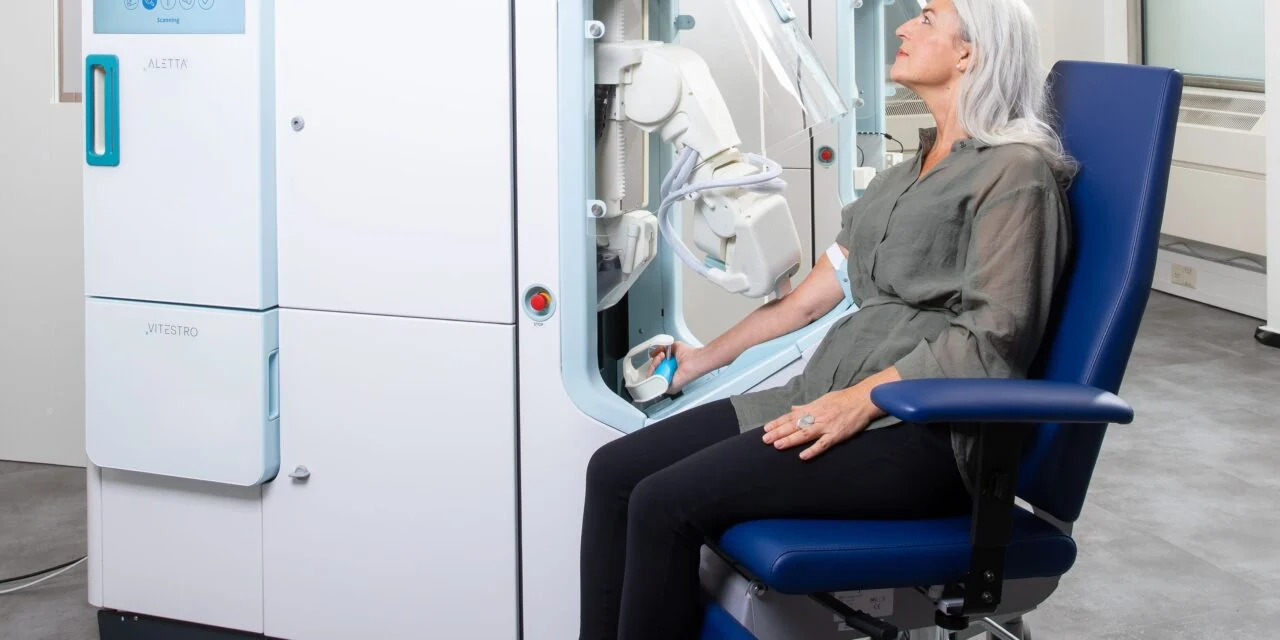
The automated phlebotomy system locates veins and completes blood draws without hands-on operator intervention, allowing one phlebotomist to oversee up to three devices.
The Food and Drug Administration (FDA) authorized Aletta, the first standalone robotic device capable of drawing blood from an adult patient’s arm without hands-on intervention from an operator.
The device is authorized for use in outpatient settings and must be operated under the oversight of a supervisor trained in phlebotomy. One phlebotomist can manage up to three Aletta devices simultaneously, which may help address the current phlebotomist shortage in the US.
“This authorization reflects the FDA’s commitment to advancing innovative medical devices that help meet a critical public health need while maintaining the safety and effectiveness patients deserve,” says Michelle Tarver, MD, PhD, director of the FDA’s Center for Devices and Radiological Health, in a release. Tarver notes that while blood draws are common medical procedures, patients often face delays due to a shortage of trained phlebotomists.
Automated Vein Identification and Collection
The Aletta autonomously handles each step of the blood draw after a trained supervisor initiates the session. The device uses near-infrared light and Doppler ultrasound to identify a suitable vein and distinguish it from arteries. If no appropriate vein is found, the device will not attempt the procedure.
Once a vein is identified, the system applies a tourniquet, prepares the skin, inserts and disposes of the needle, changes collection tubes, and applies a bandage. The supervising phlebotomist confirms that collection tubes are filled in the correct order and verifies that all tubes are sufficiently full following the procedure.
Safety features include continuous disinfectant application during the ultrasound scan and cleaning by a professional between patients. If a patient moves excessively during the draw, the needle automatically detaches and the procedure stops. Onboard sensors also alert the supervisor if other unsafe conditions are detected.
Clinical Performance and Regulatory Path
The FDA authorization is based on clinical data demonstrating that the Aletta achieves successful blood draw rates comparable to or better than trained human phlebotomists. This performance was consistent across a range of patients, including those with varying health statuses, different skin tones, and self-reported difficult vein access.
The FDA granted marketing authorization to Vitestro for the device through the De Novo pathway, a regulatory route for low- to moderate-risk devices of a new type. The agency is also establishing special controls related to labeling, performance testing, and clinical testing to provide assurance of safety and effectiveness.
Photo caption: Aletta
File photo/Provided Vitestro