The method identified amyloid-beta seeding activity in plasma with more than 90% diagnostic accuracy.
A research team led by Xuanwu Hospital of Capital Medical University has developed a blood-based diagnostic method that uses real-time ultrasonic protein misfolding cyclic amplification (PMCA) technology to identify Alzheimer’s disease (AD). The method detects plasma amyloid-beta (Aβ) aggregation seeding activity, achieving a diagnostic accuracy exceeding 90% in a validation study published in the Chinese Medical Journal.
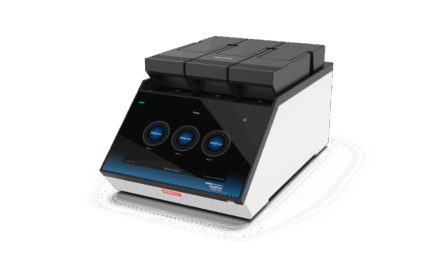
The technology represents the first application of real-time ultrasonic PMCA for detecting plasma Aβ seeding activity. By integrating ultrasonic and fluorescence techniques, the system tracks dynamic changes in Aβ aggregation and provides results within 24 hours. The process uses ultrasonic cavitation to create spherical interfaces and energy that promote fibril formation, while localized heat and shear forces induce the misfolding of normal Aβ proteins to enhance amplification efficiency.
“Compared to traditional quaking-based methods, this ultrasonic technology can detect Aβ oligomers at concentrations as low as 1 femtomole,” says Jianping Jia, a professor at Xuanwu Hospital of Capital Medical University, in a release.
Validation and Diagnostic Performance
The study utilized a two-stage design, beginning with a discovery phase of 120 participants followed by a validation phase involving 429 individuals. The validation cohort included cognitively normal individuals, patients with AD, patients with mild cognitive impairment (MCI) due to AD, and patients with non-AD dementia.
Data from the validation cohort showed that AD patients had significantly higher plasma Aβ seeding activity compared to the other groups. Receiver operating characteristic curve analysis showed the area under the curve (AUC) reached 0.93 for distinguishing AD from cognitively normal individuals and 0.91 for distinguishing AD from non-AD dementia. For individuals with MCI due to AD, the AUC was 0.92 when compared to cognitively normal participants and 0.90 when compared to those with non-AD dementia.
Clinical Implications for Alzheimer’s Screening
Currently, definitive diagnosis of AD typically requires cerebrospinal fluid testing or positron emission tomography, methods that are often limited by high costs, invasiveness, or low accessibility. The researchers note that this new blood-based biomarker could provide an objective tool for subject screening and efficacy evaluation in clinical trials for AD drugs.
“The most important significance of this study lies in providing clinicians with a minimally invasive, efficient, and accurate AD diagnostic tool,” says Jia in a release. The method is intended to facilitate large-scale screening in communities and primary healthcare facilities, potentially promoting earlier detection and intervention.
The research team plans to conduct larger-scale clinical validation studies and long-term follow-up to evaluate the biomarker’s ability to predict disease progression over time.
ID 119762254 © Anton Chervov | Dreamstime.com