The platform differentiates Zika, chikungunya, Mayaro, and four dengue virus serotypes in under an hour without conventional laboratory equipment.
Researchers at the University of Florida have developed an inexpensive, handheld diagnostic device capable of detecting and differentiating seven mosquito-borne viruses in 30 minutes to an hour.
Detailed in Analytical Chemistry, the platform is designed to assist clinicians in low-resource and remote settings who lack access to conventional laboratory infrastructure, stable power supplies, bulky instruments, or specialized technical personnel.
“We wanted to create a diagnostic test that could distinguish between viruses that was relatively quick, cheap and didn’t require expensive instrumentation or a lot of training,” says John Lednicky, PhD, a virologist and research professor in the Department of Environmental and Global Health, in a release.
Multiplex Detection Without Thermal Cycling
Rapid differential diagnosis remains a critical barrier in regions where multiple arboviruses co-circulate. Because infections such as Zika, chikungunya, Mayaro, and dengue often present with overlapping clinical symptoms—including fever, joint pain, rash, and fatigue—clinicians in settings without diagnostic laboratories frequently must rely on empirical assessments.
“Many mosquito-borne viral diseases have similar symptoms, but each viral infection requires different clinical management,” says Z. Hugh Fan, PhD, a mechanical and biomedical engineer and distinguished professor in the Department of Mechanical and Aerospace Engineering, in a release. “We had to come up with an approach that differentiates them.”
Supported by National Institutes of Health funding, the device uses reverse transcription loop-mediated isothermal amplification (RT-LAMP) to detect viral genetic material. Unlike reverse transcription polymerase chain reaction (RT-PCR), which requires repetitive thermal cycling and precision thermocyclers, RT-LAMP amplifies targets at a single constant temperature. When validated against clinical human samples, the device performed on par with gold-standard RT-PCR assays, delivering results in under an hour rather than the one- to two-day turnaround time often associated with PCR testing.
The developers report that the system is believed to be the first point-of-care platform capable of multiplexing seven viruses simultaneously using RT-LAMP chemistry: Zika, chikungunya, Mayaro, and all four dengue virus serotypes.
Low-Cost Engineering for Resource-Limited Settings
To eliminate the need for expensive pipettes, thermocyclers, and bulky laboratory water baths, the development team utilized low-cost, off-the-shelf items:
- Reagent Dispensing: The fluid delivery mechanism is based on the mechanical principles of a ballpoint pen, enabling accurate reagent dispensing without micropipettes.
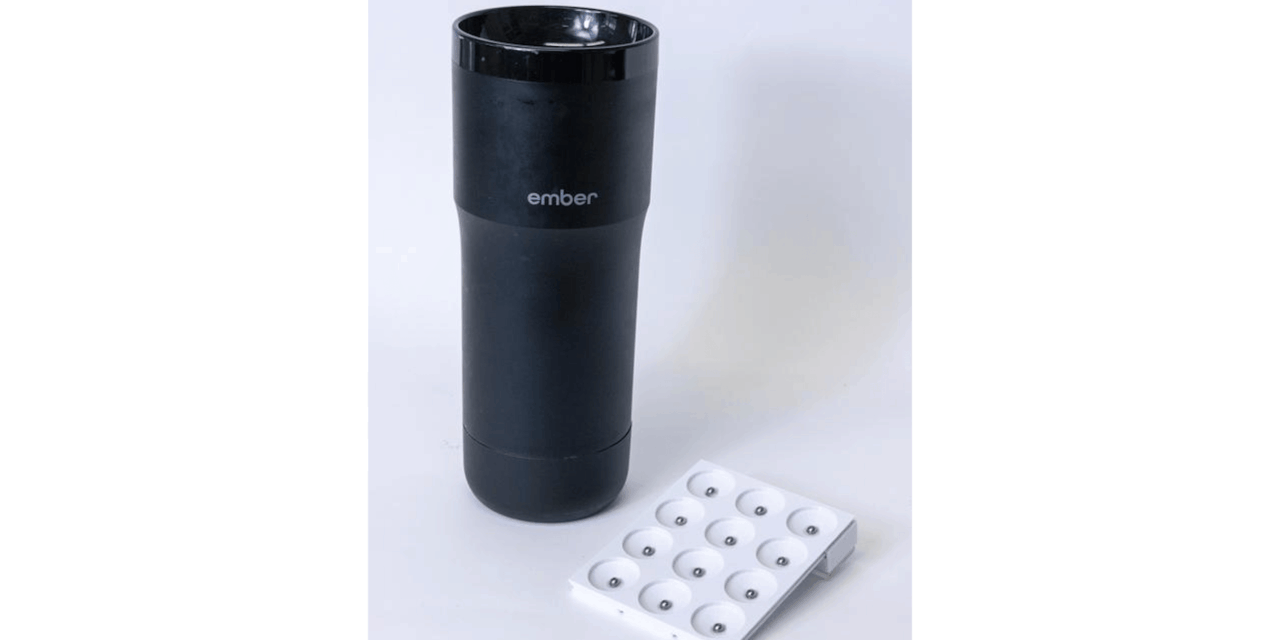
- Isothermal Incubation: Instead of laboratory heat blocks or water baths, the assay uses a commercial, USB-powered temperature-controlled coffee mug to maintain waterproof sample tubes at a steady incubation temperature.
- Signal Readout: Test outcomes are interpreted visually via color changes illuminated with a $12 blue light flashlight.
The team is pursuing patents for the platform and working to consolidate the device’s hardware into an integrated, even lower-cost design. Although the USB-heated mugs currently retail between $60 and $100, Fan noted that further cost reductions are necessary to ensure accessibility in resource-constrained regions such as Southeast Asia and South America, where mosquito-borne pathogens are especially pervasive.
Beyond arboviruses, the researchers noted that alterations to the assay chemistry could enable testing for other viral, bacterial, and environmental pathogens in humans, animals, and the environment.
“I’m most excited about the device’s simplicity, cost-effectiveness and that it is based on proven technology,” says Lednicky in a release. “It’s easy to get excited about something that’s cheap and easy to use, but if it’s not based on effective chemistry, it’s meaningless.”
Photo caption: A commercially available coffee mug that keeps liquid warm at a specific temperature stands in for an expensive laboratory water bath. Waterproof test samples are slipped into the mug for processing, with results ready to interpret in an hour or less.
Photo credit: UF Health photo by Hannah Clark