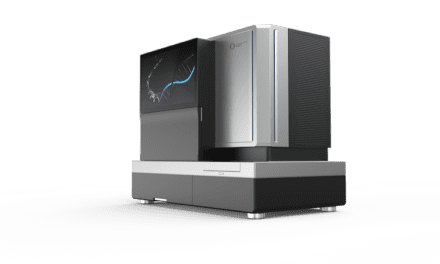
Developed by Garvan Institute researchers, the long-read nanopore assay screens more than 300 genes to detect complex structural and epigenetic variants in a single workflow.
Researchers at the Garvan Institute of Medical Research in Sydney have developed a single DNA test capable of identifying the genetic causes of inherited muscle diseases, offering answers to patients who remained without a diagnosis after years of conventional testing.
In a study published in Nature Communications, investigators evaluated the assay in 53 individuals with known or suspected inherited muscle disease, including 31 individuals whose prior genetic testing had failed to yield a cause. The test provided a diagnosis for more than one-third of those previously unsolved cases. On average, the participants had experienced symptoms without an answer for 14 years.
Inherited muscle diseases, which encompass conditions such as muscular dystrophies, affect an estimated 6,000 people in Australia. These progressive conditions cause muscle weakness and wasting, often impairing mobility, swallowing, speech, or hand function.
“Many muscle diseases have no available genetic test and for others there is a separate test for each different gene involved,” says Dr Ira Deveson, lab head at Garvan and co-senior author, in a release. “Here we’ve shown that it’s possible to test all genes at once, and that’s a game-changer for someone who has been through years of inconclusive tests.”
Consolidating Diagnostic Targets via Long-Read Sequencing
Standard diagnostic pathways for inherited muscle diseases typically assess one class of genetic alteration at a time. However, these conditions stem from diverse molecular mechanisms, including single-letter DNA errors, large missing or duplicated sections, unstable repeat expansions, and epigenetic changes that switch genes on and off. Conventional diagnostic protocols have lacked a single platform able to interrogate each of these variant types simultaneously.
The Garvan-developed assay utilizes long-read nanopore sequencing to evaluate more than 300 genes linked to inherited muscle disease in a single run. By sequencing longer stretches of native DNA, the platform resolves structural variations and complex alterations that short-read assays frequently overlook, while also accommodating newly cataloged disease genes alongside long-established targets.
For several cohort participants, the assay detected gene variants not covered by any existing Australian clinical test, while in others, it corrected an earlier misdiagnosis.
“A confirmed genetic diagnosis changes the counselling we can offer families, opens access to supports such as the National Disability Insurance Scheme, prompts monitoring for complications such as heart problems, and allows people to enrol in clinical trials that require a known genetic cause,” says associate professor Kishore Kumar, group leader at Garvan, neurologist at Concord Repatriation General Hospital, and co-senior author, in a release. “Without it, many of those doors stay closed. This new test puts Australia at the cutting edge of genetic diagnosis, and other countries will follow.”
Dr Dennis Yeow, neurologist and PhD candidate at The University of Sydney who co-led the study, noted the diagnostic odyssey patients typically endure before obtaining an answer.
“Some patients had been searching for an explanation for their symptoms for over a decade, undergoing repeated investigations, including blood tests, MRI scans, neurophysiologic studies, and even muscle biopsies,” says Dr Dennis Yeow, neurologist and PhD candidate at The University of Sydney who co-led the study, in a release. “Being able to finally give them a name for what they have is significant, both for them and for their families.”
Translating to the Clinical Laboratory Workflow
To enable routine adoption, the study authors developed a dedicated computational pipeline to translate raw sequencing output into standardized clinical reports.
“Long-read sequencing generates a huge amount of complex information about a person’s DNA,” says Dr Andre Reis, senior research officer at Garvan and lead bioinformatician on the study, in a release. “We’ve turned that into clear, reliable findings that a diagnostic laboratory can act on. That is what takes it from a research technique to something that can genuinely help people.”
The Garvan research group is currently collaborating with NSW Health Pathology’s Molecular Medicine Laboratory at Concord Hospital to implement the assay into routine diagnostic service, estimating it could become available across Australia within two years.
Because the underlying sequencing pipeline is not disease-specific, investigators plan to adapt the framework to other rare genetic conditions characterized by lengthy diagnostic workups.
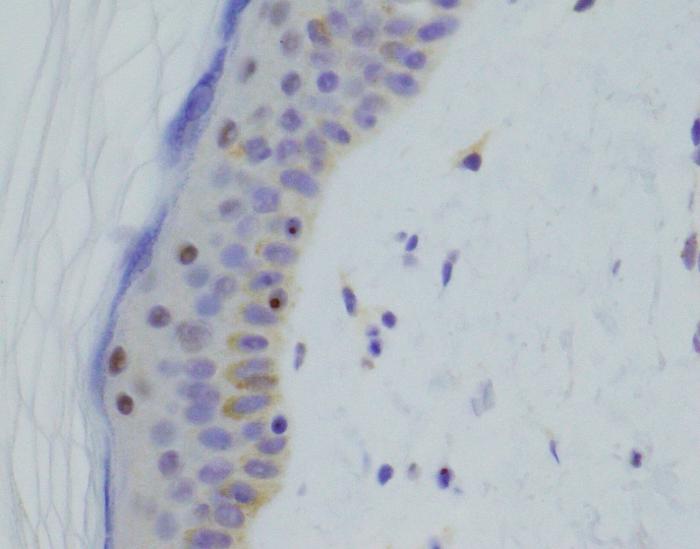
Photo caption: Skin samples from people with a suspected genetic myopathy were examined for confirmation of disease. Brown spots show abnormal protein buildup inside the nuclei of cells (purple), typical of a type of myopathy called oculopharyngodistal
myopathy.
Photo credit: Garvan Institute