Researchers at Johns Hopkins Medicine report that the FDA-cleared assay detected 92% of confirmed cases in a multicenter evaluation, with results available within hours.
Investigators at Johns Hopkins Medicine have published clinical data evaluating what is believed to be the first rapid urine-based assay to aid in diagnosing invasive aspergillosis. The study, published in Clinical Infectious Diseases, details the multicenter performance findings that supported FDA clearance of the assay in late 2025.
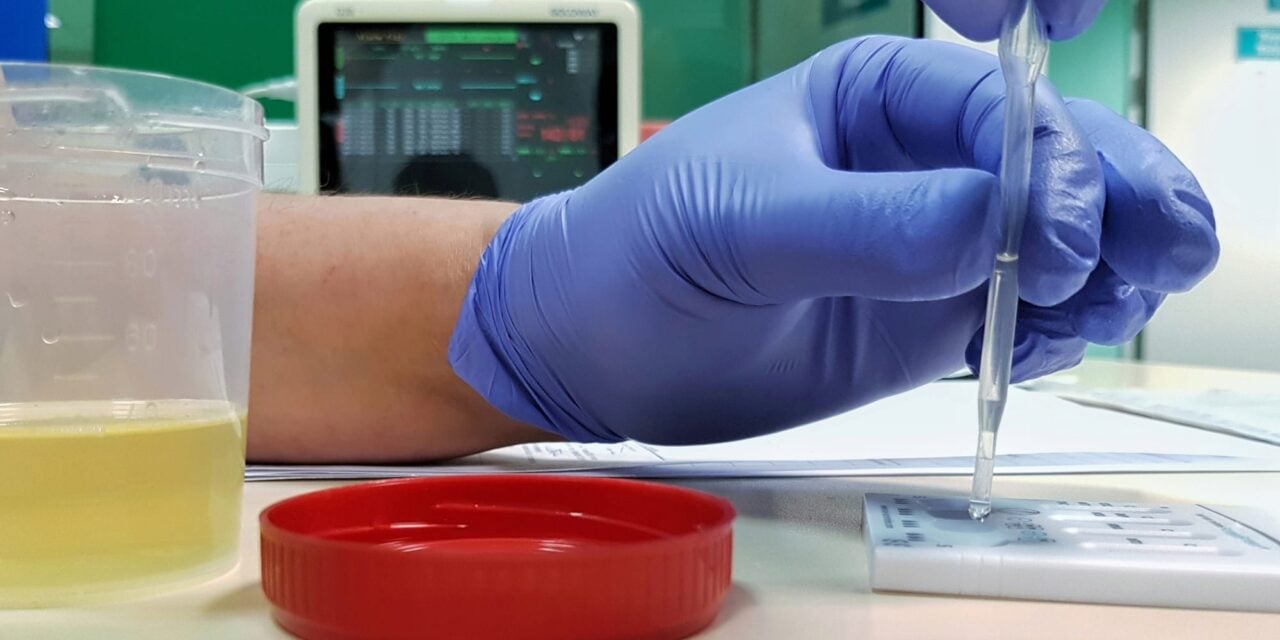
Supported by the National Institutes of Health, the test directly detects Aspergillus galactofuranose-containing antigens in urine and delivers results within several hours, providing laboratories with a rapid, noninvasive testing option.
“Having an early diagnosis is critical; it can initiate appropriate and timely treatment to help prevent disease progression and increase the odds of survival,” says Sean X. Zhang, MD, PhD, senior study author, an associate professor of pathology, and director of the medical mycology laboratory at Johns Hopkins Medicine, in a release.
Addressing a Diagnostic Gap in Vulnerable Patients
Invasive aspergillosis is a life-threatening infection caused by the environmental mold Aspergillus. While uncommon among healthy populations, the infection develops in an estimated 5% to 15% of patients with acute myeloid leukemia or those undergoing bone marrow transplants. It has also been documented in 5% to 20% of intensive care unit patients with severe influenza or COVID-19, and up to half of high-risk patients may die despite antifungal therapy.
Standard diagnostic protocols rely on combinations of chest imaging, serological testing, tissue biopsies, and respiratory samples collected through bronchoscopy. However, these methods can be invasive, technically demanding, and time-consuming, frequently leaving clinicians with diagnostic uncertainty.
The urine assay is cleared for use in adult patients suspected of having invasive aspergillosis and is intended to be interpreted alongside clinical signs, imaging, and other laboratory findings.
Multicenter Evaluation and Real-Time Hospital Validation
To evaluate assay accuracy, the team analyzed frozen urine specimens from 290 participants enrolled in studies across the US and Belgium between 2009 and 2022. Testing was performed at laboratories in Baltimore, Maryland; Pittsburgh, Pennsylvania; and Raleigh, North Carolina.
Among the 290 study participants, 50 had a confirmed case of invasive aspergillosis, with the remaining 240 serving as controls. The assay correctly identified 46 of the 50 confirmed cases (92%), with four false negatives. The test also correctly identified 218 of 249 samples as negative, a rate of 88%.
To assess routine clinical utility, the researchers also evaluated prospective performance in patients receiving care for hematologic malignancies or autoimmune disorders at The Johns Hopkins Hospital between January 2023 and February 2024. In that prospective cohort, 171 fresh urine samples from 168 eligible patients were analyzed in real time in the hospital laboratory. Among confirmed cases, the test correctly identified six out of seven positive cases (86%) and 35 out of 39 negative cases (90%).
Furthermore, among approximately half of the 210 suspected patients who lacked a definitive confirmation, the assay returned positive results in about one in four cases, highlighting its utility in guiding timely clinical decisions.
“For patients with blood cancers or stem cell transplants, the hardest part is often the gap between suspecting invasive aspergillosis and having enough evidence to act,” says Nitipong Permpalung, MD, MPH, director of mycology research and associate director for clinical trials at the Johns Hopkins Transplant Research Center, in a release. “This urine test is not a stand-alone answer, but it can provide another piece of evidence quickly and noninvasively, which could help us move faster for patients most likely to benefit from treatment while avoiding unnecessary antifungal exposure when infection is less likely.”
Next Steps in Clinical Implementation
Investigators are evaluating how the assay performs when integrated into standard clinical workflows, as well as its utility in other immunocompromised groups, such as patients experiencing fungal complications following viral respiratory infections.
The research aligns with priorities established by the World Health Organization, which placed Aspergillus fumigatus on its critical-priority fungal pathogen list in 2022. The study received financial support from Pearl Diagnostics and NIH grant R44AI157572.