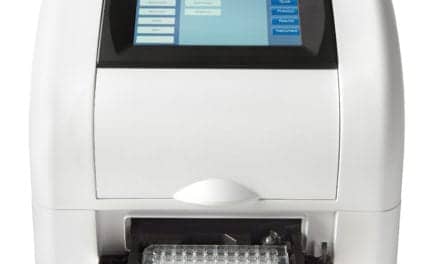

Genefluence’s near-patient test identifies UTI-causing bacteria and antibiotic resistance genes in approximately one hour, potentially helping clinicians make faster treatment decisions.
Genefluence has initiated the first clinical use of its rapid, near-patient PCR platform for urinary tract infections (UTIs) at the Royal Hospital Chelsea in London. The lab-free diagnostic is designed to identify UTI-causing bacteria and detect specific antibiotic resistance genes on the spot in approximately one hour, providing clinical laboratorians and healthcare providers with rapid alternatives to traditional multi-day urine cultures.
By accelerating pathogen identification and resistance profiling, the platform aims to allow clinicians to initiate targeted antimicrobial therapy immediately rather than relying on empirical, broad-spectrum antibiotics, which can drive antimicrobial resistance or result in disease progression toward sepsis and hospitalization.
“Diagnosing a urinary tract infection in an older person can be challenging, and antimicrobial stewardship means we must avoid inappropriate antibiotic prescribing. Waiting days for a culture result, or pre-emptively starting an antibiotic in the hope that it works, is not optimal,” says Dr Fergus Keating, principal general practitioner, physician, and surgeon at the Royal Hospital Chelsea, in a release. “Genefluence’s technology gives us a reliable answer in around an hour—including whether key resistance genes are present—so we can begin effective treatment immediately and avoid unnecessary prescribing. For all elderly and vulnerable patients, fast and accurate results mean getting better sooner, fewer side effects and, crucially, being able to stay well at home rather than going into hospital.”
Lab-in-Cartridge Workflow and Platform Evolution
The company’s diagnostic platform utilizes a proprietary Lab-in-Cartridge design. To run an assay, a user places an unprocessed clinical sample directly into a disposable cartridge, which performs automated genetic extraction. The cartridge is then loaded into a compact, portable analyzer that executes the PCR amplification and detection process from sample to result without external laboratory equipment or manual preparation steps.
The point-of-care architecture builds on diagnostic technology originally developed by Chris Toumazou, regius professor of engineering at Imperial College London, alongside his research team and Genefluence. Initially designed for consumer DNA applications, the core microchip-based molecular technology was adapted during the COVID-19 pandemic to create an instrument-free, rapid SARS-CoV-2 test that was deployed across UK National Health Service hospitals and validated in clinical studies published in The Lancet Microbe. The Royal Hospital Chelsea—a historic care home and charity for British Army veterans—was one of the early validation sites for that respiratory diagnostic platform.
“During the COVID-19 pandemic, this technology was transformative—proving that lab-quality, rapid PCR testing could be taken out of the laboratory and deployed directly at the point of decision,” says Chris Toumazou, founder of Genefluence and regius professor of engineering at Imperial College London, in a release. “We are now bringing that same capability into the day-to-day treatment of infections that are so often hard to spot, and to treat, in older people. To see this new test used for the first time at the Royal Hospital Chelsea, caring for the veterans who have given so much to this country, is a real honor. Fast genetic answers mean precise treatment from day one—which is better for the patient, better for healthcare providers and vital in the global fight against antimicrobial resistance.”
Diagnosing UTIs remains a persistent clinical and laboratory challenge in long-term care settings. According to a 2025 review published in BMJ Quality & Safety cited by Genefluence, UTIs account for the highest volume of antibiotic prescriptions among older residents in UK care homes and represent a leading cause of emergency hospital admissions.
Diagnostic complexity is heightened in elderly populations, particularly individuals with cognitive impairment or dementia, who frequently do not exhibit typical symptoms such as localized pain or dysuria. Instead, infections often manifest through nonspecific signs including acute lethargy, agitation, or sudden confusion. These presentations regularly lead either to treatment delays while waiting for central laboratory culture results or to presumptive antibiotic administration without microbiological confirmation.
Broader Diagnostic Portfolio and Pipeline
Genefluence’s current UKCA-marked molecular portfolio extends beyond infectious disease screening into point-of-care pharmacogenomics. The company’s cleared clinical offerings include tests for CYP2C19 genotypes to guide clopidogrel antiplatelet therapy in stroke patients, and DPYD variant testing to detect patients at risk of life-threatening toxicity prior to administering fluoropyrimidine-based chemotherapy regimens.
The company is also engineering a next-generation platform engineered to complete PCR cycles and yield diagnostic results in under 15 minutes, with the goal of fitting molecular profiling within standard clinical consultations, alongside research programs evaluating the platform for earlier home-based detection of oncologic targets.
ID 421631361 © Skypixel | Dreamstime.com