
Researchers identified blood levels of a brain injury biomarker that could help clinicians determine which patients need additional evaluation after head trauma.
In a study published in the Journal of Neurosurgery, a multi-institutional research team led by University of Pittsburgh School of Medicine neurosurgery clinician-scientists reported clinical cutoffs for two brain-associated proteins detected in blood following head trauma. The findings show that measuring these biomarkers can help clinicians better identify and triage patients who have sustained a traumatic brain injury (TBI).
Approximately 2.8 million individuals experience a TBI each year in the US, leading to substantial rates of mortality, morbidity, and long-term disability.
“There are amazingly poor long-term outcome rates for people with a TBI who get seen in the emergency department,” says Shawn Eagle, PhD, assistant professor in Pitt’s Department of Neurological Surgery and lead author of the study, in a release.
Addressing Limitations of First-Line Imaging
For patients presenting with suspected TBI, a head computed tomography (CT) scan serves as the standard first-line diagnostic evaluation because it is inexpensive, widely available, and fast. However, CT scans fail to identify intracranial pathologies in approximately 25% of patients.
“We’re sending people home with a negative CT scan, but 1 in 4 have an abnormality visible on MRI indicating that they should have specialized follow-up care,” says Eagle, in a release.
Although magnetic resonance imaging (MRI) provides greater sensitivity and captures structural damage that head CT imaging misses, MRI scans are slow, costly, and impractical for rapid patient triage in emergency settings. Furthermore, previous data from the federally funded, multi-center TRACK-TBI study indicate that more than 50% of individuals with mild head injuries experience functional limitations at one year.
“Prior to this research, in the absence of a positive CT scan, there was no objective way to identify if you had a brain injury,” says Eagle, in a release.
Other point-of-care neurological diagnostics are advancing in parallel; a separate blood test has shown promise for detecting stroke type before hospital arrival, potentially extending rapid triage capabilities beyond TBI.
Differentiating Biomarker Performance
To address this diagnostic gap, investigators evaluated two biomarker proteins that enter the bloodstream immediately following neural trauma: glial fibrillary acidic protein (GFAP) and ubiquitin c-terminal hydrolase-L1 (UCH-L1). While a standard 15-minute test measuring both biomarkers has been used to rule out the need for acute CT scans, researchers investigated whether quantitative cutoffs could identify positive pathology.
“We were curious about how the test would perform if you flipped it on its head,” says Eagle, in a release. “What level could you be pretty certain that someone does have a bleed in their head versus certainty that they don’t?”
The team assessed whether biomarker concentrations could distinguish patients with positive CT scans from those with negative CT scans, as well as identify patients who had negative CT scans but positive MRI findings.
The researchers determined that within 24 hours of injury, blood levels of GFAP successfully differentiated patients with acute brain injury from individuals showing no pathology on neuroimaging. Released from glial cells, GFAP exhibits an acute peak between 4 and 20 hours post-injury, followed by a gradual decline over several days. In contrast, UCH-L1, which is released from neurons, demonstrated limited utility in discriminating among the evaluated clinical cohorts.
The GFAP/UCH-L1 combination is the same pairing behind the first FDA-cleared TBI blood test, a milestone that later supported the Army’s adoption of a rapid version of the assay for field use.
Point-of-Care Integration in the Emergency Setting
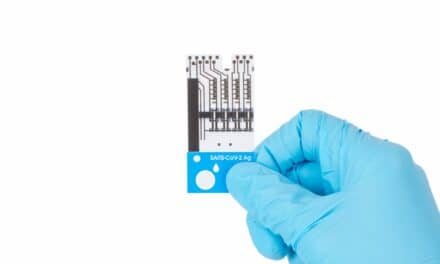
The clinical utility of biomarker testing is supported by the availability of a point-of-care, whole-blood assay format. The platform enables testing directly at the patient bedside rather than requiring specimen transport to a central clinical laboratory, delivering results within 15 minutes.
Some hospitals have already begun incorporating similar point-of-care TBI panels into emergency care; Orlando Health, for example, recently implemented Abbott’s rapid TBI blood test in its emergency department.
“We’re working to incorporate this test into the daily clinical practice in the ED,” says Eagle, in a release.
Biospecimens and clinical data for the research were gathered through the Neurotrauma Clinical Trials Center (NCTC) at Pitt, which serves as the primary biorepository for the TRACK-TBI study. The NCTC is directed by David Okonkwo, MD, PhD, professor of neurological surgery at Pitt and director of neurotrauma at UPMC, and Ava Puccio, RN, PhD, associate professor of neurological surgery at Pitt.
Funding for the investigation was provided by the Department of Defense and the National Institute of Neurological Disorders and Stroke. Research teams are currently evaluating whether circulating biomarker concentrations can also forecast long-term functional outcomes in patients following head trauma.
Other groups are also pursuing point-of-care brain-injury diagnostics, including BRAINBox Solutions’ concussion test and a separate concussion blood test advancing toward FDA submission through a point-of-care collaboration.
Photo caption: Shawn Eagle, PhD, assistant professor at the University of Pittsburgh Department of Neurological Surgery
Photo credit: UPMC