The screening tool aims to identify the disease in adults under 50, a population experiencing a significant increase in cases.
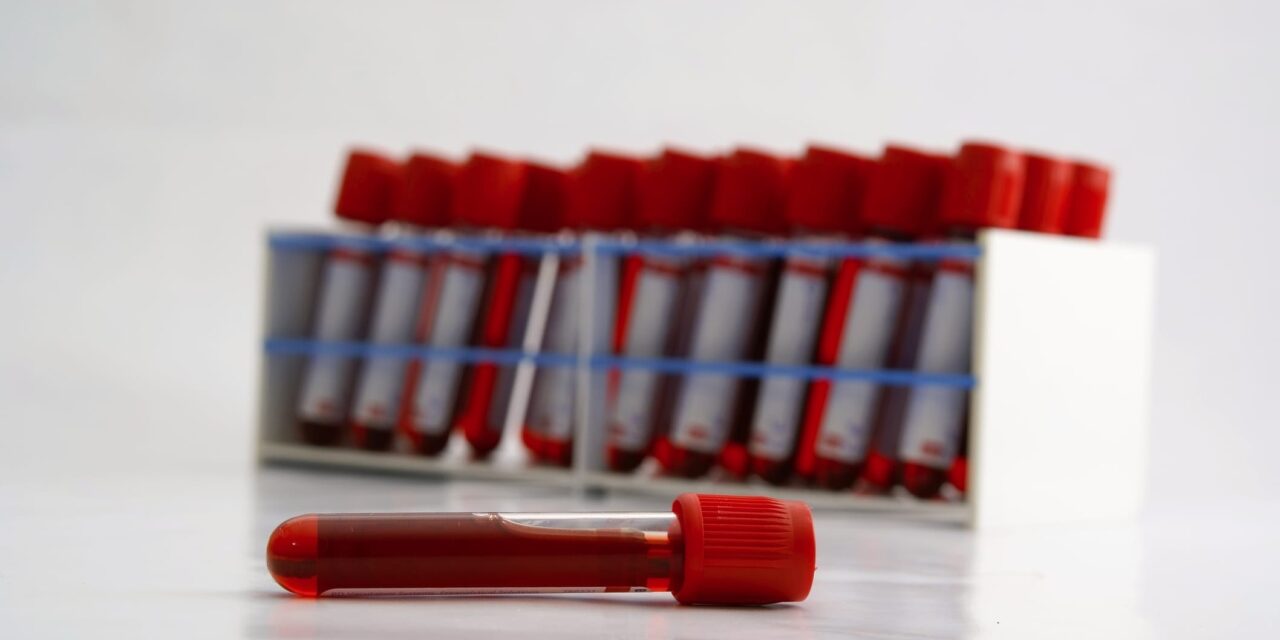
City of Hope is developing a blood test designed to detect colorectal cancer early, targeting a rising incidence of the disease in adults under age 50.
Colorectal cancer is currently the leading cause of cancer deaths in people younger than 50. While colonoscopy remains the standard screening method, guidelines generally recommend beginning the procedure at age 45. The new blood test, developed by Ajay Goel, PhD, professor and chair of the department of molecular diagnostics and experimental therapeutics at City of Hope, could allow for screening during annual exams for individuals as young as 18.
“If you detect colorectal cancer early—at stage 1 or at the advanced polyp stage—it is nearly 100% curable,” says Goel in a release. “This test, when it becomes available, could be a game-changing public health breakthrough.”
According to City of Hope, colorectal cancer rates in people under 50 increased 2.9% each year between 2013 and 2022. A report from the American Cancer Society indicates that people born in 1990 are twice as likely as those born in 1950 to develop colon cancer, and four times as likely to develop rectal cancer.
Many younger patients face delayed diagnoses because symptoms are often misattributed to other conditions, such as pregnancy-related changes or hemorrhoids. “Every young patient I’ve ever diagnosed with colon or rectal cancer was told they had hemorrhoids,” says Lance Uradomo, MD, an interventional gastroenterologist at City of Hope, in a release. Consequently, three-fourths of younger patients are diagnosed with advanced disease.
Research suggests that tumors in younger patients may be biologically different and progress more quickly than those in older patients. Approximately 65% of colorectal cancer cases in people younger than 50 occur in the rectum or on the left side of the colon.
“These appear to be biologically different tumors. Yet, even in stage 4 colorectal cancer, cure is still on the table with the right multidisciplinary approach and next-generation immunotherapies,” says Pashtoon Kasi, MD, medical director of gastrointestinal medical oncology at City of Hope Orange County, in a release.
City of Hope is also investigating how the microbiome, diet, and environmental factors influence cancer risk. “We are examining how diet, antibiotic exposure and environmental disruptions to gut bacteria may influence cancer risk and treatment response,” says Marcel van den Brink, MD, PhD, president of City of Hope Los Angeles and City of Hope National Medical Center, in a release.
In addition to diagnostic development, the organization is conducting clinical trials to improve treatment outcomes. A Phase 2 study is testing a combination of chemotherapy and immunotherapies for early-stage rectal cancer to help patients preserve fertility and long-term organ function. Another study showed that 29% of patients with microsatellite-stable colorectal cancer experienced tumor shrinkage when treated with a combination of the drug ADG126 and pembrolizumab.
The organization also led a Phase 3 trial for patients with the KRAS G12C mutation, which resulted in Food and Drug Administration approval of a new treatment option. Furthermore, the National Cancer Institute is funding an $18.5 million Cancer Moonshot project at City of Hope to study colorectal cancer in Hispanic and Latino communities, which have the highest rate of increase in early-onset disease, highlighting the critical need for expanded colorectal cancer screening options, including at-home colorectal cancer tests.
ID 2783120 | Lab © Pmisak | Dreamstime.com