Blood Test ‘Clock’ Predicts Alzheimer’s Symptom Onset Within Years
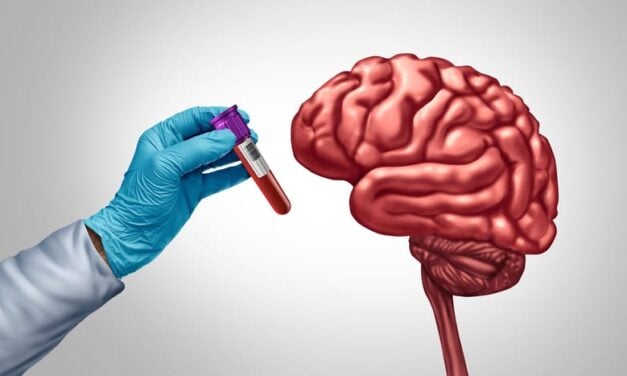
Washington University researchers have developed a blood test using p-tau217 protein levels to predict Alzheimer’s symptom onset within three to four years.
New cross-trial analysis supports the biomarker's potential to predict clinical benefit, reinforcing biomarker-driven trial designs.
The Elecsys pTau181 test measures phosphorylated Tau 181 protein to help rule out Alzheimer's-related amyloid pathology in patients 55 and older.
ALZpath pTau217 antibody data was included in 37 submissions at AAIC, building on research demonstrating its sensitivity and accuracy in blood-based tests for Alzheimer’s disease.
Read MoreThe Alzheimer’s Association released its first clinical practice guideline on the use of blood-based biomarker tests.
Read MoreAI-enhanced EEG technology is emerging as a promising tool for early detection of Alzheimer’s disease, potentially facilitating prevention efforts before symptoms appear.
Read MoreAt the Alzheimer’s Association International Conference, Roche shared new data on its investigational antibody trontinemab and its Elecsys pTau217 blood test.
Read MoreBlood-based biomarker tests are revolutionizing Alzheimer’s diagnostic testing and management of Alzheimer’s disease.
Read MoreA Finnish study reveals that Alzheimer’s-related blood biomarkers can be detected in middle age, potentially spotting the disease sooner.
Read MoreAI-enhanced EEG technology offers a promising, accessible way to detect early signs of Alzheimer’s disease—years before symptoms appear.
Read MoreQuest Diagnostics will offer a Fujirebio blood test this summer to enhance early detection of Alzheimer’s disease.
Read MoreQuanterix Corporation’s HD-X Simoa Immunoassay Analyzer has received Class 1 Medical Device registration in South Korea.
Read MoreAn FDA-cleared blood test that measures key Alzheimer’s disease biomarkers is a less invasive, more accurate method to diagnose the condition.
Read MoreSummary: CND Life Sciences has released baseline results from its NIH-funded Syn-Sleep Study,...
Read MoreAlamar Biosciences has expanded its NULISAseq CNS Disease Panel 120 to include highly sensitive, blood-based assays.
Read MoreResearchers have identified the key enzyme causing Alzheimer’s disease by linking it to excessive GABA production in reactive astrocytes.
Read MoreA large international study found that a simpler blood test method using plasma P-tau217 can accurately detect Alzheimer’s disease.
Read MoreA study found that up to 17.7% of initial Parkinson’s disease diagnoses are later revised, highlighting the challenges of its diagnosis.
Read More