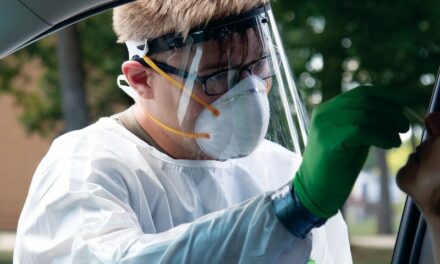
The molecular sensing platform will be deployed at clinical sites in Nigeria and Sierra Leone to support real-time pathogen detection.
Alveo Technologies and the University of Texas Medical Branch (UTMB) have entered a partnership to develop point-of-care diagnostics for viral hemorrhagic fevers across West Africa. The initiative focuses on providing real-time pathogen detection at clinical sites in Nigeria and Sierra Leone to support the UTMB Lassa fever research program.
Lassa fever affects between 100,000 and 300,000 people annually in West Africa, according to Alveo Technologies. Case fatality rates for the disease exceed 20% among hospitalized patients. Currently, the process of sending samples to distant laboratories can take weeks, creating logistical challenges for outbreak containment and patient management.
“UTMB is helping us to further push the capabilities of molecular testing to support critical research and outbreak response in the world’s most remote locations,” says Shaun Holt, CEO of Alveo Technologies, in a release. “Beyond the development of a diagnostic for Lassa Fever, UTMB faculty are engaged in validating and deploying our technology in exactly the types of real-world applications our technology was designed for.”
The collaboration is part of the Alveo Partner Program, which uses an open-platform approach to accelerate molecular diagnostic innovation. The program’s Academic Partnership Path allows researchers to develop assays on the Alveo platform for deployment in regions with significant public health needs.
“There is a clear and immediate need for a reliable point-of-care diagnostic for Lassa fever,” says Courtney Woolsey, professor in UTMB’s Department of Microbiology and Immunology and principal investigator of the Lassa fever research program, in a release. “Having immediate diagnostic capabilities at our field sites will fundamentally change how we respond to Lassa fever cases in affected communities.”
Validation of Platform Capabilities
In addition to the Lassa fever diagnostic, the partnership includes two validation initiatives designed to test the platform in challenging environmental and high-containment settings.
The Alveo Sense Poultry platform was recently deployed in Peru for avian influenza surveillance. This field testing evaluated the resilience of the device in warm, humid, and dusty environments.
Earlier this year, we tested Alveo Sense in field conditions in Peru. The main goal was to evaluate the device’s resilience in warm, humid, and dusty environments,” says Maureen Laroche, assistant professor in the Department of Microbiology and Immunology, in a release. Laroche notes that in collaboration with the Peruvian Agricultural Health Services, researchers tested healthy chickens and received real-time results on site via a mobile application.
The platform is also undergoing validation at the UTMB Galveston National Laboratory. This testing occurs under maximum biosafety conditions to ensure the platform provides consistent results regardless of environmental variables, individual analyzer units, or operator experience. These studies are supported by a National Institutes of Health grant for BSL-4 operations support.