
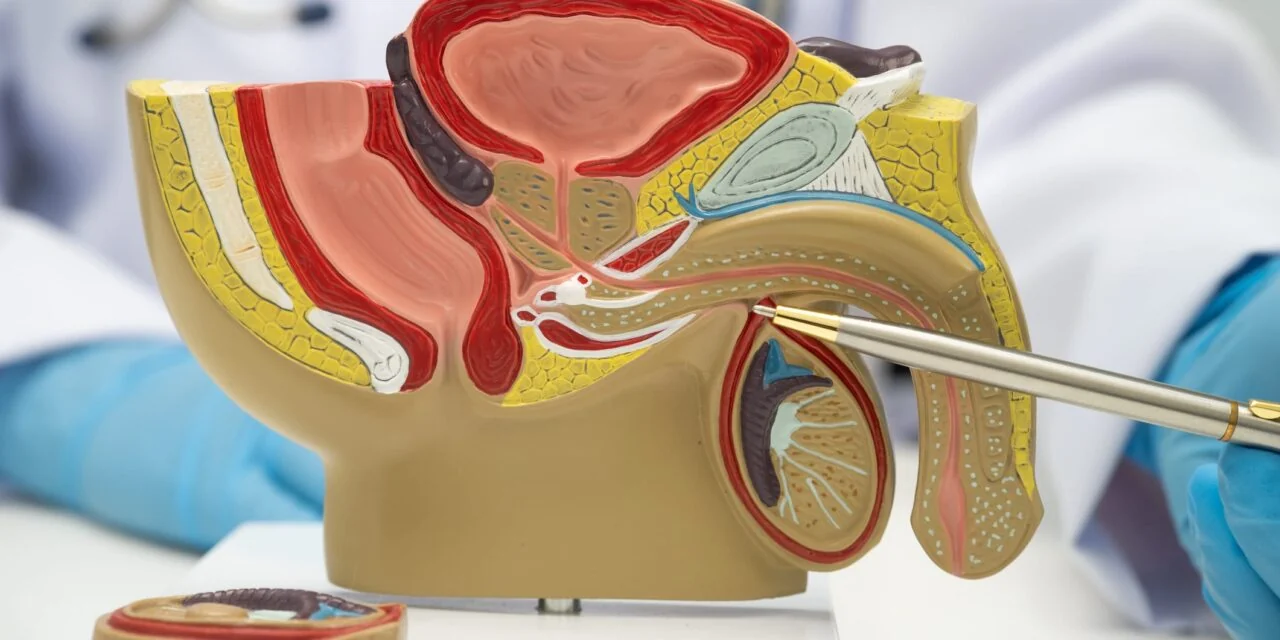
The funding will support clinical studies and laboratory validation of a semen-based assay that detects epigenetic changes linked to severe male infertility and potentially increased cancer risk.
Path Fertility has received a $2 million grant from the National Institutes of Health (NIH) to develop and validate a male infertility test that could also help identify increased cancer risk.
The two-year award will support clinical studies and laboratory validation of a semen-based assay designed to detect epigenetic changes associated with non-obstructive azoospermia (NOA), a severe form of male infertility.
NOA affects approximately 1% of men worldwide and is clinically associated with elevated risks of cardiovascular disease and malignancy. Current standard diagnostic workups, including karyotyping and Y-chromosome microdeletion testing, leave a substantial proportion of cases without an identified etiology.
“This award is a strong vote of confidence in epigenetics as the foundation for better male fertility diagnostics,” says Andy Olson, co-founder and CEO of Path Fertility, in a release. “With SpermQT, we showed that a ‘normal’ semen analysis can miss subfertile men. With NIH support, we’re extending that platform to men facing the most severe infertility, and the data we’re presenting at ASRM show the same approach producing actionable answers across male fertility care.”
Targeting MSH5 Epimutations
The project builds on prior research led by Dr Dolores Lamb and collaborators, supported by Path Fertility parent company Inherent Biosciences, which identified epigenetic alterations—termed epimutations—in the DNA repair gene MSH5 in up to 19% of men with NOA. This molecular finding links spermatogenic failure to broader systemic disease pathways, including DNA mismatch repair vulnerabilities.
Under the Phase II grant, the company plans to:
- Confirm the clinical prevalence of MSH5 epimutations in a broader cohort of patients with NOA via a multi-site clinical study,
- Develop a noninvasive, semen-based reflex test that eliminates the requirement for a separate blood draw,
- Evaluate MSH5 epimutations in 500 patients diagnosed with colorectal cancer, a population characterized by DNA mismatch repair defects, and
- Validate the diagnostic assay in a CLIA-certified laboratory for commercial launch as a laboratory developed test.
Once validated, the assay will be integrated into NOA Guide, a diagnostic tool designed to predict surgical sperm retrieval feasibility in patients with NOA using sperm-derived cell-free DNA (cfDNA) technology.
“Men with non-obstructive azoospermia are often told there is no explanation for their infertility, and rarely told it may signal risks to their overall health,” says Kristin Brogaard, PhD, co-founder and chief scientific officer of Path Fertility and principal investigator on the award, in a release. “Our earlier work found MSH5 epimutations in nearly one in five of these men. This award lets us confirm that finding across multiple clinical sites and turn it into a simple semen-based test that gives men a real answer and flags health risks that deserve follow-up.”
Clinical Data Presented at ASRM 2026
The grant announcement coincided with the presentation of two clinical studies at the American Society for Reproductive Medicine (ASRM) 2026 Scientific Congress & Expo in Baltimore.
In an oral presentation evaluating 67 men with NOA undergoing surgical sperm retrieval, investigators demonstrated that levels of semen-derived cfDNA predicted successful sperm retrieval, with the correlation modulated by serum follicle-stimulating hormone concentrations. Among men with follicle-stimulating hormone levels below 20 IU/L, each 1% increase in cfDNA corresponded to a 1.5 percentage point decrease in retrieval success probability (p=0.002). In a patient subset with testicular pathology, cfDNA distinguished maturation arrest with an area under the curve (AUC) of 0.79, with zero successful retrievals observed in men displaying maturation arrest. The study was conducted in collaboration with researchers from Baylor College of Medicine and Brigham Young University.
A separate poster presentation examined real-world outcomes for SpermQT, an epigenetic test evaluating DNA methylation patterns across genes linked to sperm function. Analyzing 537 men across 10 US fertility clinics and 28 clinicians, researchers tracked 202 couples undergoing intrauterine insemination (IUI) across an average of 2.8 cycles. Couples with normal test results achieved a cumulative pregnancy rate of 22.0%, compared to 0% among couples with abnormal results (p=0.005), despite comparable patient age and total motile sperm counts. The statistical significance persisted after adjusting for clinician (p=0.012) and clinic site (p=0.009).