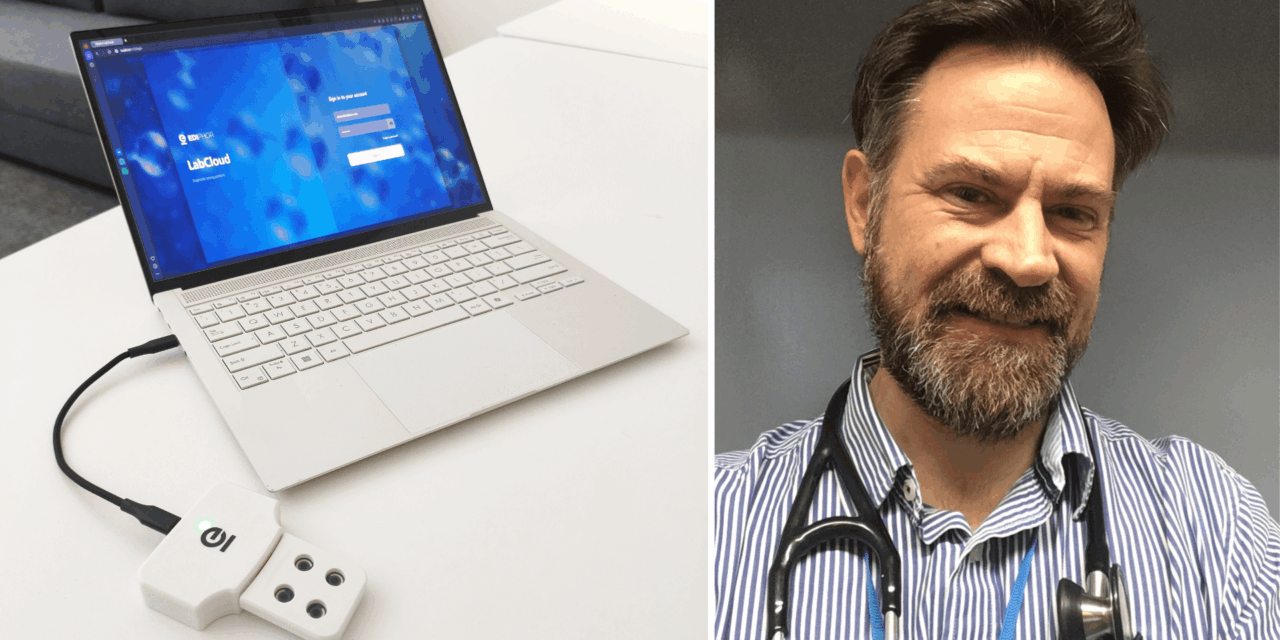
Point-of-care platform uses biosensor technology to detect flu, COVID-19, and RSV in four minutes total, including sample collection.
University Hospital Southampton is testing a rapid diagnostic platform that could reduce the time needed to diagnose winter respiratory viral infections from hours to minutes, potentially offering laboratories a faster, more cost-effective testing option.
The point-of-care test, developed by UK medical device company Ediphore, uses biosensor technology to identify respiratory viruses including influenza, COVID-19, and respiratory syncytial virus in 60 seconds, according to a release from University Hospital Southampton. The complete testing process, including sample collection, takes approximately four minutes.
Current hospital PCR testing processes require more than two hours to deliver results, need laboratory processing, and cost significantly more to perform. The new platform can be operated by staff without specialist training at a cost of £2 to £3 per test, which is comparable to lateral flow devices and at least 10 times less expensive than current rapid PCR testing, according to the hospital.
“This novel and exciting technology has the potential to be a real game-changer,” says Tristan Clark, honorary consultant in infectious diseases at University Hospital Southampton and professor at the University of Southampton, who is leading the study, in a release. “Rapid, accurate diagnosis is crucial during winter surges, but current testing methods are too slow and often very expensive.”
Addressing Winter Healthcare Pressures
Respiratory viruses represent a major source of winter pressure in the UK’s National Health Service, accounting for a high proportion of emergency department visits during peak winter periods. This surge in emergency department attendance and hospitalization often creates significant operational challenges including bed capacity shortages and cancellation of elective procedures, according to a release from University Hospital Southampton.
The trial, currently underway at University Hospital Southampton, will evaluate the test’s accuracy and performance by comparing results with existing diagnostic methods. Researchers will analyze the collected data to build evidence needed for regulatory approval and potential NHS adoption.
“While this study won’t change how we manage patients this winter, it’s a vital step in generating the evidence required to support new diagnostic technologies that could make a significant difference in years to come,” says Clark in a release.
Flexible Platform Technology
The biosensor technology offers adaptability beyond respiratory virus detection, according to researchers. Clark notes that the platform “is uniquely flexible in that it can be adapted to detect many different types of biomolecular targets, and not just respiratory viruses.”
The study is being delivered through the National Institute for Health and Care Research Southampton Biomedical Research Centre. Clark recently received a National Institute for Health and Care Research Research Professorship and has previously published work on rapid flu testing in The Lancet Respiratory Medicine.
Study findings will inform future clinical trials and decision-making regarding the use of rapid diagnostics during periods of peak healthcare demand.
Photo caption: Ediphor test and Tristan Clark
Photo credit: University Hospital Southampton