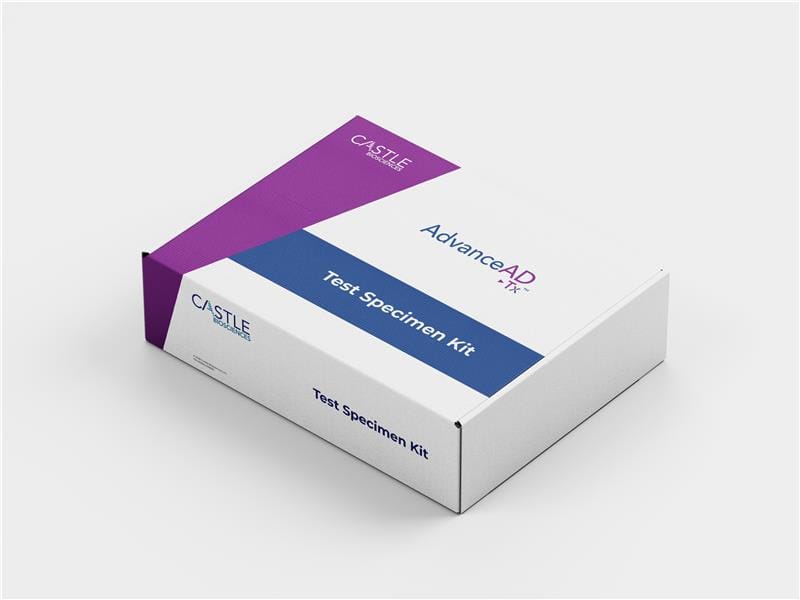
Castle Biosciences’ AdvanceAD-Tx test identifies patients more likely to respond to JAK inhibitor therapy versus Th2-targeted treatments.
A new gene expression test can help clinicians identify patients with moderate-to-severe atopic dermatitis who are more likely to achieve better outcomes with JAK inhibitor therapy compared to Th2-targeted treatments, according to a prospective validation study published in the Journal of the American Academy of Dermatology.
Castle Biosciences’ AdvanceAD-Tx test uses lesional skin scrapings to evaluate the expression of 487 genes across 12 inflammatory and cutaneous biology pathways. The test reports one of two actionable molecular profiles to help guide systemic treatment decisions for patients 12 years and older with moderate-to-severe atopic dermatitis.
Results from the independent validation cohort showed that approximately 30% of patients studied were identified as having a JAK Inhibitor Responder Profile. Among these patients, those treated with a JAK inhibitor were 5.5 times more likely to achieve at least 90% improvement in Eczema Area and Severity Index (EASI-90) by three months compared to those treated with Th2-targeted therapies (45.5% vs 8.3%, p=0.021).
“Atopic dermatitis can look similar on the surface, but the biology driving the disease can differ meaningfully from patient to patient,” says Mark G. Lebwohl, MD, senior study author and dean for clinical therapeutics at the Icahn School of Medicine at Mount Sinai in New York, in a release. “This study shows that AdvanceAD-Tx can provide objective molecular insight to help clinicians better align systemic therapy choices with an individual patient’s disease biology earlier in the treatment journey.”
Improved Clinical Outcomes
Patients with a JAK Inhibitor Responder Profile who were treated with a JAK inhibitor achieved responses nearly four times faster than those receiving Th2-targeted therapies (p=0.049). They were also significantly more likely to achieve complete skin clearance (36.4% vs 0%, p=0.006), report no itching (45.5% vs 8.3%, p=0.021), and remain flare-free by three months (54.5% vs 16.7%, p=0.041).
Quality of life improvements were also notable, with patients achieving a Dermatology Life Quality Index score of 0, indicating no impact of disease on quality of life (45.5% vs 8.3%, p=0.021).
In contrast, patients identified with a Th2 Molecular Profile showed no statistically significant differences in clinical or patient-reported outcomes when taking a JAK inhibitor or Th2-targeted therapy.
Non-Invasive Testing Approach
The AdvanceAD-Tx test requires no biopsy, using only lesional skin scrapings to analyze RNA expression data. The test evaluates genes across inflammatory and cutaneous biology pathways to reveal the underlying immune biology driving an individual patient’s disease.
“Together, these results highlight how aligning systemic therapy selection with an individual patient’s molecular profile may help streamline care by reducing unnecessary treatment changes and accelerating meaningful clinical improvement,” says Rebecca Critchley-Thorne, PhD, vice president of research and development at Castle Biosciences, in a release.
Castle Biosciences launched limited commercial access to AdvanceAD-Tx in late 2025. The company is based in Friendswood, Texas, and trades on NASDAQ under the symbol CSTL.
Photo caption: AdvanceAD-Tx
File photo / Castle Biosciences