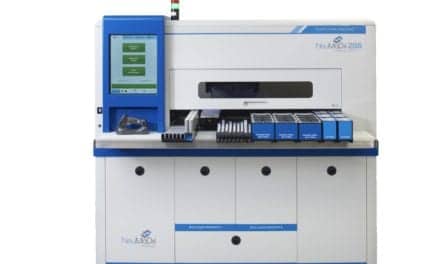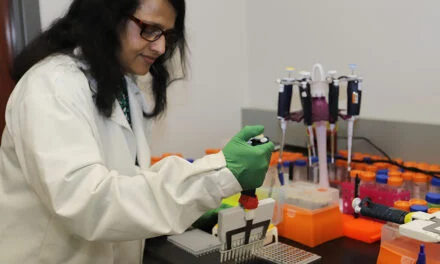

The RT-qPCR and qPCR kits support multiple amplification methods to enable faster results in decentralized and field-based environments.
Watchmaker Genomics has expanded its molecular diagnostic (MDx) tools portfolio with the launch of Stellar reverse transcription quantitative polymerase chain reaction (RT-qPCR) and quantitative polymerase chain reaction (qPCR) kits. These tools are designed to assist assay developers in creating rapid, robust point-of-care and field-deployable tests.
The expansion allows developers to design across both polymerase chain reaction and isothermal modalities. These capabilities support RT-qPCR and qPCR workflows in molecular diagnostics where performance, speed, and robustness are critical factors. By applying a protein engineering platform, the company develops reagents that maintain sensitivity and reliability in crude or minimally processed samples to enable faster workflows.
The kits are powered by StellarTaq deoxyribonucleic acid polymerase and StellarScript HT+ reverse transcriptase. According to the company, these components offer high inhibitor tolerance, speed, and sensitivity, which allow for reliable amplification directly from complex sample matrices. The kits also support rapid cycling workflows that can deliver results in under 10 minutes on fast-cycling platforms.
In addition to the kits, the Boulder, Colorado-based company offers a Recombinase Polymerase Amplification (RPA) enzyme suite. This suite provides an isothermal alternative to traditional methods such as loop-mediated isothermal amplification for applications requiring fast detection and simplified instrumentation. Operating at a constant low temperature, RPA enables results in minutes and is intended for decentralized, field-based, and at-home testing environments.
“Whether supporting sophisticated next-generation sequencing workflows or decentralized molecular diagnostic assays, the underlying need is the same—better reagents that drive better performance,” says Eric van der Walt, chief innovation officer of Watchmaker Genomics, in a release. “Our protein engineering platform has helped establish Watchmaker as a trusted partner in next-generation sequencing, and we are excited to bring that same rigor and innovation to MDx assay developers and other life science tools providers who need speed, sensitivity, and robustness in real-world testing environments.”
The company presented data on these amplification technologies at the European Society of Clinical Microbiology and Infectious Diseases 2026 in Munich, Germany, from April 18-21.
Photo credit: Watchmaker Genomics