A simplified test of HDL’s ability to remove cholesterol was associated with high-risk coronary plaques in a study of 61 patients.
Researchers at the Institute of Science Tokyo developed a blood-based assessment to measure how effectively high-density lipoprotein (HDL) removes cholesterol from blood vessel walls. This function, known as cholesterol efflux capacity (CEC), was linked to high-risk coronary plaques in a study published in the journal Atherosclerosis.
Predicting the risk of coronary artery disease remains a challenge because standard HDL measurements do not always reflect how effectively the particles function in the body. CEC serves as an indicator of HDL function, measuring the ability of the particles to remove excess cholesterol from cells and transport it to the liver for metabolism.
To address the complexity of traditional testing, a research group led by Ryunosuke Ohkawa, professor, and Minoru Tozuka, professor emeritus, from the department of clinical bioanalysis and molecular biology at the Institute of Science Tokyo, developed the immobilized liposome-bound gel beads (ILG) method. This approach uses ILG for CEC determination to simplify the testing process for clinical use.
Linking HDL Function to Plaque Risk
In collaboration with the department of cardiovascular medicine, the researchers analyzed samples from 61 patients who had undergone catheter examinations. The team compared CEC values obtained through the ILG method with plaque characteristics visualized via optical coherence tomography, an advanced imaging technique.
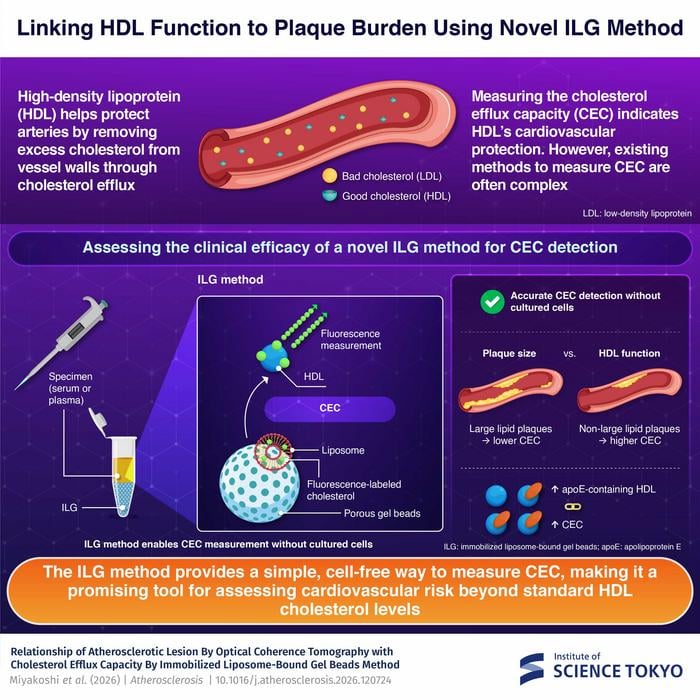
The results revealed that patients with high-risk, large lipid-rich plaques had significantly lower CEC values. In contrast, patients with non-large lipid-rich plaques showed higher CEC values. The researchers also found that higher CEC values were associated with HDL particles containing apolipoprotein E. These findings suggest that a reduced capacity for cholesterol removal may be associated with the development of unstable plaques, which can trigger serious cardiovascular events.
“By simplifying the measurement of CEC, we aimed to make this biomarker more accessible for clinical use,” says Ohkawa in a release.
Clinical Applications for Preventive Care
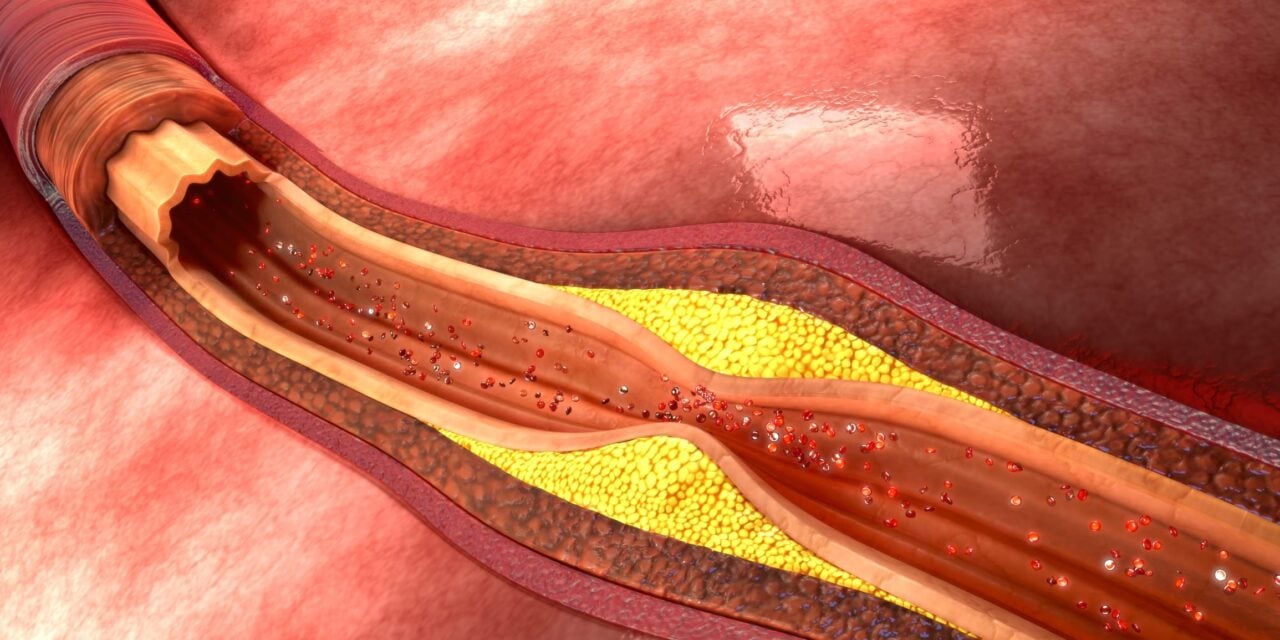
Large lipid-rich plaques are recognized as vulnerable lesions capable of rupturing and triggering acute coronary syndromes. However, detecting these plaques without invasive procedures, such as cardiac catheterization, remains difficult.
By identifying patients who show reduced HDL function using the ILG method, physicians may be better able to predict future cardiovascular risk and guide preventive treatment strategies. Researchers suggest that the ILG method helps overcome the barriers of existing complex measuring methods, enabling more practical and reliable testing.
In the future, the research team hopes the ILG method will contribute to the earlier detection of coronary artery disease risk and more precise monitoring of patients following cardiovascular events.
ID 84219835 © 7active Studio | Dreamstime.com