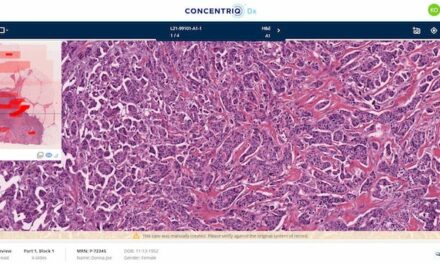
The clearances include the first standalone software designed to automate quality control for digital pathology slides.
Leica Biosystems announced multiple Food and Drug Administration (FDA) 510(k) clearances to expand its clinical digital pathology portfolio, including an artificial intelligence (AI)-assisted quality control software. The advancements aim to help laboratories manage increasing case volumes, staffing pressures, and diagnostic complexity by automating workflows.
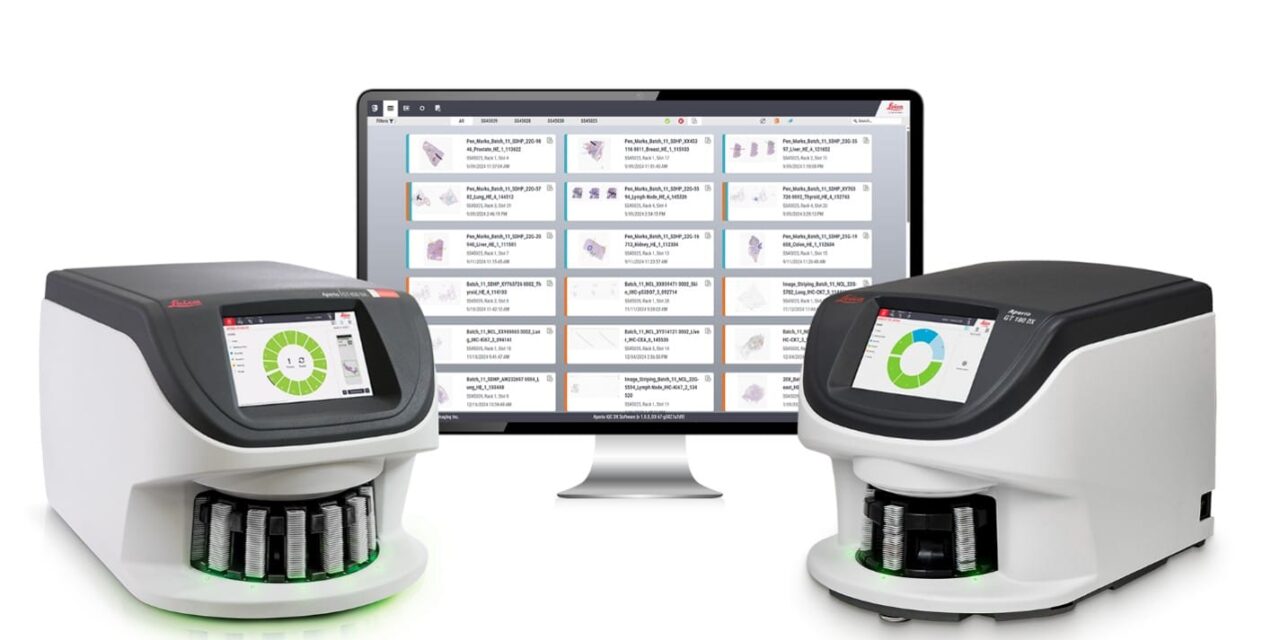
The clearances introduce Aperio iQC DX software, add the Aperio GT 180 DX scanner, and enhance capabilities for the Aperio GT 450 DX scanner.
AI-Assisted Quality Control in Clinical Workflows
The Aperio iQC DX software is the first FDA 510(k)-cleared software for AI-assisted digital pathology quality control in a clinical setting. The tool identifies artifacts created during tissue preparation, staining, coverslipping, or scanning. These artifacts include air bubbles, pen marks, clipped tissue, missing tissue, out-of-focus regions, and image striping.
By detecting these issues while slides remain on the scanner, the software allows laboratories to resolve quality concerns earlier in the workflow. This reduces the need for rescanning and minimizes downstream delays for pathologists.
In a real-world data study conducted with the Institute of Pathology at Heidelberg University, the AI models detected up to 24% more artifacts missed by histotechnicians. The study also showed a 69% reduction in hands-on review time, allowing laboratories to reallocate staff to other tasks, according to Leica Biosystems.
Expanded Scanning Solutions
Leica Biosystems also received clearance for the Aperio GT 180 DX clinical scanner, designed for mid-volume laboratories. This scanner features a 180-slide capacity and shares the scan speed of the higher-capacity models to help laboratories build connected digital pathology workflows.
The high-throughput Aperio GT 450 DX scanner received enhancements including new manual scan capabilities for complex slides, advanced Digital Imaging and Communications in Medicine (DICOM) capabilities, and z-stacking for clinical environments. The system features a 450-slide capacity and automation designed to rapidly convert glass slides into digital images.
“Every improvement in the pathology workflow matters because patients and clinicians are waiting for answers that guide care,” says Naveen Chandra, vice president and general manager of digital pathology at Leica Biosystems, in a release. “By embedding AI-assisted quality control directly into the scanning workflow and expanding clinical scanning options, we are enabling laboratories to scale digital pathology in ways that support timely diagnosis, pathologist efficiency, and better care for patients.”
The company provides solutions for each step of the pathology process, from sample preparation and staining to imaging and reporting. According to the company, the expanded portfolio helps laboratories move from slide preparation to diagnosis with less variability and greater consistency.
Photo caption: Aperio iQC DX software, Aperio GT 180 DX scanner, and Aperio GT 450 DX scanner.
Photo credit: Leica Biosystems